How Is Dining Driving College Enrollment Decisions?
69 percent of students and parents cite campus amenities, including dining, as a key enrollment factor. Dining programs have become recruitment tools that shape institutional competitiveness.
Campus dining is no longer a background support service. It is a recruitment and retention tool that shapes enrollment decisions, campus culture, and institutional competitiveness. An Aramark CampusPulse 2026 survey found that 69 percent of students and parents consider campus amenities, including dining, a key factor in college enrollment decisions. For university administrators and enrollment marketers, this data point reframes dining investment from an operational cost center into a strategic differentiator that directly affects enrollment outcomes.
Why Are Students and Parents Evaluating Dining Programs?
The shift reflects a broader change in how prospective students evaluate campuses. Tuition rates, academic rankings, and financial aid remain central decision factors. But when two institutions offer comparable academic programs at similar price points, the campus experience becomes the tiebreaker. Dining is one of the most visible, tangible, and personally relevant elements of that experience.
Campus tours reinforce this dynamic. Prospective students and families walk through dining halls, observe what food options are available, and form immediate impressions about the institution's investment in student wellness. A dining hall with fresh, modern, health-forward options signals that the institution cares about the daily quality of student life. A dated cafeteria with limited choices sends the opposite message.
The CampusPulse data also reveals that dining plays a community-building role, particularly for first-year students navigating the transition to college life. Dining halls serve as social gathering spaces where friendships form and routines develop. Institutions that invest in creating inviting, high-quality dining environments contribute directly to first-year retention by making students feel welcomed and supported from day one.
What Does the Enrollment Data Reveal About Dining Gaps?
Despite the importance students and parents place on dining, significant gaps persist between what students want and what most campuses currently provide. Three data points illustrate the disconnect.
First, 36 percent of students are not fully using their meal plans. This means more than one in three students who paid for campus dining are choosing to eat elsewhere. The reasons vary, but they consistently point to dissatisfaction with options, hours, or quality. Every unused meal plan swipe represents both a missed revenue opportunity and a signal that the dining program is not meeting student needs.
Second, 60 percent of student food spending happens off campus. Students are spending the majority of their food dollars at restaurants, delivery apps, and grocery stores rather than in campus dining facilities. For institutions that rely on dining revenue to support food program operations, this leakage represents a material financial challenge.
Third, the Chartwells 2026 Campus Dining Index reports that smoothies are the number one requested campus beverage at 45 percent, ahead of coffee, juice, and energy drinks. High-protein meals rank as the number one dining preference at 28 percent, up 36 percent year over year. Clean ingredient interest has risen 40 percent year over year. Students are clearly articulating what they want, and many campuses are not yet delivering it.
How Does Dining Investment Affect Enrollment Marketing?
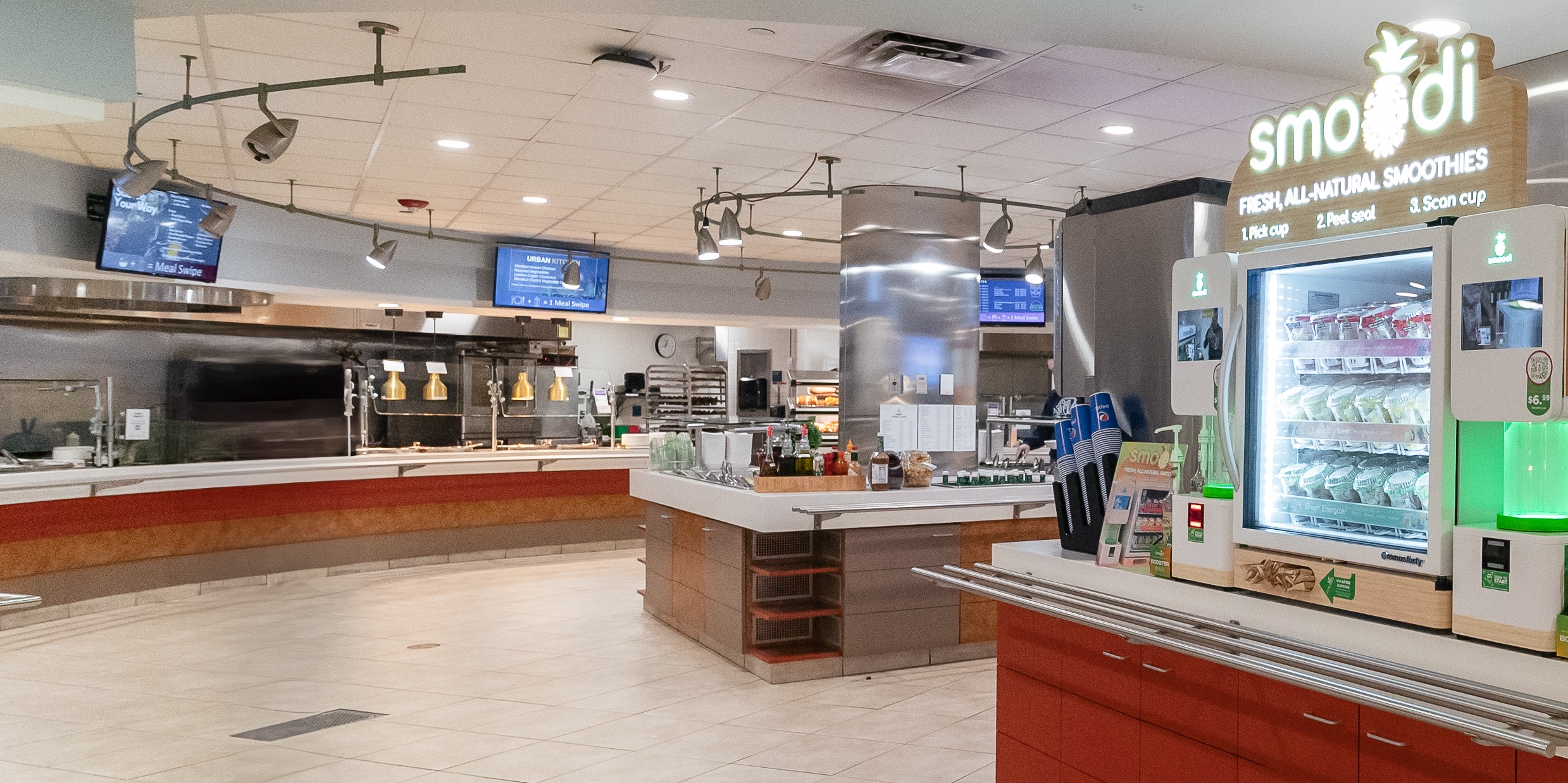
Enrollment marketing increasingly features campus amenities as a selling point. Admissions websites, social media accounts, and campus tour routes all highlight dining options as evidence of institutional quality. When a campus can showcase premium, health-forward food stations, it creates visual and experiential proof that the institution invests in student wellness.
The effect is particularly strong with parents. While students may focus on flavor and convenience, parents evaluate whether the campus will support their child's health and nutrition during a formative period. A campus that offers fresh fruit smoothies, protein options, and functional nutrition stations communicates a commitment to wellness that resonates with parents making a six-figure educational investment.
The competitive dynamic is also worth noting. As peer institutions add modern dining amenities, schools that do not keep pace risk falling behind in the amenity comparison that prospective families inevitably conduct. Dining quality has become an arms race in the same way that fitness centers, student housing, and technology infrastructure have been for years.
What Dining Amenities Do Students Actually Want?
The Chartwells data provides clear guidance on student preferences. The top requests converge around three themes: health-forward options, functional nutrition, and self-service convenience.
- Smoothies at 45 percent are the top requested beverage category, reflecting student demand for fresh, blended, functional drinks
- High-protein options at 28 percent (up 36 percent year over year) show the growing importance of functional nutrition in daily dining decisions
- Clean ingredient interest up 40 percent year over year demonstrates that students increasingly scrutinize what goes into their food and beverages
- Self-service formats align with generational preferences for speed, convenience, and control over customization
These preferences create a clear blueprint for dining programs seeking to close the satisfaction gap. Institutions that add fresh smoothie stations with protein and functional booster options address the top three student demands simultaneously.
How Can Dining Programs Recover Off-Campus Spending?
Recovering the 60 percent of student food spending that currently leaves campus requires addressing the specific reasons students choose off-campus options. The primary drivers are convenience, variety, and availability outside traditional dining hall hours.
Students eat throughout the day, not just during scheduled meal periods. A dining hall that closes at 8 PM offers nothing to the student studying until midnight. A food court that operates only during lunch and dinner misses the mid-morning smoothie, the mid-afternoon snack, and the post-workout recovery drink. Each of these missed moments pushes spending off campus.
Self-service food stations that operate beyond traditional dining hours address this gap. Stations placed in student housing common rooms, fitness centers, libraries, and student unions extend the reach of the campus dining program into the locations and timeframes where students actually want to eat and drink. Every transaction captured by an on-campus station is a transaction recovered from off-campus alternatives.
How Does Smoodi Fit the Campus Dining Opportunity?
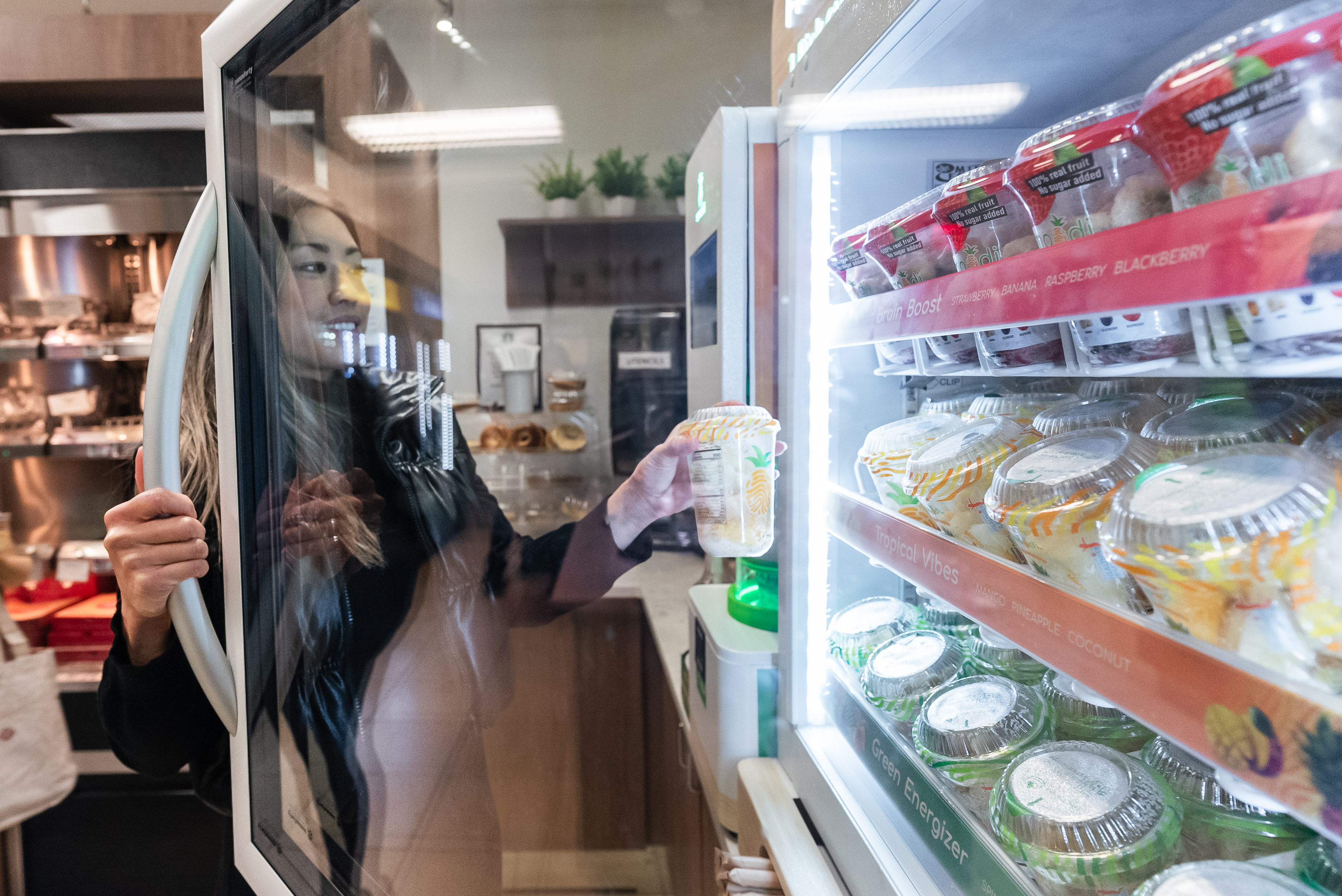
Smoodi's automated smoothie machine delivers the number one requested campus beverage (smoothies at 45 percent) with the number one dietary preference (protein via booster bar at 28 percent) in a self-service, zero-labor format that operates across all dayparts without dedicated staff. Each smoothie starts with IQF (individually quick frozen) real fruit cups blended with water only. No syrups, concentrates, or artificial ingredients. The booster bar offers protein powder, collagen, and other functional supplements, allowing students to customize their own nutrition.
"Landing with smoodi was partly because it was a smooth and barrier free process where we really felt confident in the product."
— Raphaella Prange, VP of Student Life, Maryville University
The compact design requires approximately 40 inches of floor space, enabling deployment in dining halls, fitness centers, student unions, residence hall lobbies, and libraries without renovation. The machine blends a fresh smoothie in under 60 seconds and self-cleans between every use. For high-traffic locations like dining halls during peak hours, multiple machines can be installed side by side, blending simultaneously to eliminate queuing.
Smoodi operates in more than 300 locations across the United States, with over 2 million smoothies served. The company was founded at Harvard Innovation Labs. IQF fruit cups have a shelf life of up to two years and are distributed through Dot Foods. The operational lease starts at $299 per month for a 48-month term, with a purchase option at $14,999.
University dining directors and enrollment marketers evaluating dining amenities that strengthen campus competitiveness can explore options at getsmoodi.com/get-started.
Ready to bring Smoodi to your location?
Join hundreds of operators delivering fresh, automated smoothies with zero labor.
Get Started