What Makes Compact Equipment the Smartest Investment?
Space is the number one constraint for operators adding new food programs. Modular, compact, and self-contained equipment systems are emerging as the defining foodservice equipment trend of 2026, enabling nutrition programs in locations previously considered too small.
Space is the most persistent constraint operators face when adding new food programs. Airports, hospital lobbies, office breakrooms, student housing common areas, and convenience stores all share the same challenge: the desire to offer fresh food options in locations where traditional foodservice equipment simply does not fit. In 2026, the foodservice equipment market is responding to this constraint with a clear trend toward compact, modular, and self-contained systems. Industry analysts at New Age Industrial and Label Foodservice both identify modular, multi-functional, and mobile equipment as among the most significant equipment trends shaping the industry this year.
Why Is Space the Top Constraint for New Food Programs?
Traditional foodservice equipment was designed for dedicated kitchen spaces. A commercial blender station requires counter space, a sink, storage for ingredients, and room for a staff member to operate. A traditional smoothie bar typically needs 200 to 400 or more square feet when accounting for the counter, equipment, ingredient storage, handwashing station, and staff work area. Robotic beverage kiosks, while more automated, still require 50 to 100 or more square feet for the enclosure, loading area, and clearance space.
These footprint requirements exclude the vast majority of potential deployment locations. A hospital lobby has limited open floor space that must accommodate patient and visitor flow. An office breakroom is already occupied by tables, a microwave, a refrigerator, and a coffee station. A convenience store has every square foot allocated to merchandise displays and checkout lanes. A student housing common room serves multiple functions and cannot dedicate significant space to a single food station.
The result is that operators who want to add fresh food options in these locations face a binary choice: undertake expensive renovation to create the required space, or forgo the program entirely. Compact equipment changes this calculation by fitting nutrition programs into spaces that previously could not accommodate them.
What Defines Compact, Modular Equipment in 2026?
The compact equipment category is defined by several characteristics that distinguish it from both traditional kitchen equipment and large-format automated systems.
- Self-contained operation: all functions (preparation, serving, cleaning) happen within a single unit, with no external prep space required
- Minimal footprint: the total floor space requirement is measured in inches rather than feet, typically under 40 inches of linear floor space
- Standard utility connections: operation from a standard 120 VAC outlet rather than requiring dedicated electrical circuits, three-phase power, or specialized infrastructure
- Integrated cleaning: self-cleaning between every use, eliminating the need for a separate cleaning station or end-of-shift manual cleaning
- Pre-portioned inputs: ingredients arrive in standardized, shelf-stable formats that require no on-site preparation, chopping, measuring, or refrigerated storage
These characteristics are not just engineering details. They represent a fundamental shift in how operators evaluate equipment purchases. The question is no longer whether a location has the space, infrastructure, and staffing capacity for a food program. The question is whether it has 40 inches of floor space and a standard electrical outlet.
How Does Modular Deployment Multiply Capacity?
One of the most significant advantages of compact equipment is the ability to deploy multiple units in parallel. Traditional large-format equipment occupies a fixed footprint regardless of volume requirements. A single robotic kiosk takes the same space whether it serves 50 transactions per day or 500. When demand exceeds the capacity of one unit, the operator faces a difficult decision: accept longer wait times, or find space for an entirely separate installation.
Compact, modular equipment solves this by allowing side-by-side installation. Two or three compact units placed together occupy less total space than a single large-format system while providing two to three times the throughput. Each unit operates independently, blending simultaneously, so peak-hour demand is met without queuing.
This modular approach also provides operational flexibility. An operator can start with one unit to validate demand, then add a second unit during the next budget cycle if utilization justifies expansion. The incremental investment and incremental space requirement are both proportional and predictable. Compare this to a traditional staffed station, where expanding capacity typically requires a full renovation, additional counter space, and another employee.
What Are the Financial Advantages of Compact Equipment?
The financial case for compact equipment extends beyond the purchase or lease price. Traditional food programs involve several hidden costs that compact, self-contained systems eliminate.
First, renovation costs. Installing a traditional smoothie bar or juice station often requires plumbing modifications, electrical upgrades, ventilation changes, and counter construction. These renovation costs can exceed $10,000 to $50,000 depending on the location and scope. Compact equipment that connects to existing standard outlets and push-to-connect water lines avoids most or all of these costs.
Second, labor costs. A staffed station requires an employee present during all operating hours. At current foodservice wage levels, this represents $30,000 to $50,000 or more in annual labor cost per station. Self-service, self-cleaning equipment eliminates this line item entirely.
Third, waste costs. Traditional food programs generate ingredient waste from over-portioning, spoilage of fresh ingredients, and end-of-day disposal. Pre-portioned, shelf-stable inputs with up to two years of shelf life reduce waste to near zero.
When operators calculate the total cost of ownership across a three to five year period, compact, self-contained equipment frequently delivers the lowest cost per serving while simultaneously eliminating the space, labor, and infrastructure barriers that prevent deployment in the first place.
How Does Smoodi Exemplify the Compact Equipment Trend?
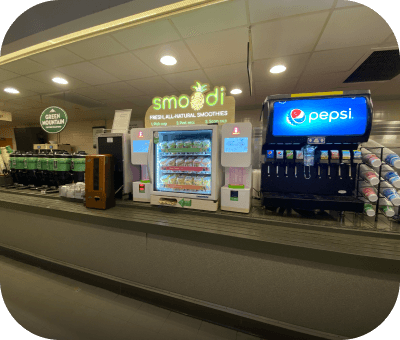
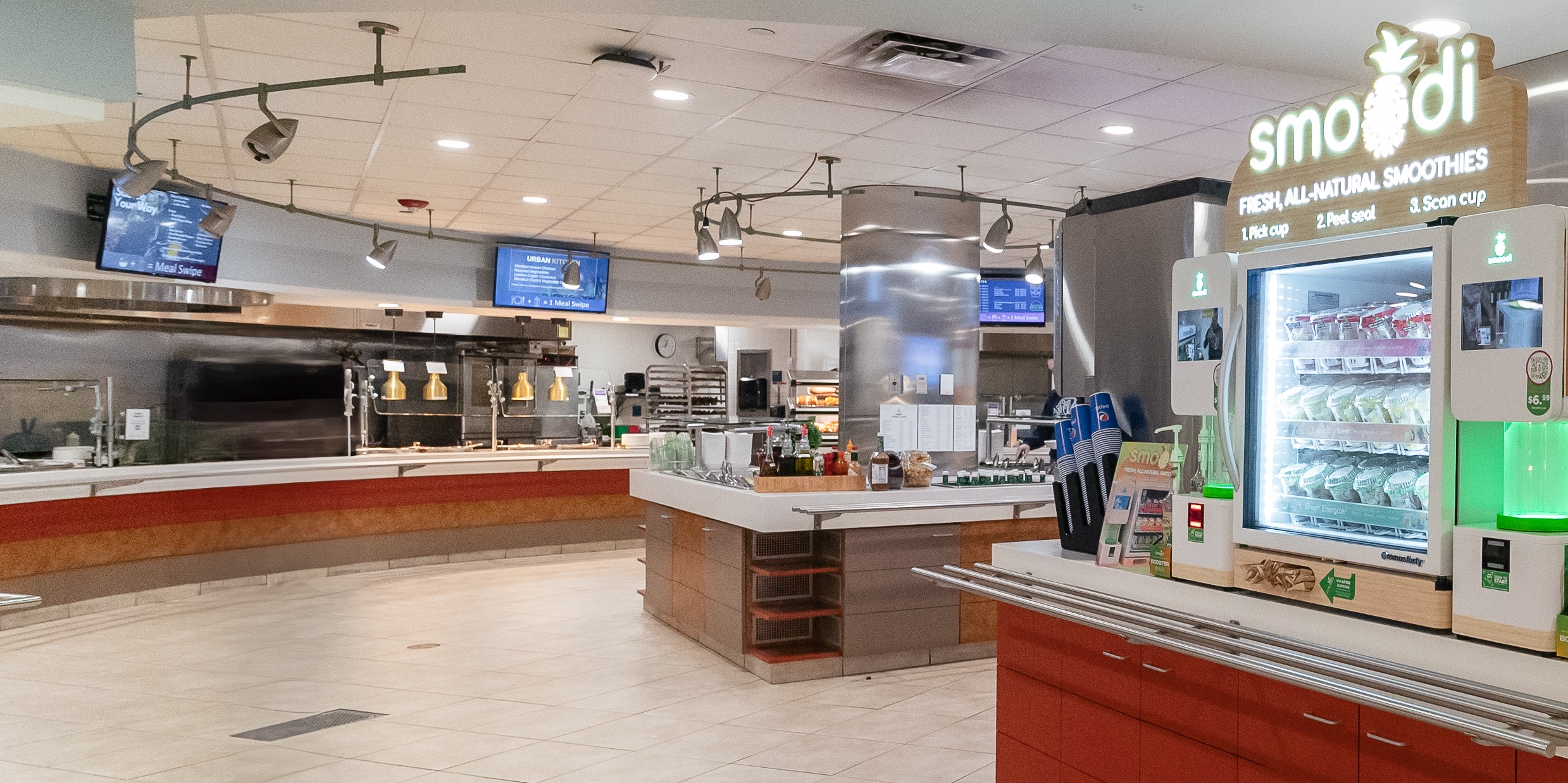
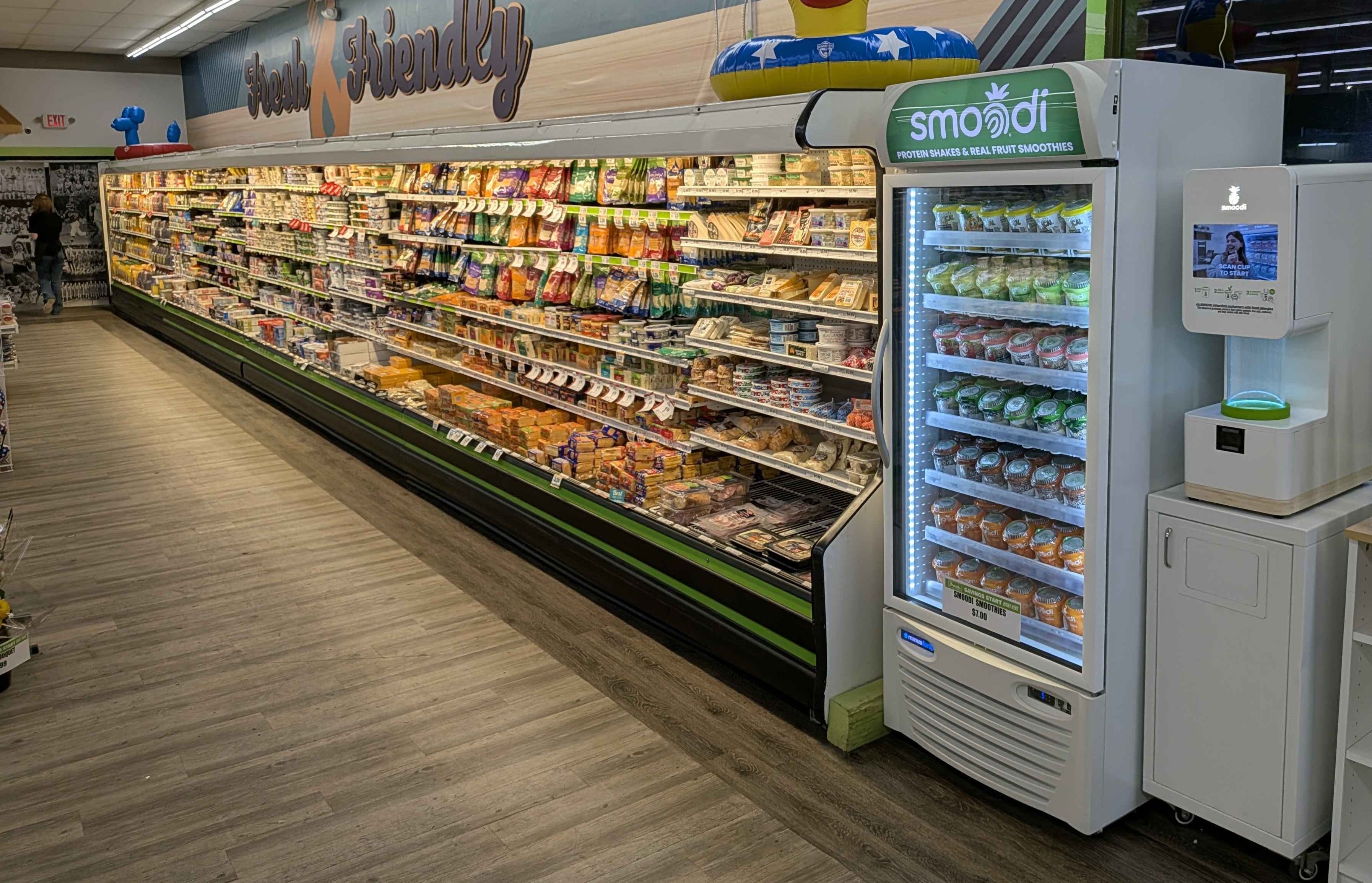
Smoodi's automated smoothie machine represents the compact equipment category at its most developed. The machine requires approximately 40 inches of floor space, operates from a standard 120 VAC outlet (NEMA 5-15P with integrated GFCI), and connects to water and drain via push-to-connect fittings. Each smoothie starts with IQF (individually quick frozen) real fruit cups blended with water only. No syrups, concentrates, or artificial ingredients. The booster bar offers protein powder, collagen, and other functional supplements. The machine blends in under 60 seconds and self-cleans between every use.
"Campus dining is continuously evolving and as operators we have a rising bar to meet the needs of our guests. We've been able to provide a quality smoothie experience while leaning into a labor-saving technology."
— Dustin Peterson, Director of Retail Operations, Rochester Institute of Technology
For high-volume locations, multiple Smoodi machines can be installed side by side in the same footprint as a single larger-format system, blending simultaneously to serve peak demand. This modular deployment model means operators can scale capacity without scaling space requirements proportionally.
Smoodi operates in more than 300 locations across the United States, with over 2 million smoothies served. The company was founded at Harvard Innovation Labs. IQF fruit cups have a shelf life of up to two years and are distributed through Dot Foods. The operational lease starts at $299 per month for a 48-month term, with a purchase option at $14,999.
Operators evaluating how compact equipment can transform their food program can explore options at getsmoodi.com/get-started.
Ready to bring Smoodi to your location?
Join hundreds of operators delivering fresh, automated smoothies with zero labor.
Get Started