What Nutrition Trends Are Driving Employee Benefits Decisions in 2026?
Sixty-eight percent of employees say workplace food and beverage options influence their job satisfaction. In 2026, nutrition is emerging as a core employee benefit alongside healthcare, PTO, and retirement contributions.
Sixty-eight percent of employees say food and beverage options at work influence their job satisfaction, according to Zippia research. Eighty-three percent of Gen Z and millennial workers consider wellness perks essential when evaluating potential employers. Employee benefits spending is now the fastest-growing HR budget category at many organizations. In 2026, nutrition has moved from a nice-to-have office perk to a core benefit that shapes recruitment, retention, and daily productivity. Companies that recognize this shift are gaining a measurable advantage in the competition for talent.
How Did Nutrition Become a Core Employee Benefit?
The evolution happened in stages. A decade ago, the standard office benefit package included healthcare, a retirement plan, and paid time off. These remain foundational, but they are now table stakes. Every employer of meaningful size offers them. Differentiation has shifted to the next tier of benefits: flexible work arrangements, mental health support, fitness subsidies, and workplace food programs.
The pandemic accelerated this shift. Employees who worked from home for months had complete control over their food environment. When they returned to offices, many were unwilling to accept vending machines and stale coffee as the default. They had experienced what it meant to eat well during the workday, and they expected their employers to support that standard.
Simultaneously, large technology companies set a new benchmark by building campuses centered around food. Free meals, artisan coffee bars, and chef-prepared snacks became recruiting tools. The message was clear: top talent expected top-tier food. The challenge for most employers is that they cannot replicate that model. They do not have the scale, the budget, or the infrastructure for a campus cafeteria. What they need is a way to offer fresh, healthy food as a visible employee benefit at a cost that mid-market budgets can absorb.
What Nutrition Trends Are Shaping Benefits in 2026?
Trend 1: Food as a Productivity Tool
The conversation about workplace food has shifted from comfort to performance. Employers are increasingly evaluating food programs not by employee satisfaction alone but by their impact on cognitive function, energy levels, and sustained productivity. Research showing that employees with unhealthy diets are 66 percent more likely to report lower productivity has reframed workplace nutrition as a business investment rather than an amenity cost.
Trend 2: Zero Added Sugar as the New Standard
Consumer awareness of added sugar's health impact has reached a tipping point. The 2025 to 2030 Dietary Guidelines explicitly call for reducing added sugar intake. Eighteen percent of American adults using GLP-1 medications are actively seeking zero-added-sugar options. Workplace food programs that still rely on sugary snacks, flavored coffee drinks, and sweetened beverages are increasingly out of step with what employees want and what health science recommends.
Trend 3: Personalization and Functional Nutrition
Employees expect food options they can customize to their individual needs. One person wants extra protein for post-workout recovery. Another wants collagen for skin and joint health. A third wants a light, vitamin-rich option for an afternoon energy boost. One-size-fits-all catering does not satisfy these preferences. The most valued workplace food programs in 2026 offer some degree of personalization that lets employees tailor their nutrition to their goals.
Trend 4: All-Day Availability
The traditional 9-to-5 workday is no longer the norm for many organizations. Employees arrive early, stay late, work flexible hours, and take breaks at non-standard times. A workplace nutrition program that operates only during a catered lunch window misses the employees who need it most: the early arrivals who skipped breakfast, the afternoon workers fighting the 3 PM energy dip, and the late stayers who need fuel to finish their projects.
Why Do Mid-Market Employers Struggle with Food Benefits?
Companies with 50 to 500 employees represent the most underserved segment in workplace nutrition. They are large enough that employees expect professional amenities but not large enough to justify a full-service cafeteria. The options available to mid-market employers each have significant drawbacks.
- Snack walls and fruit baskets are inexpensive but uninspiring. They signal minimal investment and often default to processed, packaged items within weeks.
- Catering is expensive, creates food waste, requires advance ordering, and serves everyone the same menu regardless of individual preferences.
- Meal delivery programs are logistically complex, generate packaging waste, and cost $10 to $15 per employee per meal.
- Staffed micro-kitchens require hiring at least one food service employee, managing food safety compliance, and maintaining kitchen equipment.
- Vending machines offer convenience but are associated with processed, unhealthy options that contradict a wellness-focused benefits strategy.
The result is that most mid-market employers settle for a compromise that satisfies no one fully. They spend money on food programs that do not meaningfully improve employee health, satisfaction, or productivity. The gap between what employees want and what mid-market employers can practically deliver is where self-service nutrition creates the most value.
How Smoodi Delivers Nutrition as an Employee Benefit
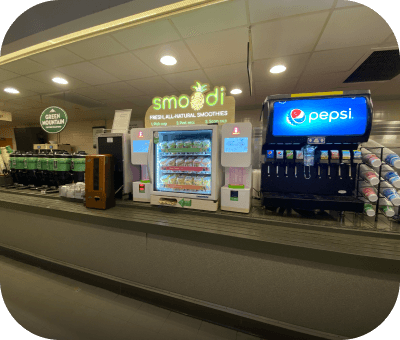
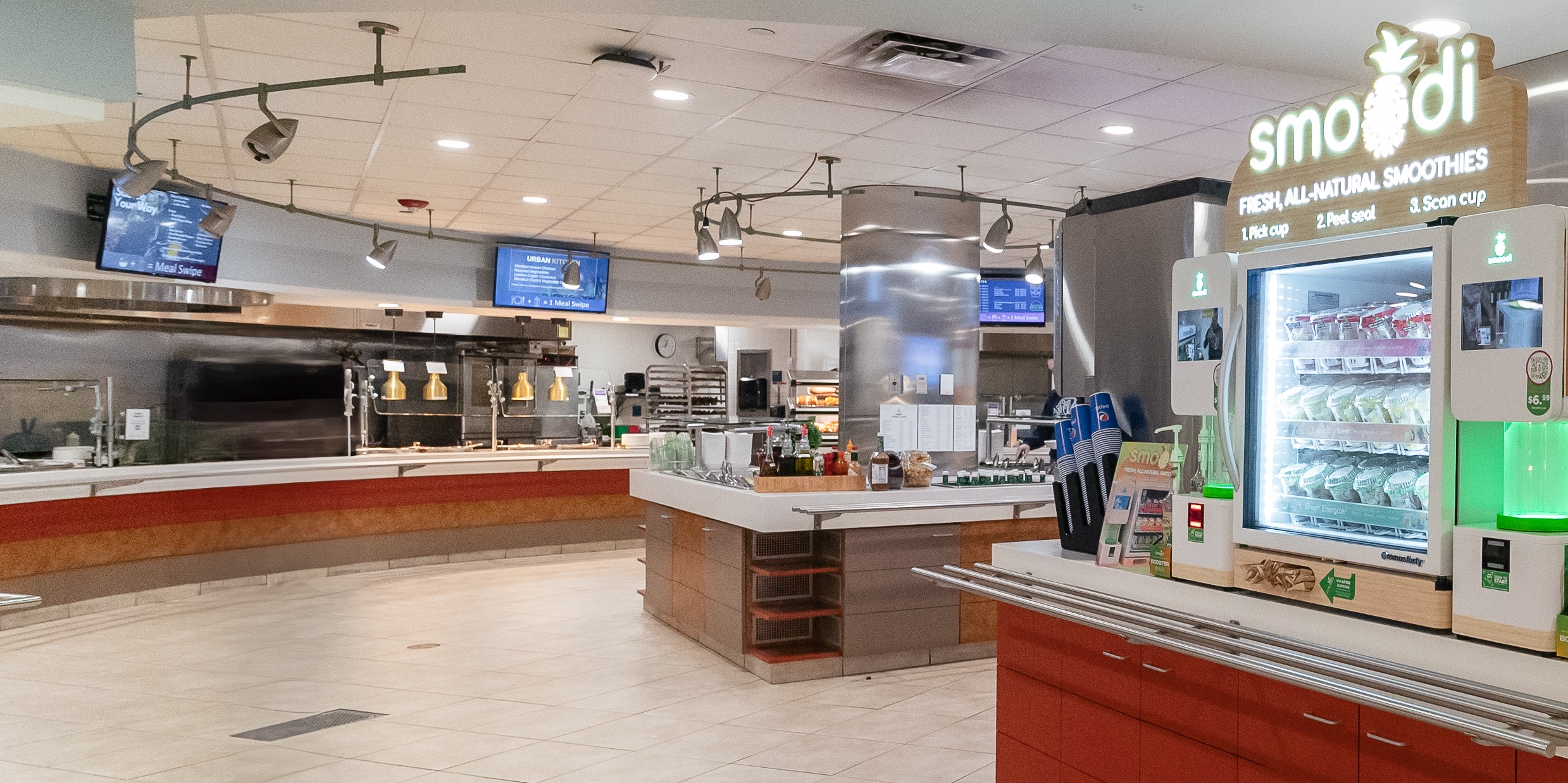
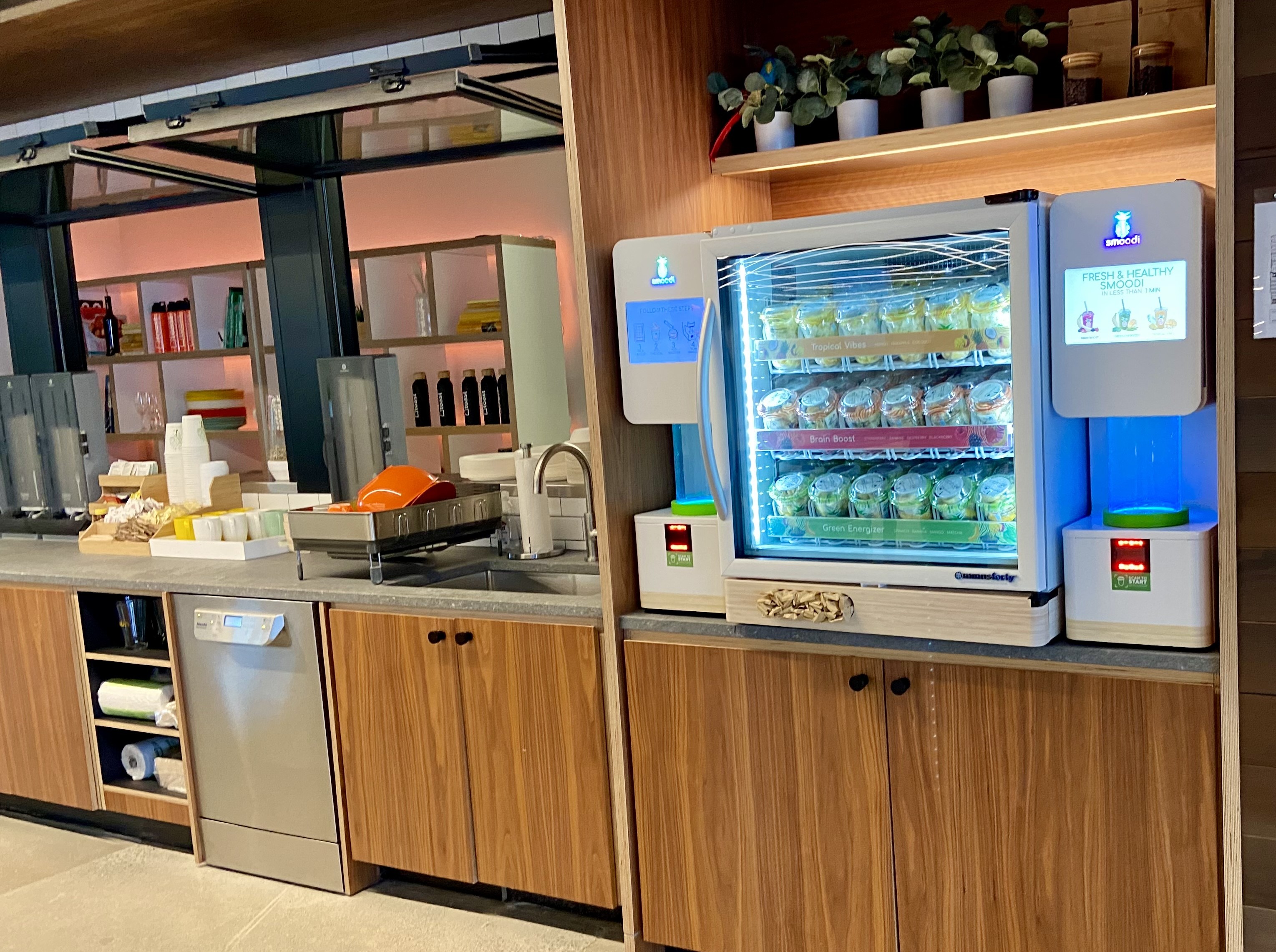
Smoodi's automated smoothie machine turns fresh fruit nutrition into an employee benefit that is visible, valued, and operationally effortless. Each smoothie is blended from IQF (individually quick frozen) real fruit cups with water only. Zero syrups, zero concentrates, zero artificial ingredients, zero added sugar. The booster bar offers protein powder, collagen, and other functional supplements, giving employees the personalization they expect from a modern wellness benefit.
"As an office leader, I'm always looking for ways to support my team's health and productivity. smoodi's variety of healthy options are a game-changer."
— Karen Hood, Manager, ZS
The operational lease starts at $299 per month for a 48-month term. For perspective, most companies with 50 or more employees spend considerably more than that on monthly snack budgets for a single floor. Smoodi replaces a passive snack expense with an active wellness benefit that employees notice, use, and talk about. The machine operates all day without dedicated staff, self-cleans between every use, and fits in approximately 40 inches of floor space.
IQF fruit cups have a shelf life of up to two years and are distributed through Dot Foods. The machine blends a fresh smoothie in under 60 seconds. For companies that prefer ownership, the purchase option is $14,999. Multiple machines can be installed side by side in larger offices to handle peak morning and afternoon demand.
Smoodi operates in more than 300 locations across the United States, with over 2 million smoothies served. The company was founded at Harvard Innovation Labs. HR leaders, office managers, and workplace experience teams exploring nutrition as an employee benefit can learn more at getsmoodi.com/get-started.
Ready to bring Smoodi to your location?
Join hundreds of operators delivering fresh, automated smoothies with zero labor.
Get Started