How Are Employers Using Food Perks for Return to Office?
Workplace meal programs are growing 26 percent year over year. As employers push return-to-office mandates, food has emerged as the most effective amenity for making the commute worthwhile, and the data shows measurable impacts on productivity, retention, and real estate value.
The return-to-office movement has created a new competitive dynamic in the workplace: employers must demonstrate that in-office days deliver something employees cannot get at home. Among every amenity available, food consistently ranks as the most impactful. Workplace meal programs are growing 26 percent year over year according to ezCater, and companies across industries are increasing spending on food as a strategic tool for getting employees back to the office and keeping them engaged once they arrive.
Why Is Food the Most Effective Return-to-Office Amenity?
Employees evaluating whether to commute to an office make a practical calculation: does the in-office experience offer enough value to justify the time, cost, and inconvenience of the commute? Ping-pong tables and open floor plans no longer move the needle. Food, however, addresses a fundamental daily need. An employee who knows that fresh, healthy food is available at the office has one fewer errand to run, one fewer meal to plan, and one more reason to come in.
The data supports this. On-site food ranks among the top five amenities for employee engagement across multiple industry surveys. Employees who drive 20 minutes to convenience stores during the workday lose 40 minutes of productive time per trip. When healthy food is available on-site, that productivity loss disappears entirely.
For real estate operators, the impact is equally measurable. JLL research shows that buildings with food halls and robust food amenity programs add up to 1.4 percent in net operating income compared to same-submarket peers without food amenities. Food is not just an employee perk. It is a property value driver that affects lease renewal decisions and tenant satisfaction scores.
How Has Hybrid Work Changed the Food Amenity Model?
The shift to hybrid work has fundamentally changed how employers think about workplace food programs. When employees are in the office five days a week, a traditional cafeteria with fixed hours and staffed serving lines makes operational sense. When employees come in three days a week, that model breaks down. Fixed labor costs remain constant regardless of daily headcount, and food waste increases on low-attendance days.
Hybrid work also changes which dayparts matter most. The traditional cafeteria focuses on the lunch window, typically 11:30 AM to 1:30 PM. But hybrid employees who commute to the office want value throughout the day: a morning smoothie before the first meeting, a mid-afternoon pick-me-up during the energy slump, and healthy grab-and-go options for the commute home. Programming that covers only the lunch hour misses the dayparts where food amenities can have the greatest impact on the employee experience.
This shift favors food solutions that operate without dedicated staff, scale up and down with daily attendance, and serve multiple dayparts without increasing labor costs. The most effective hybrid workplace food programs combine staffed options during peak lunch with automated, self-service stations that cover the rest of the day.
What Are Employers Spending on Workplace Food?
Employer spending on workplace food is accelerating. The 26 percent year-over-year growth in workplace meal programs reflects a strategic decision, not a temporary trend. Companies that once viewed food as a discretionary expense now treat it as a retention and productivity investment with measurable returns.
The economics are straightforward. Replacing an employee costs 50 to 200 percent of their annual salary, depending on the role. An investment of $300 to $500 per month in a food amenity that contributes to even a small improvement in retention pays for itself many times over. When combined with the productivity benefits of keeping employees on-site during the workday (rather than driving to restaurants or convenience stores), the business case is even stronger.
Companies leading in return-to-office food strategy share several common approaches.
- Offering variety beyond the traditional cafeteria model, including specialty beverages, fresh smoothies, and functional nutrition options
- Covering multiple dayparts rather than concentrating food amenities exclusively around lunch
- Choosing formats that require zero or minimal additional staff, given the difficulty of hiring foodservice workers in 2026
- Tracking utilization data to demonstrate ROI to leadership and justify continued investment
- Selecting clean-label, health-forward options that align with employee wellness expectations
What Food Formats Work Best for Hybrid Offices?
The most successful hybrid workplace food programs use a layered approach. Staffed cafeterias or catering services handle the high-volume lunch daypart on peak attendance days. Self-service, automated stations cover the rest: morning, mid-afternoon, and low-attendance days when a full cafeteria cannot justify its labor costs.
Self-service stations must meet specific criteria to work in a corporate environment. They must produce a high-quality, consistent product every time. They must require no dedicated staff for operation, cleaning, or restocking during the day. They must fit within existing office infrastructure without major renovation. And they must offer the kind of fresh, health-forward options that today's employees expect from a premium workplace experience.
The format must also be visually and experientially appealing. Employees perceive a difference between a vending machine dispensing packaged snacks and a fresh-preparation station producing real food. The perceived quality of the food amenity directly influences how employees feel about their employer's investment in their experience.
How Does Smoodi Fit Into a Return-to-Office Food Strategy?
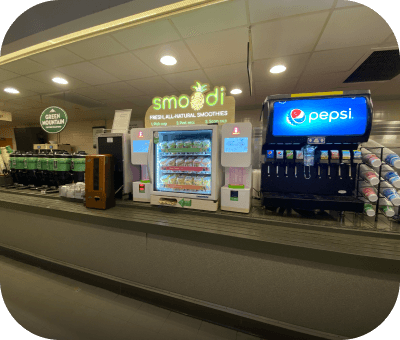
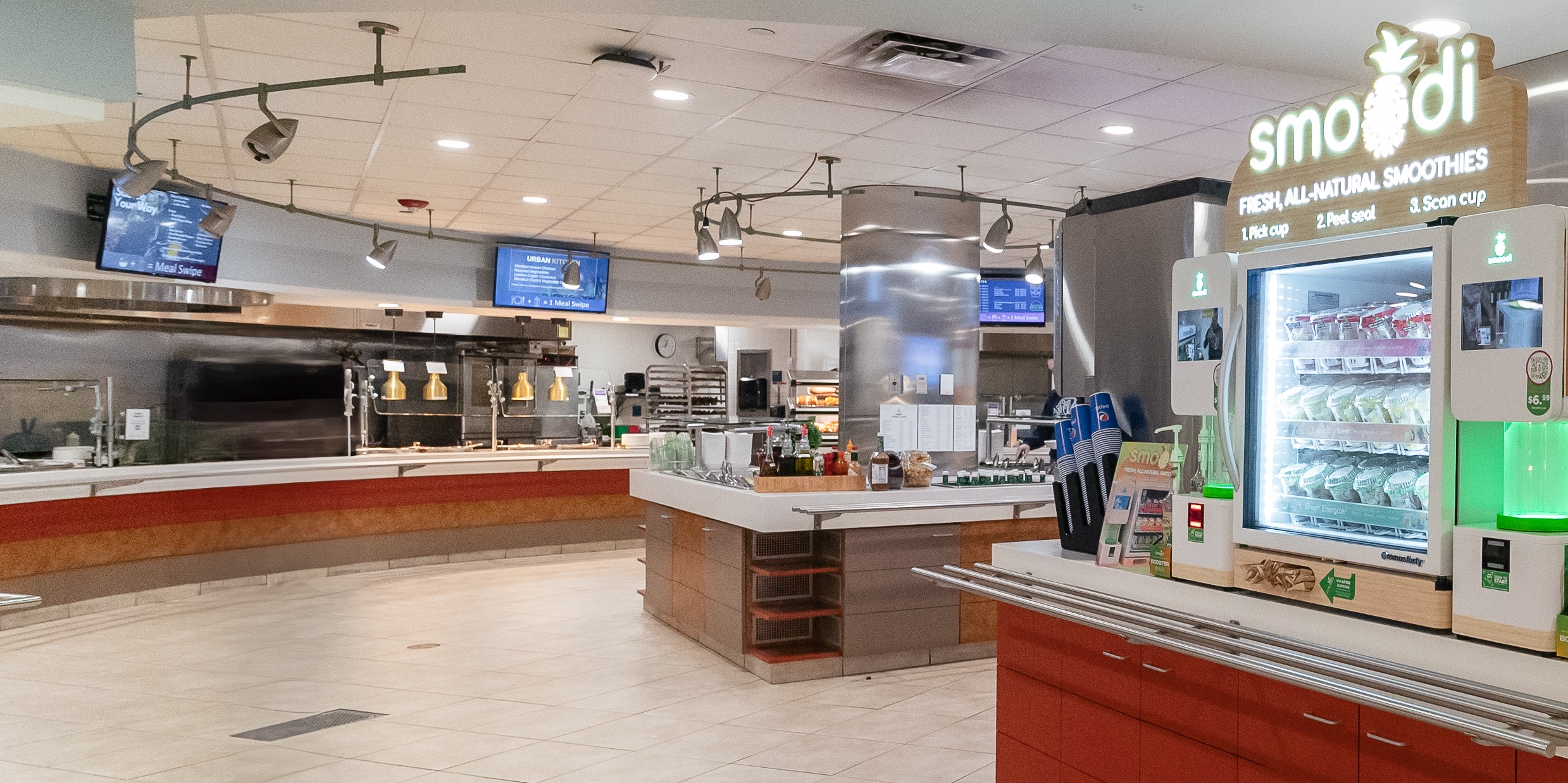
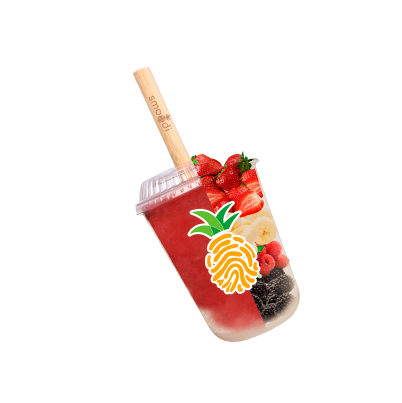
Smoodi's automated smoothie machine delivers the kind of premium, health-forward food amenity that drives return-to-office engagement. Each smoothie starts with IQF (individually quick frozen) real fruit cups blended with water only. No syrups, concentrates, or artificial ingredients. The booster bar offers protein powder, collagen, and other functional supplements. The machine blends a fresh smoothie in under 60 seconds and self-cleans between every use. No staff required at any point.
"As an office leader, I'm always looking for ways to support my team's health and productivity. smoodi's variety of healthy options are a game-changer."
— Karen Hood, Manager, ZS
The compact design requires approximately 40 inches of floor space, making it feasible to place the machine in breakrooms, lobbies, or common areas without renovation. The self-service format covers every daypart: early morning, mid-morning, lunch, and afternoon. Because the machine operates without staff, it provides the same experience whether the office has 20 people or 200 people on any given day.
Smoodi operates in more than 300 locations across the United States, with over 2 million smoothies served. The company was founded at Harvard Innovation Labs. IQF fruit cups have a shelf life of up to two years and are distributed through Dot Foods. The operational lease starts at $299 per month for a 48-month term, with a purchase option at $14,999. For larger offices, multiple machines can be installed side by side, blending simultaneously during high-traffic periods.
Employers looking to make food the reason employees want to come to the office can explore options at getsmoodi.com/get-started.
Ready to bring Smoodi to your location?
Join hundreds of operators delivering fresh, automated smoothies with zero labor.
Get Started