What Healthy Food Options Work for Entertainment Centers?
Family entertainment centers generate 20 to 40 percent of revenue from food and beverage. Parents increasingly demand healthy options, but FECs lack kitchen infrastructure. Automated smoothie stations bridge this gap.
Family entertainment centers (FECs) occupy a unique position in the foodservice landscape. Trampoline parks, bowling alleys, go-kart venues, indoor play centers, laser tag facilities, and arcade complexes generate a significant share of their total revenue from food and beverage sales. Industry data shows that F&B accounts for 20 to 40 percent of total revenue at most FECs. The food program is not a side business. It is a core profit driver.
Yet FEC food programs face a specific tension that other foodservice verticals do not. Parents are increasingly demanding healthy options for their children, while FECs have traditionally built their menus around pizza, nachos, chicken tenders, and soda. Adding fresh, healthy alternatives is operationally difficult because these venues typically have minimal kitchen infrastructure and employ entertainment staff, not food prep workers. The result is a growing gap between what families want and what FECs can deliver.
Why Are Parents Pushing for Healthy Options at FECs?
The shift in parent expectations is well documented. Families who pay premium admission prices at FECs are the same families choosing organic groceries, reading nutrition labels, and limiting sugary drinks at home. When they spend a Saturday afternoon at a trampoline park or bowling alley, they expect food options that do not completely contradict their dietary values.
This does not mean parents expect a full health food menu at an entertainment venue. They understand the context. What they want is at least one credible healthy option alongside the pizza and pretzels. A real-fruit smoothie with no added sugar fits this expectation precisely. It gives parents a product they feel good about buying for their child, and it gives the child a product they actually enjoy consuming.
What Makes Traditional Healthy Food Hard for FECs?
Adding fresh food to an FEC menu is not as simple as stocking a salad case. Most FECs operate with compact kitchen spaces designed for simple prep: warming pizza, dispensing soft drinks, microwaving snack items. The staff are typically young, part-time entertainment workers, not trained food handlers. Introducing fresh produce means additional food safety training, new supplier relationships, daily prep labor, and increased waste from perishable items that do not sell before expiration.
The economics compound the challenge. FECs experience extreme demand variability. A rainy Saturday might bring 500 guests. A sunny weekday might bring 50. Staffing a smoothie bar for both scenarios means either paying idle labor on slow days or disappointing customers with long waits on busy days. Fresh fruit purchased for a packed weekend becomes waste if attendance underperforms expectations.
How Does an Automated Smoothie Station Solve This?
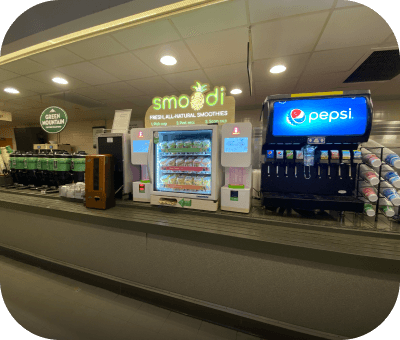
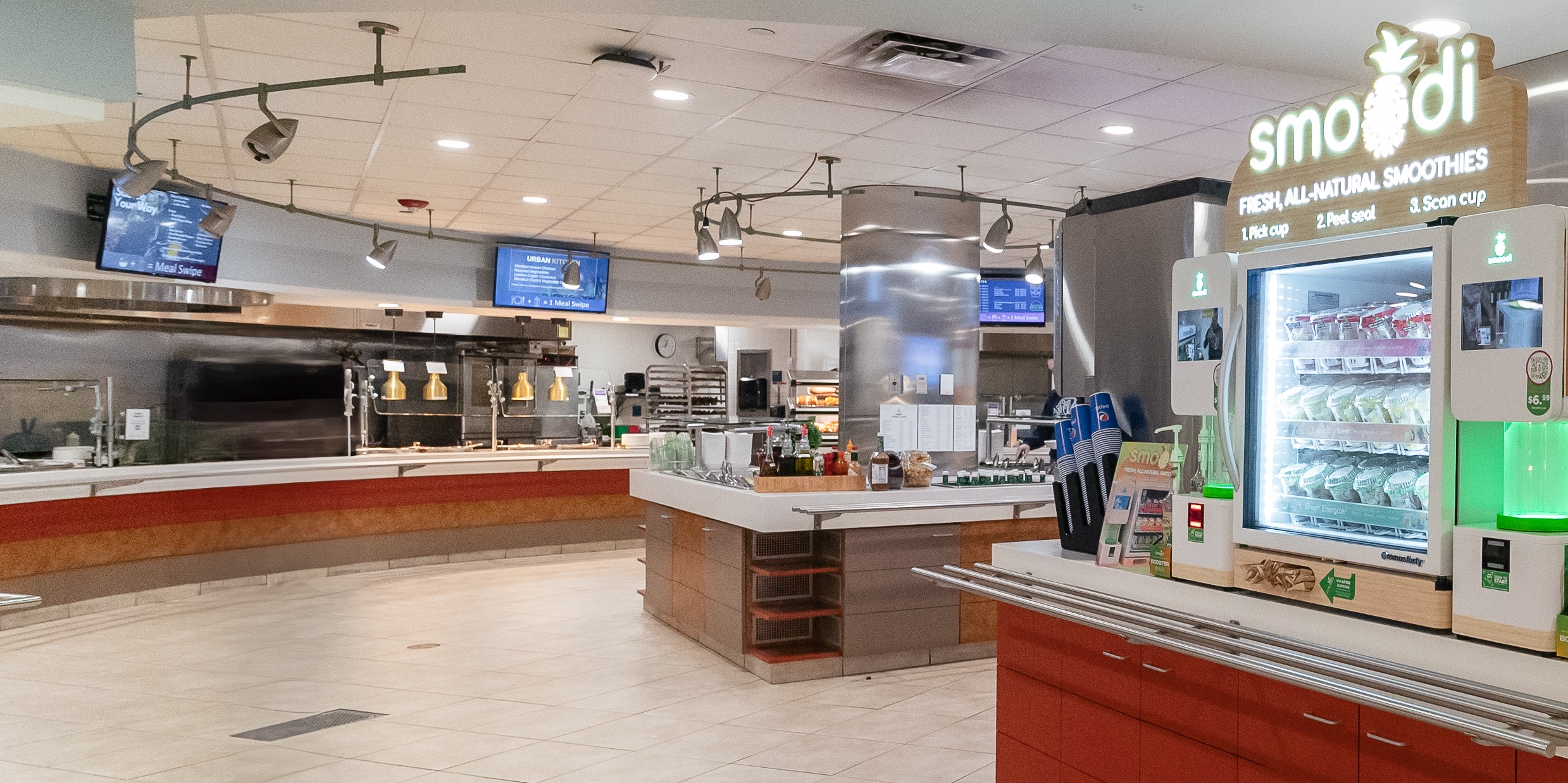
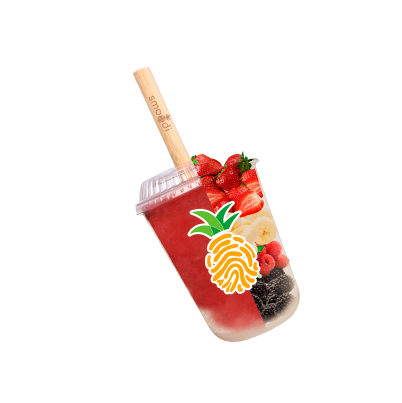
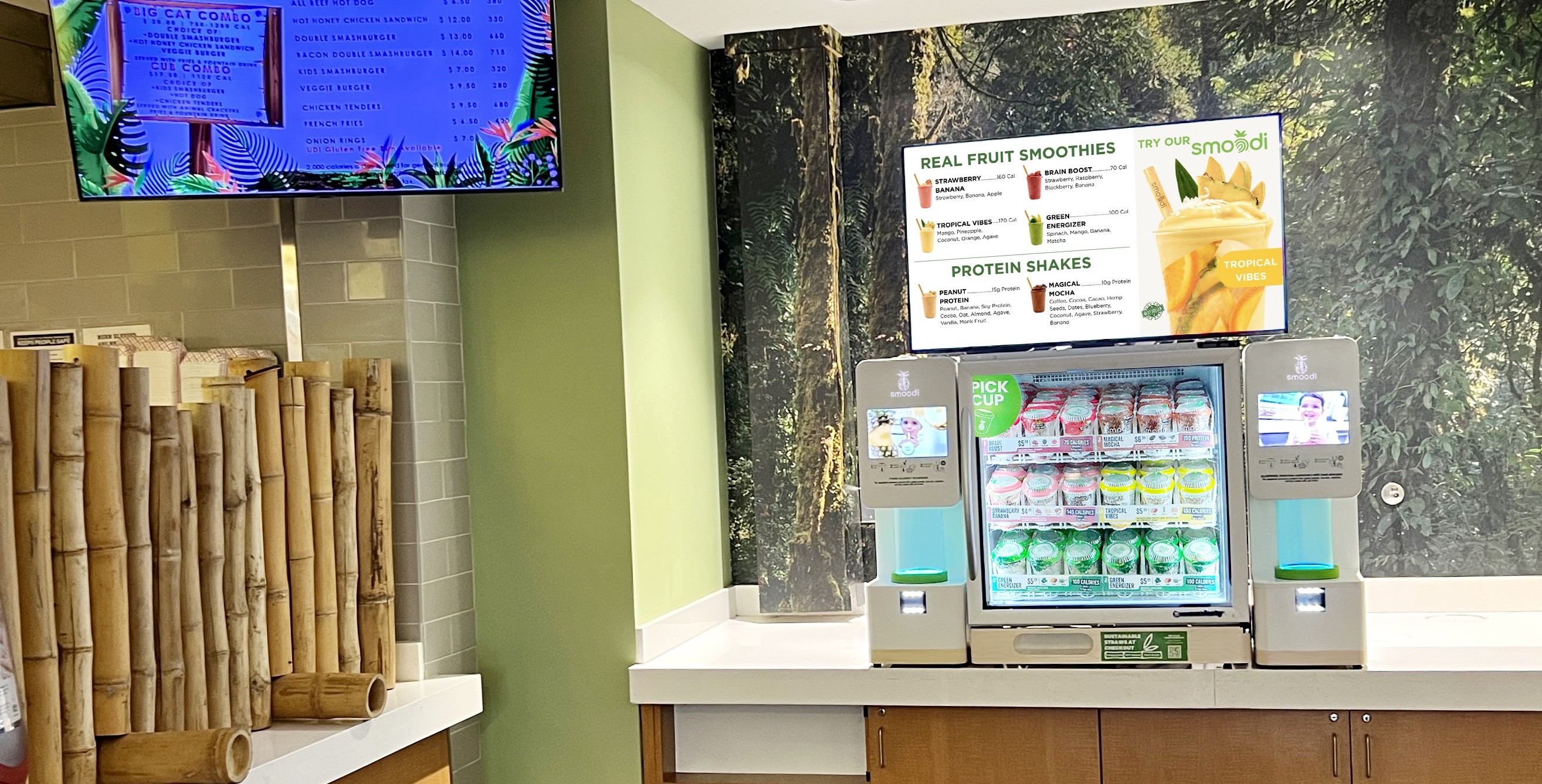
An automated smoothie station eliminates every operational barrier that makes healthy food difficult at FECs. Smoodi's machine blends IQF (individually quick frozen) fruit cups with water only, producing a whole-fruit smoothie in under 60 seconds. The machine self-cleans between every use. No food prep training is required. No kitchen buildout is needed. No dedicated staff member stands behind a counter.
The IQF fruit cups have a shelf life of up to two years, which eliminates the spoilage problem entirely. An FEC operator stocks cups based on typical weekly volume and adjusts orders as demand patterns become clear. There is no risk of throwing away $200 worth of fresh berries because Tuesday was slower than expected. The cups are distributed through Dot Foods, simplifying procurement through a single distributor.
The machine occupies approximately 40 inches of floor space. It fits next to the concession counter, in the lobby, near the party rooms, or adjacent to the redemption area. Installation requires a standard 120 VAC outlet, a water inlet, a sanitizer inlet, and a drain connection. For most FECs, installation takes a single day.
What Revenue Can FEC Operators Expect?
Smoodi's operational lease starts at $299 per month for a 48-month term, with shorter terms at $349 (36 months), $399 (24 months), and $499 (12 months). Operators pay the lease plus ingredient costs and keep the margin on every smoothie sold. Most FEC operators price smoothies between $6.00 and $8.00, competitive with specialty beverages at entertainment venues.
The booster bar (protein powder, collagen, and functional supplements) provides an upsell path, particularly for teen athletes and health-conscious parents. At a busy FEC running 15 to 25 smoothies per day at an average price of $7.00, monthly revenue ranges from $3,150 to $5,250. Against a total monthly cost of approximately $1,200 to $2,000 (lease plus ingredients), the margins are strong.
For operators who prefer to own the equipment outright, purchase pricing starts at $14,999.
Why Do Kids Actually Want Smoothies?
One of the practical advantages of a smoothie station in an entertainment environment is that the product appeals to kids on its own terms. Children do not need to be convinced to drink a fruit smoothie the way they might need to be convinced to eat a salad. The flavors are naturally sweet from real fruit. The visual experience of watching the machine blend a colorful smoothie creates excitement. And the self-service format gives kids a sense of independence, similar to choosing their own prizes at the redemption counter.
This dual appeal, healthy enough for parents and fun enough for kids, is rare in the FEC food landscape. It is the reason automated smoothie stations generate consistent demand in entertainment environments without requiring marketing or promotional support. The product sells itself to both the buyer (the parent) and the consumer (the child).
Where Should FECs Place Smoothie Stations?
- Near the concession counter, where families are already making food and beverage decisions
- In the lobby or entrance area, capturing guests on arrival and departure
- Adjacent to party rooms, where birthday groups look for food and drink options
- Near seating or spectator areas, where parents wait while children play
- By the prize redemption counter, where kids transition from active play to socializing
How Does This Fit the FEC Business Model?
FEC operators evaluate every square foot of their facility based on revenue contribution. A smoothie station in 40 inches of floor space generates revenue per square foot that competes with arcade games and attractions. It requires no attendant, no maintenance contract beyond the included lease service, and no food handling permits beyond what the venue already holds for its concession operation.
Smoodi was founded at Harvard Innovation Labs and now operates in more than 300 locations across the United States, with over 2 million smoothies served. The machine's proven track record across high-traffic venues (sports complexes, universities, hospitals, convenience stores) demonstrates reliable performance under the kind of variable, peak-driven demand patterns that FECs experience daily.
To explore adding a healthy, high-margin beverage option to your entertainment venue, visit getsmoodi.com/get-started. To calculate projected returns, visit getsmoodi.com/roi.
Ready to bring Smoodi to your location?
Join hundreds of operators delivering fresh, automated smoothies with zero labor.
Get Started