Why Is Fiber the Next Protein for Foodservice Operators?
Datassential positions fiber to surpass protein as the top health trend in 2026. With 54% of consumers seeking high-fiber options and 150 million social media views for fibermaxxing, operators need a plan.
Fiber is having its moment. Datassential's 2026 trends report positions dietary fiber to surpass protein as the dominant health and wellness trend in the food and beverage industry. The numbers support the shift: 54% of consumers now actively seek high-fiber foods and beverages, and among Gen Z consumers, that figure rises to 60%. The hashtag fibermaxxing has accumulated over 150 million views across social media platforms, turning a once-overlooked nutrient into a cultural movement.
Industry leaders are paying attention. PepsiCo's CEO has stated publicly that fiber will be the next protein. McDonald's CEO has called fiber a trend that is going to be big. The dietary fiber market reached an estimated $15 billion in 2026 and is projected to grow to $40 billion by 2036, representing a compound annual growth rate of 10.3%. For foodservice operators, the question is no longer whether fiber matters. It is how to capture this demand before competitors do.
What Is Driving the Fiber Trend?
The consumer interest in fiber is rooted in growing awareness of gut health and its connection to overall wellness. Research published over the past several years has established clear links between dietary fiber intake, gut microbiome diversity, and outcomes ranging from immune function to mental health. Consumers are reading this research, discussing it online, and actively changing their purchasing behavior as a result.
Survey data shows that 52% of consumers say gut health food consumption is important to them. This is not a niche interest confined to health enthusiasts. It spans demographics, income levels, and dining occasions. When more than half of the population prioritizes a specific nutritional attribute, it becomes a mainstream expectation that foodservice operators must address.
The fibermaxxing movement on social media has accelerated this trend by making fiber intake visible and aspirational. Consumers share their daily fiber totals, recommend high-fiber foods, and celebrate hitting fiber goals in ways that mirror the protein-tracking culture that has dominated fitness communities for the past decade. This social proof creates demand that extends well beyond the health food aisle and into every foodservice setting where consumers make purchasing decisions.
Why Whole Fruit Is the Natural Fiber Solution
When consumers think of fiber-rich beverages, they often picture prebiotic sodas or fiber-supplemented drinks that add isolated fiber compounds to flavored water. These products have found commercial success, but they represent only one approach to delivering dietary fiber. Whole fruit smoothies offer a fundamentally different value proposition: natural fiber from intact plant cell walls, delivered alongside vitamins, minerals, antioxidants, and phytonutrients.
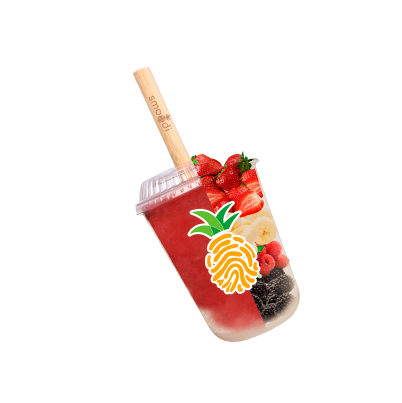
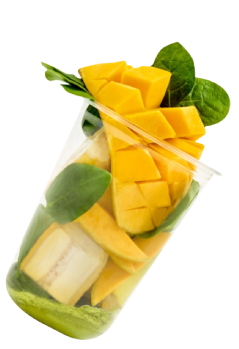
Berries, mangoes, bananas, and other whole fruits contain between 3 and 6 grams of dietary fiber per serving. This fiber comes from the fruit itself, not from an added supplement. The distinction matters to consumers who read ingredient labels and prefer foods with recognizable, whole-food ingredients over those with added functional compounds.
The individually quick frozen (IQF) process used by Smoodi preserves the cellular structure of the fruit, including the fiber-containing cell walls. Unlike juicing, which strips fiber during extraction, or concentrates, which lose fiber during processing, IQF whole fruit retains its complete nutritional profile. When blended into a smoothie with water only, the result is a beverage that delivers natural fiber alongside the full spectrum of nutrients present in the original fruit.
The Foodservice Fiber Gap
Despite strong consumer demand, most foodservice operators have no dedicated fiber-forward beverage option on their menus. The fiber trend has been captured primarily by packaged consumer brands in retail channels: prebiotic sodas, fiber-enhanced waters, and supplemented snack bars. Foodservice environments, from university dining halls to corporate cafeterias to hospital cafeterias, have been slow to respond.
This gap exists for practical reasons. Adding fiber-rich beverages through traditional means, such as a staffed juice or smoothie bar, requires labor, perishable ingredient management, recipe development, and staff training. For operators already managing complex menus with tight margins and limited staff, launching a new beverage category is a significant undertaking.
The operators who close this gap first will capture demand from the 54% of consumers actively seeking high-fiber options. In foodservice environments where consumers have limited choices, a single well-positioned fiber-forward beverage option can become a high-frequency purchase. University students, office workers, and hospital visitors who want fiber-rich options will return repeatedly to a reliable source.
How Smoodi Delivers Fiber Without Complexity
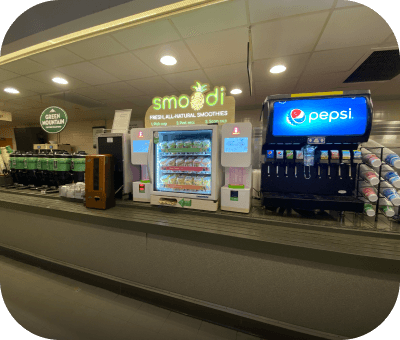
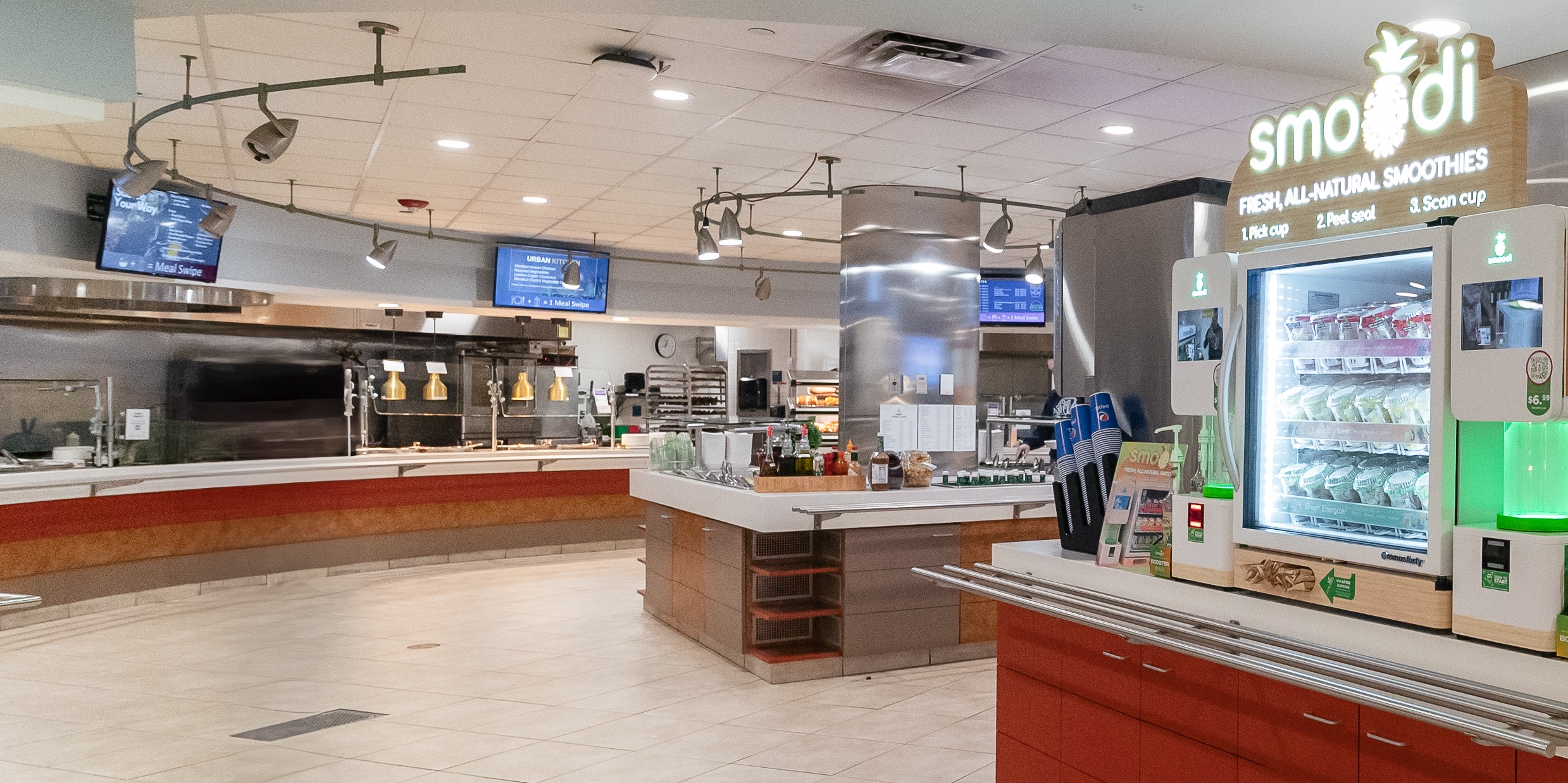
Smoodi's automated smoothie machines provide operators with a way to offer fiber-rich, whole-fruit beverages without the operational burden of a traditional smoothie program. Each sealed IQF fruit cup contains pre-portioned real fruit that delivers 3 to 6 grams of natural dietary fiber per smoothie. No artificial fiber is added. The fiber comes entirely from the whole fruit itself.
The self-service format means no staff training is required and no recipe development is needed. Consumers select their smoothie, the machine blends it in under 60 seconds, and the machine self-cleans between every use. For operators, this eliminates the labor, waste, and complexity barriers that have prevented them from adding fiber-forward beverages to their offerings.
Smoodi's booster bar extends the nutritional customization further. Operators can offer supplemental fiber sources alongside protein powder, collagen, and other functional supplements. This allows health-conscious consumers to build their ideal nutritional profile on top of an already fiber-rich whole-fruit base. The booster bar also increases average transaction value by providing premium add-on options.
"smoodi is hands down the number one perk at our headquarters. Fresh, healthy, and zero effort on our end."
— Katherine Berman, Workplace Experience Manager, Toast
Positioning Fiber in Your Beverage Program
Operators looking to capitalize on the fiber trend should consider how they communicate the fiber content of their offerings. Consumers seeking fiber-rich options respond to clear, specific messaging. Highlighting the grams of fiber per serving, the whole-fruit source of that fiber, and the absence of artificial additives all resonate with the fibermaxxing audience.
Signage and menu descriptions should emphasize that the fiber in a Smoodi smoothie comes from real, whole fruit rather than added supplements. This distinction aligns with the clean-label expectations of the same consumers who are driving the fiber trend. The IQF process, which preserves the complete fruit including fiber-containing cell walls, is a meaningful differentiator in a market where many fiber-enhanced beverages rely on isolated compounds.
- Feature fiber content prominently in menu descriptions and point-of-sale signage
- Highlight that fiber comes from whole fruit, not from added supplements or isolated compounds
- Position smoothies alongside other fiber-rich food options to create a fiber-forward menu section
- Promote the gut health benefits of natural fruit fiber to connect with consumer awareness of the microbiome
- Use seasonal messaging to connect fiber intake with specific health goals throughout the year
The Business Case for Fiber-Forward Beverages
The financial opportunity in fiber-forward beverages extends beyond capturing a trending consumer preference. The dietary fiber market's projected growth from $15 billion to $40 billion by 2036 represents a structural shift in consumer spending patterns. Operators who establish fiber-rich beverage programs now position themselves to benefit from a decade of sustained growth in this category.
Smoodi's cost structure makes entering this market financially accessible. Operational leases start at $299 per month for a 48-month term, with shorter terms available at $349, $399, and $499 per month for 36, 24, and 12 months respectively. Purchase pricing starts at $14,999. The zero-labor, zero-waste model means the ongoing cost per serving is limited to the fruit cups themselves, distributed through Dot Foods.
With over 300 locations across the US and more than 2 million smoothies served, Smoodi has proven that consumers respond to real-fruit, whole-ingredient beverages. Founded at the Harvard Innovation Labs, Smoodi was designed to make genuinely healthy beverages accessible at scale. As fiber becomes the next protein in consumer health priorities, Smoodi gives operators a practical path to meeting that demand. Visit getsmoodi.com/get-started for more information.
Ready to bring Smoodi to your location?
Join hundreds of operators delivering fresh, automated smoothies with zero labor.
Get Started