What Is the Foodservice Equipment Market Outlook?
The global foodservice equipment market is projected to reach $76.9 billion by 2036, with hospital foodservice equipment alone growing from $4.8 billion to $8.6 billion. Automation, self-service, and labor-saving technology are the investment categories growing fastest.
The foodservice equipment market is entering a period of sustained growth driven by structural changes in how food is prepared, served, and consumed across every commercial setting. Research Nester projects the global foodservice equipment market will reach $76.9 billion by 2036. Hospital foodservice equipment alone is projected to grow from $4.8 billion in 2026 to $8.6 billion by 2035. Global food automation has reached $28 billion as of 2026. For operators evaluating capital allocation, understanding where this growth is concentrated reveals which equipment categories will deliver the strongest returns over the next decade.
Where Is Equipment Investment Growing Fastest?
The growth is not distributed evenly across all equipment categories. Three segments are capturing a disproportionate share of new investment: automation and labor-saving equipment, self-service and unattended formats, and connected (smart) systems with predictive maintenance capabilities.
Automation and labor-saving equipment leads the growth trajectory because it addresses the industry's most pressing constraint. With 46 percent of operators expecting to increase their technology budgets in 2026, and labor recruitment now the number one operator challenge, equipment that reduces or eliminates staffing requirements commands premium demand. Operators are no longer evaluating automation as a future consideration. They are purchasing it as an immediate operational necessity.
Self-service formats are growing because they align with consumer expectations. The generation that grew up with self-checkout, mobile ordering, and contactless payment expects the same convenience in foodservice. Self-service stations that allow customers to serve themselves without waiting for an attendant meet this expectation while simultaneously reducing labor requirements.
Connected equipment with IoT capabilities and predictive maintenance is growing because it reduces downtime and extends equipment life. Operators who can monitor equipment health remotely and address issues before they cause failures avoid the revenue loss and customer dissatisfaction that come with unexpected outages.
What Is Driving the Healthcare Equipment Surge?
The healthcare foodservice equipment segment deserves particular attention because of its projected growth rate. The expansion from $4.8 billion to $8.6 billion represents a near-doubling over less than a decade. Several factors are driving this acceleration.
First, CMS nutrition mandates are requiring hospitals to invest in food quality improvements. The Make Hospital Food Healthier Pledge and expanded Malnutrition Care Score create compliance obligations that many hospitals cannot meet with their existing equipment. New equipment purchases are necessary to deliver fresh, whole-food nutrition options at the scale and consistency hospitals require.
Second, the decentralization of hospital dining is creating demand for satellite equipment. Hospitals are moving beyond the central cafeteria model and placing nutrition stations in lobbies, waiting areas, and staff common areas. Each satellite location requires its own equipment, multiplying the total equipment investment per facility.
Third, patient experience has become a measurable institutional performance metric. Hospitals that invest in food quality see improvements in satisfaction scores, which in turn affect reimbursement rates and institutional reputation. Equipment that enables fresh food preparation with minimal labor directly supports this outcome.
How Are Automation Trends Reshaping Equipment Decisions?
The traditional equipment purchase decision centered on production capacity: how many units per hour can this equipment produce? The 2026 purchase decision adds a second, equally weighted criterion: how much labor does this equipment require to operate?
This shift fundamentally changes which equipment categories win budget allocation. A high-capacity commercial blender that requires a trained operator may produce more units per hour than an automated system, but its total cost of ownership is significantly higher when labor costs are included. Over a three to five year ownership period, the labor-inclusive cost calculation frequently favors automated equipment even when the upfront purchase price is higher.
- Equipment that operates without a dedicated attendant scores highest in current purchase evaluations
- Self-cleaning functionality eliminates end-of-shift cleaning labor, a hidden cost in traditional equipment
- Pre-portioned ingredient systems reduce the training requirements for new staff and eliminate portioning errors
- Compact footprints allow deployment in locations where traditional equipment cannot fit, expanding the addressable market
- Standard utility connections (120V outlets, push-to-connect water) avoid the renovation costs that delay traditional installations
Operators evaluating equipment purchases in this environment should calculate total cost of ownership across the full expected life of the equipment, including labor, maintenance, ingredient waste, and utility costs. The equipment with the lowest purchase price is rarely the equipment with the lowest total cost.
What Should Operators Consider When Investing in 2026?
Three questions should guide equipment investment decisions in the current market. First, does this equipment reduce my dependence on labor? In a market where 89 percent of operators expect labor costs to continue rising, equipment that requires dedicated staff creates a growing liability rather than a fixed cost.
Second, does this equipment serve growing consumer demand? Self-service formats, health-forward options, and functional nutrition categories are all expanding. Equipment that serves declining demand categories, regardless of its technical capabilities, represents a poor long-term investment.
Third, can this equipment deploy in my actual available space? The best equipment in the world is useless if it cannot fit in the location where it needs to operate. Compact, self-contained systems that require minimal infrastructure eliminate the space constraint that prevents many operators from adding new food programs.
How Does Smoodi Align with Equipment Market Trends?
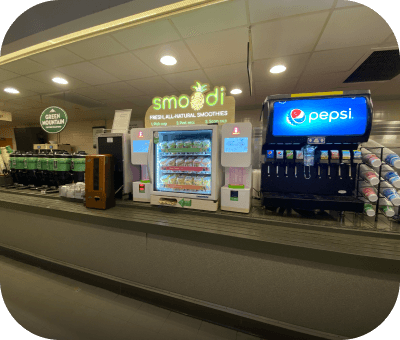
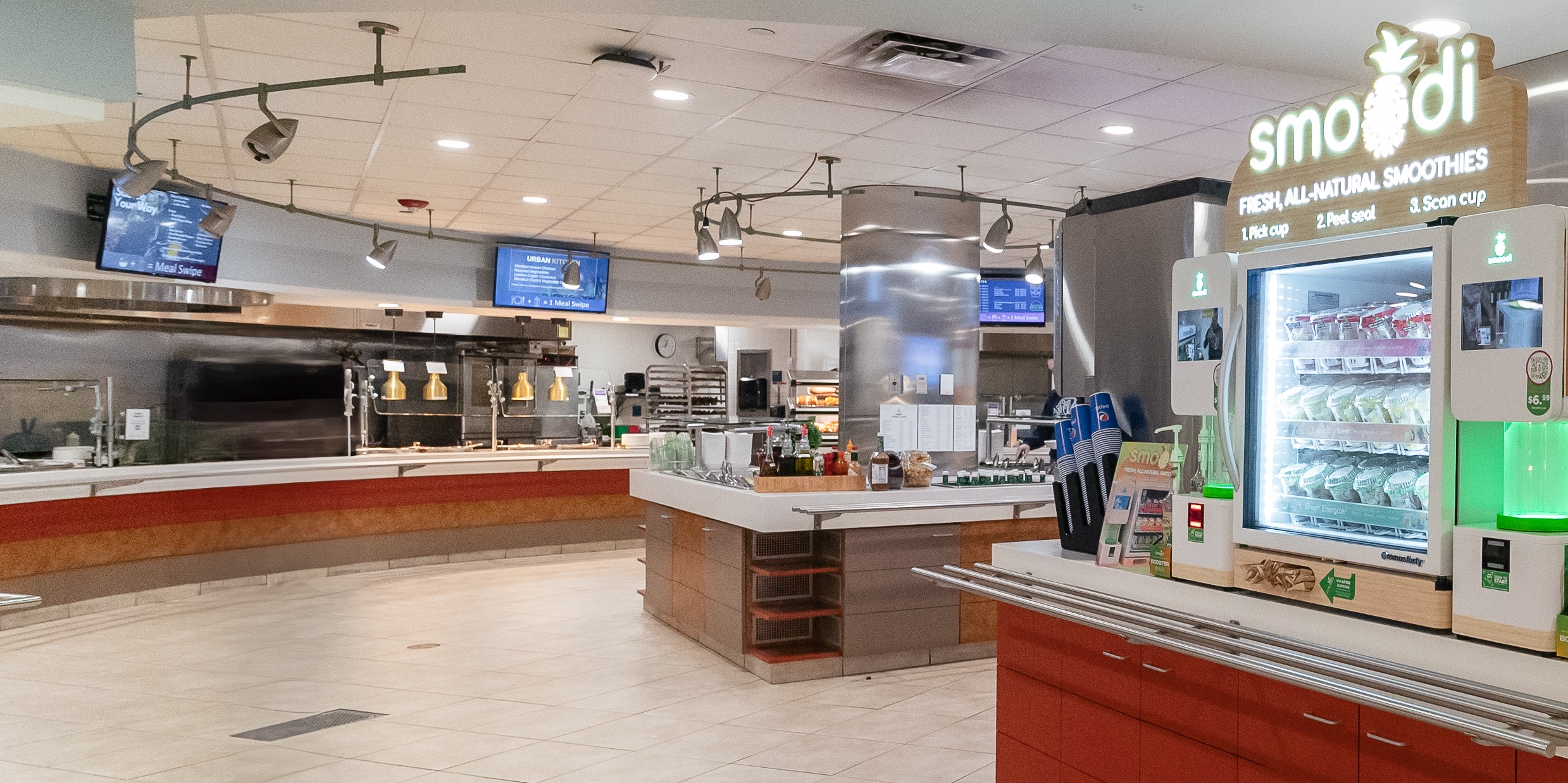
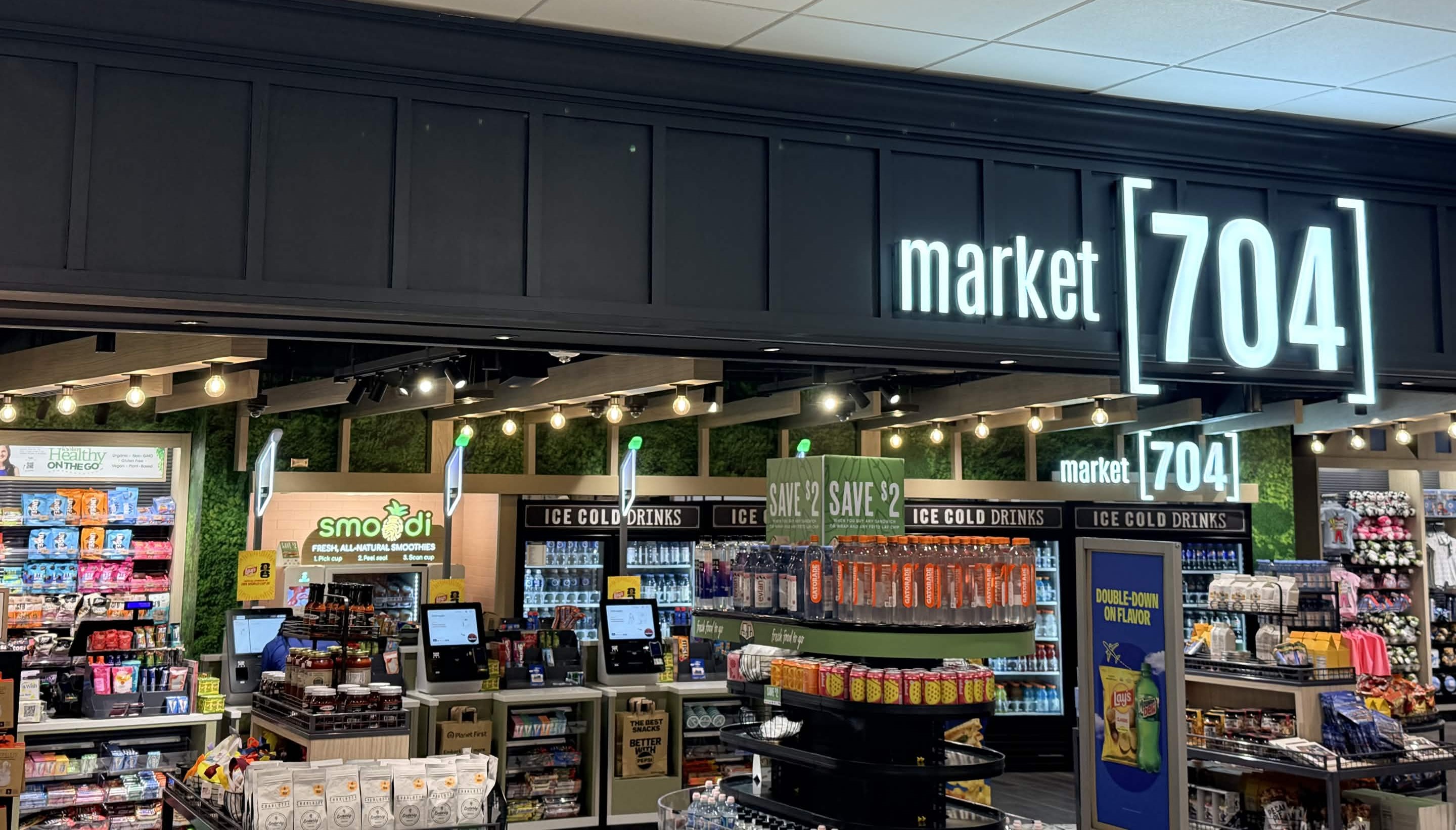
Smoodi's automated smoothie machine sits at the intersection of the three fastest-growing equipment categories: automation, self-service, and compact format. Each smoothie starts with IQF (individually quick frozen) real fruit cups blended with water only. No syrups, concentrates, or artificial ingredients. The booster bar offers protein powder, collagen, and other functional supplements. The machine blends a fresh smoothie in under 60 seconds and self-cleans between every use. No dedicated staff required.
"We've had great success with smoodi across corporate offices and collegiate locations."
— Marcel Winokur, Director of Innovation, Aramark
The compact design requires approximately 40 inches of floor space, operates from a standard 120 VAC outlet, and connects to water and drain via push-to-connect fittings. For high-volume locations, multiple machines can be installed side by side, blending simultaneously. Smoodi operates in more than 300 locations across the United States, with over 2 million smoothies served. The company was founded at Harvard Innovation Labs. IQF fruit cups have a shelf life of up to two years and are distributed through Dot Foods. The operational lease starts at $299 per month for a 48-month term, with a purchase option at $14,999.
Operators evaluating equipment investments that align with the market's growth trajectory can explore automated options at getsmoodi.com/get-started.
Ready to bring Smoodi to your location?
Join hundreds of operators delivering fresh, automated smoothies with zero labor.
Get Started