How Is Grab-and-Go Reshaping Institutional Dining?
Grab-and-go is replacing traditional cafeteria service across hospitals, campuses, and workplaces. Self-service stations add fresh-food quality at grab-and-go speed.
The grab-and-go model is quietly replacing traditional cafeteria service across every institutional foodservice vertical. This is not a temporary accommodation or a pandemic holdover. Nestle Professional's Future of Grab-and-Go research identifies this as a structural shift in how institutions feed their populations. StrategyDriven (May 2026) reports that grab-and-go is reshaping the food industry at a fundamental level, with demand driven by time-constrained consumers who want quality without waiting.
The traditional cafeteria model imposes two constraints: time and location. Diners must be in a specific place during a specific window to eat. On a hospital campus, that means a nurse on a 12-hour shift may have only one 30-minute break that coincides with cafeteria hours. On a university campus, a student with back-to-back afternoon classes cannot walk to the dining hall and wait in line between sessions. In corporate offices, more than half of employees skip lunch entirely at least once a week, according to Fooda's 2026 workplace data. The grab-and-go format removes both constraints, making food accessible in seconds at locations distributed throughout a facility.
Where Is the Grab-and-Go Shift Happening?
Healthcare Facilities
The HHS Make Hospital Food Healthier pledge (July 2026) is accelerating the shift from processed cafeteria offerings to nutrient-dense alternatives available outside traditional meal windows. Hospital staff, patients, and visitors need food access at unpredictable hours. A cafeteria that closes at 7:00 PM does not serve the night-shift nurse who starts at 11:00 PM or the family member keeping vigil in a patient room at midnight. Grab-and-go stations positioned in lobbies, break rooms, and near nursing stations fill this gap. Learn more about hospital deployment at getsmoodi.com/hospitals.
College and University Campuses
Students are abandoning fixed dining hall schedules in favor of flexible, on-demand options between classes. Chartwells Higher Education CDI 2026 reports that smoothies are the number one requested beverage on college campuses at 45 percent, high protein is the number one dietary preference at 28 percent, and clean eating demand has increased 40 percent year over year. These preferences align precisely with the grab-and-go format: students want healthy, fast, and convenient. They do not want to sit down in a dining hall for 45 minutes between a 1:00 PM lecture and a 2:30 PM lab.
Corporate Workplaces
Fooda's research confirms that 51 percent of employees skip lunch at least once a week. These employees are not choosing to fast. They are choosing their workload over the inconvenience of a sit-down meal. Grab-and-go options that take less than two minutes to access and consume capture this population. The food comes to where the employee already is (the break room, the lobby, the hallway near the conference rooms) rather than requiring the employee to go to the food.
Why Are Traditional Cafeterias Losing Ground?
Institutional cafeterias face a set of structural challenges that the grab-and-go model avoids entirely.
- Labor requirements: staffed cafeterias need cooks, servers, cashiers, and cleaning crews, and labor shortages in foodservice are persistent and increasingly expensive
- Food waste: cafeterias that prepare large batches for anticipated demand discard significant quantities when actual traffic falls short, with the USDA estimating that foodservice operations waste 30 to 40 percent of food produced
- Limited operating hours: most cafeterias serve breakfast and lunch only, leaving the building without food access for 16 or more hours per day
- Space requirements: a full cafeteria with seating, serving lines, kitchen equipment, and storage requires thousands of square feet that many facilities cannot allocate
Grab-and-go stations sidestep these challenges. They operate without dedicated staff, produce food only when a customer requests it (eliminating batch waste), run 24/7, and occupy a fraction of the floor space. The economic model is fundamentally different from traditional cafeteria service.
What Sets Fresh Grab-and-Go Apart from Packaged Options?
Most grab-and-go programs today rely on packaged products: pre-made sandwiches, bottled beverages, protein bars, and bagged snacks. These products are convenient but compromise on freshness and nutritional quality. A pre-made sandwich that was assembled hours ago and stored in a refrigerated case is not the same experience as a made-to-order product.
The next evolution of grab-and-go bridges the gap between packaged convenience and made-to-order quality. Self-service stations that produce a fresh product in under a minute give consumers the speed of grab-and-go with the freshness of a made-to-order experience. This distinction matters to the growing segment of consumers who prioritize whole ingredients, nutritional value, and transparency in their food choices.
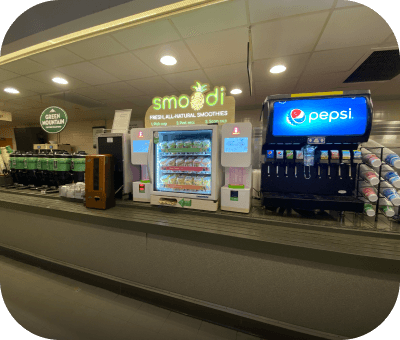
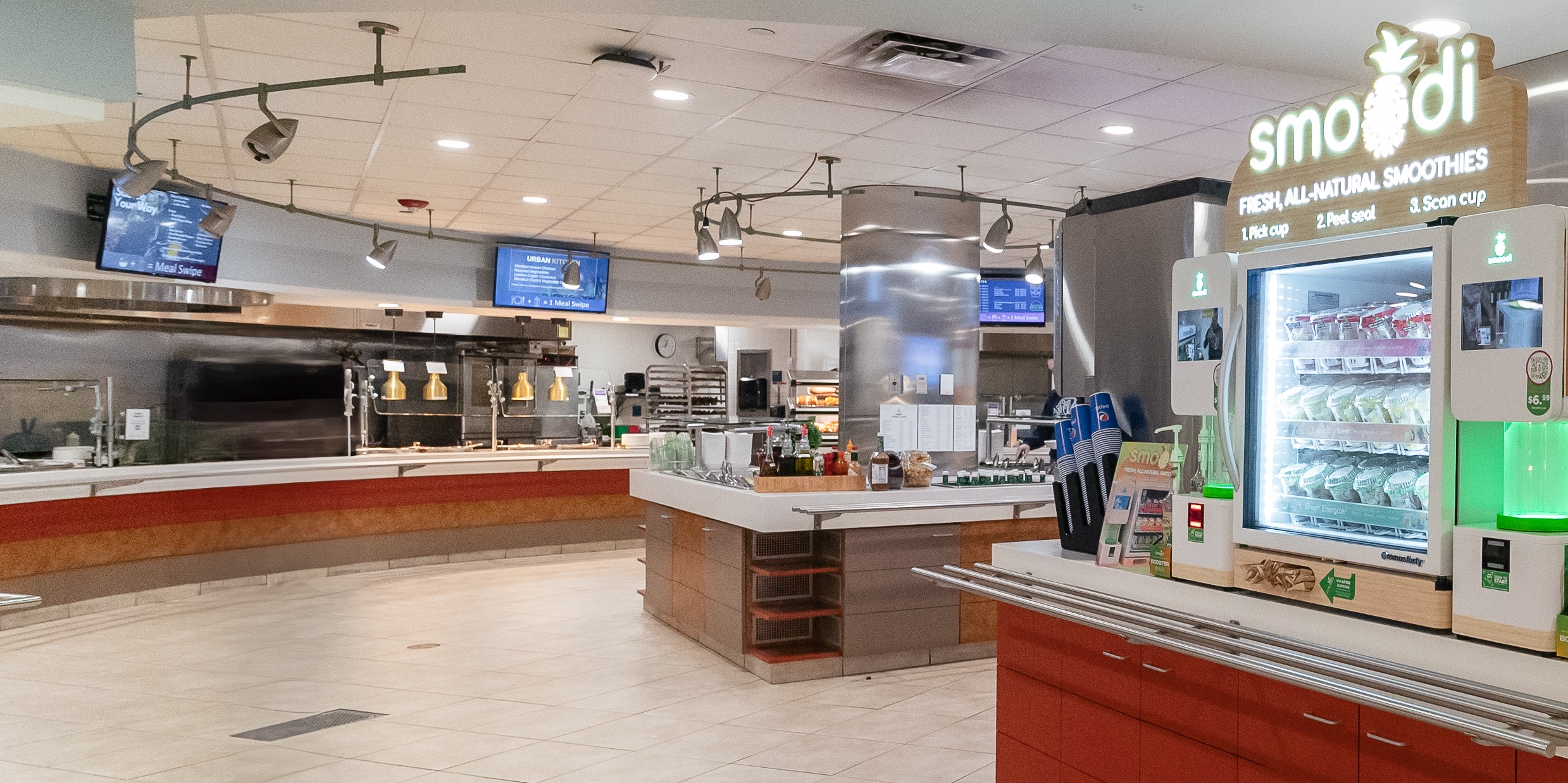
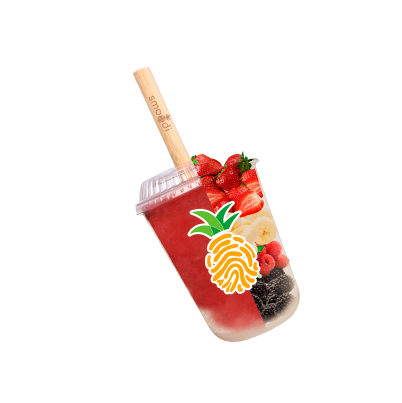
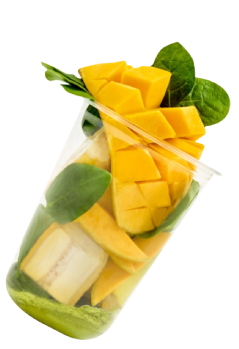
Smoodi's automated smoothie machine delivers exactly this: a fresh, whole-fruit smoothie blended in under 60 seconds, made to order, with no wait and no line. IQF (individually quick frozen) fruit cups are blended with water only. No syrups, concentrates, or artificial ingredients. The machine self-cleans between every use. For institutions implementing grab-and-go programs, a Smoodi station adds a fresh-food category to what is otherwise a packaged-product format.
"It's been a day and a half and we've sold over 1,000 pieces. It's been great. Install was very fast. Our guys love it."
— Hector Ortiz, Food Service Operations Manager, Baptist Health
How Does Fresh Grab-and-Go Fit Operationally?
The operational profile of an automated smoothie station aligns with every requirement of the grab-and-go model. The machine occupies approximately 40 inches of floor space, fitting into a hallway alcove, a lobby corner, or a break room counter. It requires a standard 120 VAC / 7A outlet, water connection (3/8 inch push-to-connect, 50 to 80 PSI), sanitizer inlet (1/4 inch push-to-connect), and drain (1 inch FNPT). No kitchen, no hood, no dedicated food preparation area.
IQF fruit cups have a shelf life of up to two years, distributed through Dot Foods. For institutional foodservice operations that manage inventory across multiple locations, the long shelf life and centralized distribution simplify procurement. There is no fresh produce to order weekly, no cold chain to manage for perishable fruit, and no waste from expired ingredients.
The booster bar offers protein powder, collagen, and other functional supplements, allowing consumers to customize their smoothie for specific nutritional goals. This personalization element distinguishes the station from packaged grab-and-go products, which offer no customization at all.
Smoodi's operational lease starts at $299 per month for a 48-month term, scaling to $499 per month for a 12-month term. The purchase option is $14,999. For institutions transitioning from staffed cafeteria service to distributed grab-and-go stations, the cost comparison is favorable. A single cafeteria employee costs $30,000 to $45,000 annually in wages and benefits. A self-service smoothie station costs $3,588 to $5,988 per year on the lease model, operates 24/7, and requires no scheduling, no training, and no management oversight. Calculate the ROI for your facility at getsmoodi.com/roi.
What Is the Institutional Trend Outlook?
The grab-and-go shift is not a temporary trend. It reflects how modern populations eat: in shorter windows, at irregular times, in distributed locations, and with higher expectations for nutritional quality. Institutions that adapt their foodservice infrastructure to this reality will serve their populations more effectively and at lower cost. Those that maintain traditional cafeteria-only models will see declining utilization and rising per-meal costs as fixed overhead is spread across fewer meals.
Smoodi operates in more than 300 locations across the United States, with over 2 million smoothies served. The company was founded at Harvard Innovation Labs. For institutional foodservice directors, facilities managers, and campus dining teams exploring the grab-and-go model, a self-service smoothie station is the most direct path to adding fresh, made-to-order nutrition at grab-and-go speed.
Operators interested in adding fresh grab-and-go options to their facilities can explore deployment at getsmoodi.com/get-started.
Ready to bring Smoodi to your location?
Join hundreds of operators delivering fresh, automated smoothies with zero labor.
Get Started