How Are Fitness Centers Building Nutrition Revenue?
Protein smoothie demand is projected to reach $30.2 billion by 2033. Fitness centers are shifting from staffed juice bars to automated models.
The protein smoothie market reached $14.6 billion in 2025 and is projected to grow to $30.2 billion by 2033 at a 9.5 percent compound annual growth rate. For fitness center owners and operators, this growth represents a direct revenue opportunity. Members who invest in gym memberships, personal training, and fitness classes increasingly expect access to post-workout nutrition as part of their fitness experience. The question is not whether to offer nutrition products but which model delivers the best financial return with the least operational burden.
What Revenue Do Gym Smoothie Programs Generate?
Industry data from WodGuru indicates that gym smoothie bars generate between $100,000 and $600,000 in annual revenue, with profit margins typically ranging from 5 to 15 percent. The wide range reflects the enormous variation in how gyms operate their nutrition programs. A high-volume, well-run juice bar at a large fitness center with dedicated staff and premium pricing can approach the upper end. A smaller gym with a part-time smoothie bar that operates only during peak hours and struggles with consistency will land near the lower end.
Gyms that have introduced protein vending or automated supplement stations report a 30 to 40 percent jump in supplement revenue during the first month of deployment. This initial surge reflects pent-up demand from members who previously had to bring their own supplements or stop at a store on their way home from the gym. Once the convenience of an on-site option is established, usage patterns stabilize at a level that sustains meaningful ongoing revenue.
The critical insight from this data is that demand exists. Members want nutrition products at the gym. The variable that determines financial performance is the operating model.
What Are the Challenges of a Staffed Smoothie Bar?
Many fitness centers have attempted to operate staffed juice bars or smoothie bars, and the results are mixed. The concept is appealing: a full menu of custom smoothies and juices, prepared by trained staff, with the ability to accommodate any flavor combination or dietary restriction. In practice, the staffed model introduces several financial and operational challenges that erode profitability.
Labor Costs
A staffed smoothie bar requires at least one employee during all operating hours. At $15 to $20 per hour (depending on market), a single employee working a 10-hour shift costs $150 to $200 per day in wages alone, before benefits, payroll taxes, and management overhead. During slow periods (early morning, mid-afternoon, late evening), the labor cost per smoothie served can exceed the selling price. Most gym smoothie bars need to sell 30 to 50 smoothies per day just to cover labor costs before any profit is generated.
Ingredient Waste
Fresh fruit and perishable ingredients spoil. A staffed smoothie bar that stocks bananas, berries, spinach, yogurt, and milk must manage inventory carefully to avoid waste. On slow days, fresh ingredients go unused and eventually must be discarded. Industry estimates place fresh ingredient waste at 10 to 20 percent of total food cost for smoothie bar operations. This waste directly reduces margins and creates unpredictable cost variability.
Inconsistency
Staff-prepared smoothies vary in taste, texture, and portion size depending on who is working and how busy they are. Members notice when their usual order tastes different from one visit to the next. Inconsistency erodes customer confidence and reduces repeat purchases, which is the opposite of what a nutrition program should achieve.
Space Requirements
A full smoothie bar requires counter space, a blending station, refrigeration for fresh ingredients, a hand-washing sink, dry storage for cups and supplies, and enough room for staff to work efficiently. In a fitness center where every square foot either generates membership revenue (workout floor) or supports member retention (amenity space), dedicating 100 to 200 square feet to a smoothie bar is a significant opportunity cost.
How Does the Financial Comparison Work?
The financial case for an automated model becomes clear when the numbers are compared side by side.
- Staffed smoothie bar labor cost: $150 to $200 per day ($3,300 to $4,400 per month for a single employee)
- Automated smoothie station labor cost: $0 per day, $0 per month
- Staffed smoothie bar ingredient waste: 10 to 20 percent of food cost
- Automated station waste: zero (IQF cups have a two-year shelf life)
- Staffed smoothie bar space requirement: 100 to 200 square feet
- Automated station space requirement: approximately 40 inches of counter or floor space
- Staffed smoothie bar revenue per square foot: moderate (diluted by the large footprint)
- Automated station revenue per square foot: high (minimal footprint, same or higher throughput)
When labor, waste, and space costs are removed from the equation, the margin per smoothie increases substantially. An automated station that sells the same number of smoothies as a staffed bar generates significantly more profit because the cost structure is fundamentally different.
"I have been looking to add a smoothie bar for years but did not want to deal with the labor and food waste. Having smoodi in our facility is a huge benefit for our members."
— Adam Healy, General Manager, Waverly Oaks Athletic Club
What Does an Automated Nutrition Program Look Like?
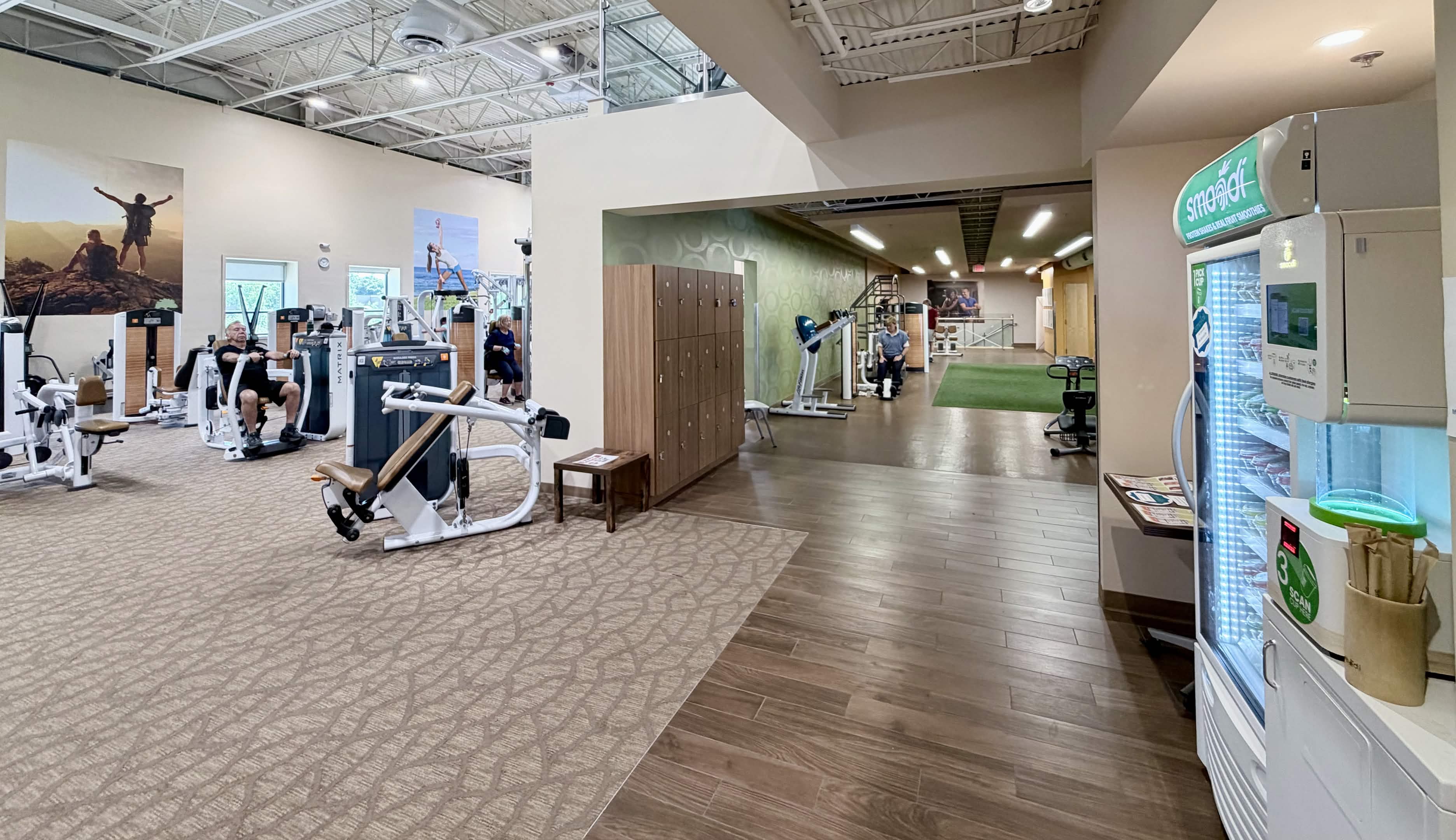
Smoodi's automated smoothie machine delivers the nutrition products gym members want without the operational burden of a staffed bar. IQF (individually quick frozen) fruit cups are blended with water only. No syrups, concentrates, or artificial ingredients. The booster bar offers protein powder, collagen, and other functional supplements, addressing the post-workout recovery need that drives most gym nutrition purchases.
The machine blends a smoothie in under 60 seconds and self-cleans between every use. It occupies approximately 40 inches of floor space. Compare that to the 100 to 200 square feet a staffed bar requires, and the revenue per square foot advantage is immediately apparent. For fitness centers where floor space directly correlates to membership capacity and revenue, reclaiming 150 square feet of smoothie bar space for workout equipment or group fitness can generate more value than the bar itself.
Installation requires a standard 120 VAC / 7A outlet, a water inlet (3/8 inch push-to-connect), a sanitizer inlet (1/4 inch push-to-connect), and a drain (1 inch FNPT). Most fitness centers can accommodate these requirements near an existing plumbing connection in a kitchen area, a lobby alcove, or adjacent to existing water fountains.
What Is the Financial Model for Fitness Centers?
Smoodi's operational lease starts at $299 per month for a 48-month term, scaling to $499 per month for a 12-month term. The purchase option is $14,999. For fitness centers, the lease model is particularly attractive because it converts a potential capital expenditure into a predictable monthly operating expense that can be measured against smoothie revenue from day one.
Gyms can price smoothies between $5 and $8 depending on the market and the boosters selected. A gym that sells 20 smoothies per day at an average of $6 generates $120 in daily revenue, or approximately $2,640 per month over 22 operating days. After the lease cost and cup costs, the remaining margin flows directly to the bottom line with no labor offset required.
For gyms that currently operate a staffed smoothie bar, the transition to an automated model can be phased. Some operators run both models during a transition period, using the automated station to cover early morning, late evening, and weekend hours when staffing a bar is least efficient. Over time, as members adopt the automated option, the staffed hours can be reduced or eliminated.
Smoodi operates in more than 300 locations across the United States, with over 2 million smoothies served. The company was founded at Harvard Innovation Labs. IQF fruit cups have a shelf life of up to two years and are distributed through Dot Foods, ensuring consistent supply and zero spoilage.
Fitness center owners, gym operators, and recreation facility managers interested in building a nutrition revenue stream can explore options at getsmoodi.com/get-started.
Ready to bring Smoodi to your location?
Join hundreds of operators delivering fresh, automated smoothies with zero labor.
Get Started