What Should Gym Owners Know About Adding a Smoothie Program in 2026?
Gym smoothie bars generate $5,000 to $15,000 in monthly revenue with margins near 50%. Gyms with retail nutrition programs see member retention rates 8 to 12% higher than those without. Here is what operators need to know.
The fitness industry faces a retention problem. The average gym retention rate sits at 66.4% in 2026, with cancellations up 8% year over year. Members join with good intentions, plateau, and leave. Facilities that give members reasons to stay beyond the workout itself, reasons like convenient post-workout nutrition, consistently outperform those that rely solely on equipment and classes to retain members.
At the same time, consumer demand for high-protein beverages is at an all-time high. Protein remains the number one functional ingredient trend in 2026, driven by both the fitness community and the broader GLP-1 lifestyle movement. Collagen reached its highest historical search interest in March 2026. Gym members are actively looking for protein and collagen options, and they are willing to pay for convenience. The question for gym owners is not whether to offer smoothies. It is how to do it without adding the labor, waste, and complexity of a traditional juice bar.
The Revenue Opportunity for Gyms
Gym smoothie bars generate between $5,000 and $15,000 in monthly revenue, depending on facility size, membership volume, and pricing. Margins on blended beverages typically run around 50%, making smoothie programs one of the highest-margin ancillary revenue streams available to fitness operators. For a mid-size gym generating $50,000 per month in membership dues, adding $8,000 to $10,000 in monthly smoothie revenue at 50% margin represents a meaningful boost to the bottom line.
The revenue opportunity extends beyond the smoothie itself. Gyms with retail programs, including beverages, supplements, and branded merchandise, report 15 to 25% higher non-dues revenue than comparable facilities without retail. The smoothie program serves as an anchor for the retail experience, creating a reason for members to stop, engage, and spend after their workout.
Timing matters for this revenue. The post-workout window is when members are most receptive to nutrition purchases. They have just finished exercising, they are hungry and thirsty, and they are primed to make decisions that align with their fitness goals. A visible, convenient smoothie option captures this moment. If the member walks out the door without purchasing, that revenue opportunity is lost entirely.
How Smoothie Programs Improve Member Retention
Gyms with retail nutrition programs see member retention rates 8 to 12% higher than comparable gyms without these programs. The mechanism is straightforward: a smoothie program adds a touchpoint to the member experience that reinforces the value of the membership. Members who purchase a smoothie after every workout develop a habit loop that ties nutrition to their gym visit. Breaking the gym habit means also giving up the smoothie they enjoy, which creates additional friction against cancellation.
In a market where the average gym retention rate is 66.4%, an 8 to 12% improvement is significant. For a gym with 2,000 members paying $50 per month, a 10% improvement in retention means keeping 200 additional members per year. At $50 per month, that is $120,000 in retained annual membership revenue, before counting the smoothie revenue itself.
The retention effect is amplified when the smoothie program includes functional boosters like protein and collagen. Members who use the smoothie station as part of their recovery routine become more invested in the facility as a complete fitness destination, not just a place to exercise. This perception shift is what separates gyms that retain members from those that churn them.
"I have been looking to add a smoothie bar for years but did not want to deal with the labor and food waste. Having smoodi in our facility is a huge benefit for our members."
— Adam Healy, General Manager, Waverly Oaks Athletic Club
Why Traditional Juice Bars Are Difficult for Most Gyms
The operational challenges of a staffed smoothie bar are well documented. Fresh ingredients require daily procurement, cold storage, and waste management. Bananas brown, berries mold, and protein powder containers need constant monitoring. A dedicated employee must be scheduled during peak hours to take orders, blend smoothies, and clean equipment between customers.
For most gym operators, these challenges are prohibitive. Labor is the single largest expense in running a juice bar, and fitness facilities are already managing lean staff across front desk, cleaning, personal training, and group fitness. Adding a dedicated smoothie bar attendant means adding headcount, scheduling complexity, and training overhead. During off-peak hours, that employee is underutilized but still on the clock.
Food waste compounds the cost problem. Fresh fruit purchased for a Monday rush may go unused if Tuesday is slow. Industry averages suggest that staffed smoothie programs waste 15 to 25% of their perishable ingredients. That waste comes directly off the margin, turning a theoretically profitable program into a break-even or losing proposition for many facilities.
How Smoodi Solves the Gym Smoothie Problem
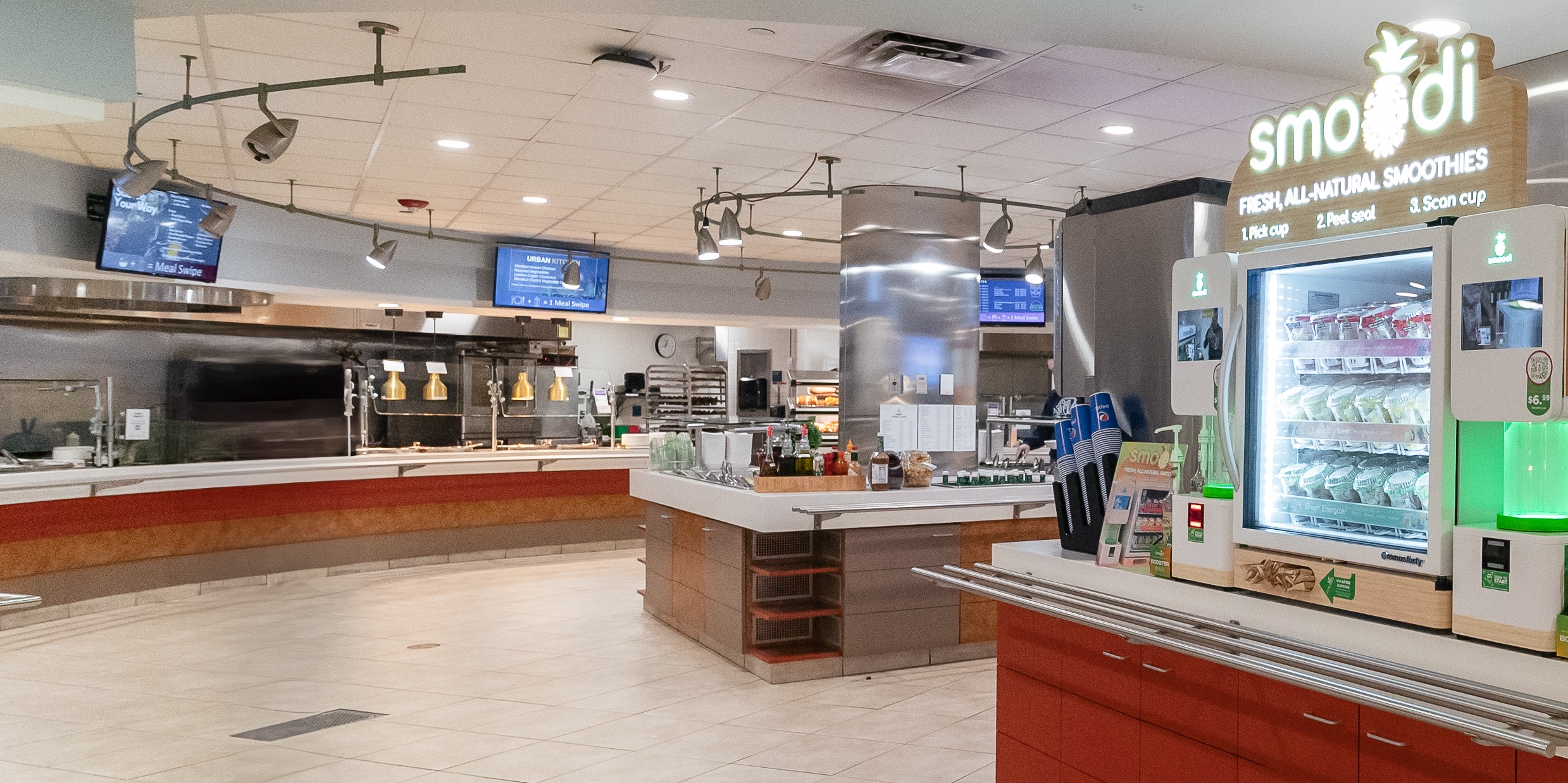
Smoodi's automated smoothie machine eliminates the three biggest barriers to gym smoothie programs: labor, waste, and complexity. The machine operates entirely self-service. Members select their smoothie, the machine blends it in under 60 seconds, and it self-cleans between every use. No dedicated staff is required to operate, monitor, or clean the equipment during service hours.
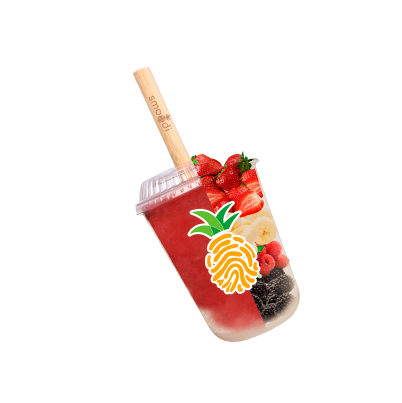
The IQF (individually quick frozen) fruit cups eliminate food waste entirely. Each cup contains pre-portioned real frozen fruit with a shelf life of up to two years. There are no bananas to track, no berries to throw away, and no daily prep to manage. Operators order cups through Dot Foods and store them in a standard freezer. Every cup that goes into the machine becomes a smoothie that gets served to a member.
Smoodi's booster bar is particularly relevant for gym environments. Members can add protein powder, collagen, and other functional supplements to their smoothie, creating a customized post-workout recovery drink. This aligns directly with the protein and collagen demand trends driving consumer behavior in 2026. Each booster add-on also increases the average transaction value, improving the revenue per smoothie served.
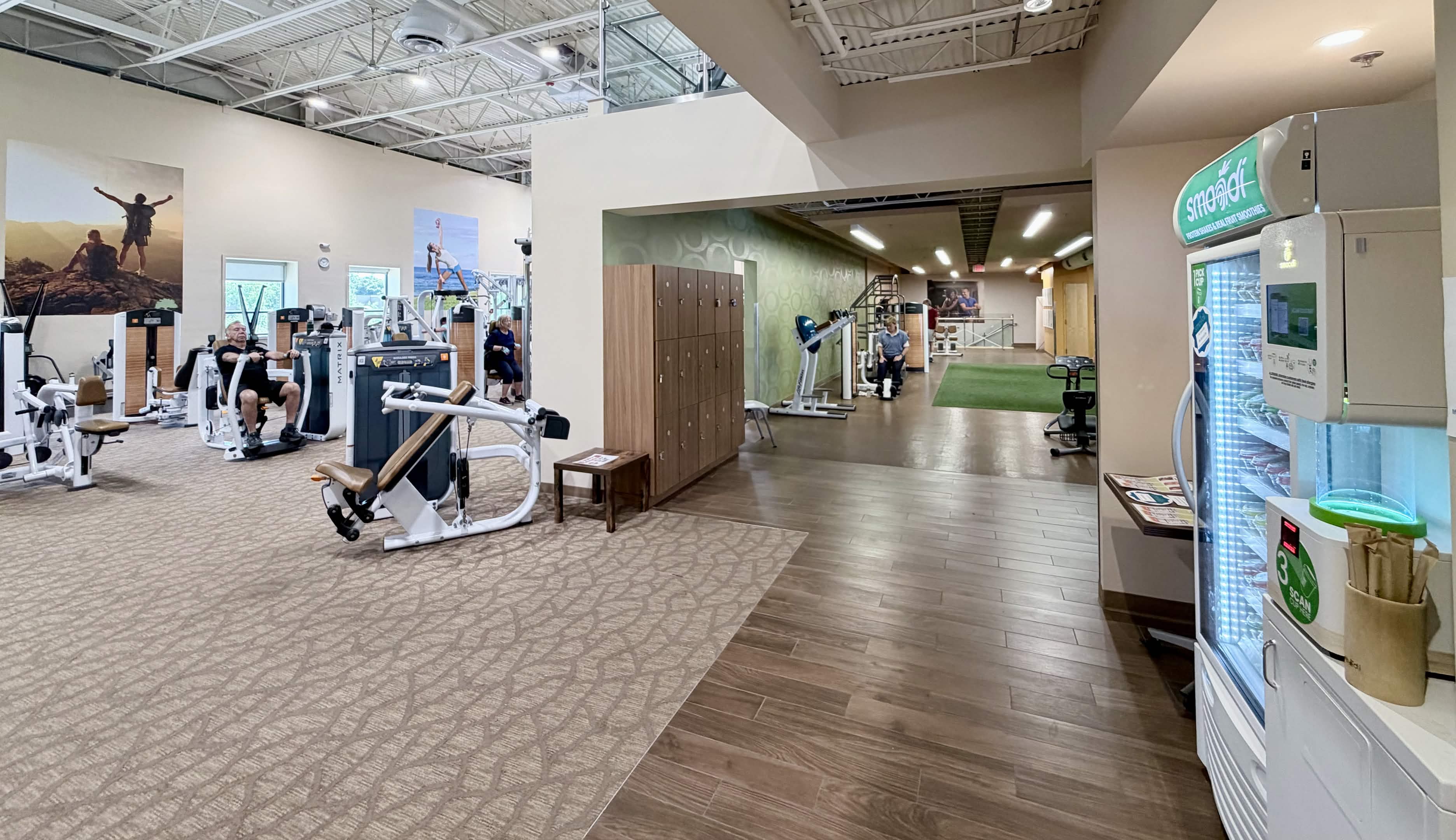
The machine requires approximately 40 inches of floor space and connects to a standard 120V outlet along with water, sanitizer, and drain connections. This compact footprint means Smoodi can be placed near the gym exit, in the lobby, or adjacent to the locker room, capturing members at the exact moment they are most likely to purchase.
Running the Numbers for Your Facility
Gym operators considering a smoothie program should evaluate three financial metrics: direct smoothie revenue, retention value, and total program cost.
- Direct smoothie revenue: at 20 to 40 smoothies per day and $6 to $8 per smoothie, monthly revenue ranges from $3,600 to $9,600 per machine
- Retention value: an 8 to 12% improvement in retention at a 2,000-member gym paying $50 per month translates to $80,000 to $120,000 in annual retained membership revenue
- Program cost with Smoodi: operational leases start at $299 per month (48-month term), with 36-month terms at $349, 24-month at $399, and 12-month at $499 per month; purchase pricing starts at $14,999
The lease model is particularly attractive for gym operators because it aligns cost structure with revenue generation. There is no large upfront capital expenditure, and the lease includes full service. Operators pay the lease plus cup costs and keep the margin on every smoothie sold.
Getting Started with a Gym Smoothie Program
Smoodi has over 300 locations across the United States, including fitness centers, health clubs, and recreation facilities. More than 2 million smoothies have been served across the network. Founded at the Harvard Innovation Labs, Smoodi was built specifically to deliver genuinely healthy beverages at scale without adding operational complexity.
For gym owners evaluating whether a smoothie program makes sense for their facility, the math is straightforward: the combination of direct smoothie revenue and improved member retention typically delivers a return that far exceeds the program cost. The key is choosing a solution that does not create new operational burdens in a business that is already managing dozens of moving parts.
Calculate your potential ROI at getsmoodi.com/roi, or explore lease and purchase options at getsmoodi.com/get-started.
Ready to bring Smoodi to your location?
Join hundreds of operators delivering fresh, automated smoothies with zero labor.
Get Started