What Are the Best Healthy Alternatives to Vending?
Traditional vending offers packaged snacks, but workplaces want healthier options. Fresh-food automation delivers whole-ingredient nutrition at zero labor cost.
Vending machines have served as the default self-service food option across workplaces, campuses, healthcare facilities, and public spaces for decades. The format is familiar: a glass-front cabinet stocked with packaged chips, candy bars, cookies, and sugar-sweetened beverages. While vending machines offer unmatched convenience (available 24/7, zero labor, compact footprint), the products they deliver increasingly conflict with the nutritional expectations of employees, students, patients, and visitors. Organizations across every sector are asking the same question: what can replace the traditional vending machine with something healthier, without adding staff or operational complexity?
Why Are Traditional Vending Machines Falling Short?
The core limitation of vending machines is structural, not operational. Vending machines dispense pre-packaged, shelf-stable products. The product range is defined by what can survive weeks or months in an unrefrigerated or lightly refrigerated cabinet without quality degradation. This constraint eliminates fresh fruits, fresh vegetables, prepared salads, and whole-ingredient beverages from the product set. Even healthy vending initiatives that replace candy bars with protein bars and swap regular chips for baked alternatives are still operating within the packaged, processed food category.
The University of Southern California launched a Healthy Vending Initiative in March 2026, restocking campus machines with lower-sugar items, baked snacks, and unsweetened beverages. The initiative improved the nutritional profile of available snacks, but the fundamental format remained unchanged: consumers are still choosing between packaged options, none of which qualify as fresh food.
The broader vending market reflects this tension. The industry is projected to grow at 3.2 percent CAGR toward $19.9 billion by 2033, driven largely by demand for healthier options. Manufacturers are responding with better packaging, more protein-bar varieties, and refrigerated cabinets for yogurt and salads. Yet none of these innovations address the core gap: vending cannot deliver a fresh, whole-ingredient product prepared at the moment of consumption.
What Are the Three Categories of Self-Service Food?
Organizations evaluating alternatives to traditional vending should consider three distinct categories, each with different product quality, cost, and operational profiles.
Traditional Vending Machines
Packaged, shelf-stable products dispensed from a glass-front cabinet. Lowest operational complexity and lowest cost per location. Product quality is limited by the need for extended shelf life. Most products fall into the ultra-processed food category, even when marketed as healthier options. Capital cost is typically borne by the vending operator, not the host facility.
Micro-Markets
A small, unstaffed retail zone (typically a wall of shelving, a cooler, and a self-checkout kiosk) offering a broader range of products than a vending machine. Micro-markets can stock fresh sandwiches, salads, yogurt, fruit cups, and premium beverages. Product variety is significantly better than vending, and micro-markets are growing rapidly in corporate offices and large facilities. The tradeoff is space (micro-markets require 50 to 150 square feet), higher restocking frequency (fresh items have shorter shelf life), and regular inventory management by a contracted operator.
Automated Fresh-Food Stations
Compact, self-service machines that prepare a fresh product at the moment of consumption. Unlike vending (which dispenses pre-made items) and micro-markets (which display pre-made items for selection), automated fresh-food stations produce the product on demand. The ingredient is stored in a preserved state (frozen, sealed, or otherwise shelf-stable) and transformed into a fresh product when the consumer initiates the process. This category includes automated smoothie stations, robotic coffee makers, and fresh-juice machines.
How Do Fresh-Food Stations Compare in Practice?
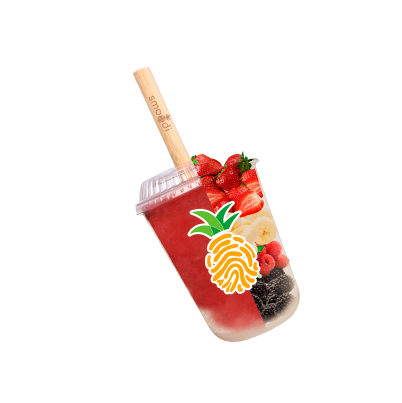
The critical distinction is the product itself. A vending machine delivers a packaged protein bar that was manufactured weeks ago. A micro-market offers a pre-made sandwich prepared yesterday and delivered by a route driver this morning. An automated fresh-food station produces a whole-fruit smoothie blended 30 seconds ago from ingredients that were flash-frozen at peak ripeness and stored without degradation.
"smoodi is hands down the number one perk at our headquarters. Fresh, healthy, and zero effort on our end."
— Katherine Berman, Workplace Experience Manager, Toast
For organizations prioritizing nutrition quality, the gap between these categories is significant. Fresh-food stations deliver a product that contains no industrial additives, no preservatives needed for ambient shelf life, and no packaging designed to survive a supply chain. The ingredient list for a Smoodi smoothie is fruit and water. The ingredient list for a typical vending machine protein bar may include 20 to 30 components, including soy lecithin, natural flavors, sugar alcohols, and maltodextrin.
How Should Operators Evaluate the Transition?
Facility managers and operations directors evaluating a shift from vending to fresh-food alternatives should consider four dimensions.
- Product quality: Does the alternative deliver genuinely fresh, whole-ingredient food, or does it simply offer better-packaged processed options?
- Labor requirements: Does the alternative require dedicated staff for preparation, restocking, or cleaning? Vending's greatest strength is its zero-labor model, and any replacement must match or improve on this.
- Footprint: Micro-markets require significant floor space. Vending machines and automated stations fit in compact areas. The available space in the facility often determines which option is practical.
- Cost structure: Vending operators typically provide machines at no cost to the host facility, taking revenue share. Micro-markets follow a similar operator model. Automated fresh-food stations like Smoodi offer operational leases starting at $299 per month, with the host facility controlling pricing and keeping the margin.
Smoodi's operational lease starts at $299 per month for a 48-month term, scaling to $499 per month for a 12-month term. The purchase option is $14,999. Operators pay the lease plus the cost of IQF fruit cups and keep the margin on every smoothie sold. Cups have a shelf life of up to two years and are distributed through Dot Foods, so there is no spoilage risk and no waste from unsold inventory.
Where Does Fresh-Food Automation Fit Best?
Not every vending machine location is a candidate for replacement. Traditional vending remains appropriate for locations where shelf-stable snacks and cold beverages are the primary demand (break rooms in warehouses, outdoor rest areas, transit stations). Fresh-food automation fits locations where the audience actively wants healthier options and where the organization benefits from demonstrating a commitment to wellness.
- Corporate offices: employees who chose an employer partly for its wellness culture expect food amenities that match the company's values
- University campuses: students rank smoothies as the number one requested beverage (Chartwells CDI 2026), and a self-service station meets demand without cafeteria labor
- Healthcare facilities: hospitals pledging to reduce ultra-processed foods need whole-ingredient alternatives for cafeterias and waiting areas
- Fitness centers and gyms: members seek post-workout nutrition that complements their training, not a candy bar from a vending machine
- Hotels and hospitality: guests expect fresh, healthy options that reflect the property's wellness positioning
Smoodi operates in more than 300 locations across the United States, with over 2 million smoothies served. The company was founded at Harvard Innovation Labs. The machine blends a smoothie in under 60 seconds, self-cleans between every use, and requires approximately 40 inches of floor space. Installation requires a standard 120 VAC outlet, water connection, sanitizer inlet, and drain.
For facility managers and operations directors evaluating healthier alternatives to vending, visit getsmoodi.com/get-started to request a site assessment. To calculate the financial impact, visit getsmoodi.com/roi.
Ready to bring Smoodi to your location?
Join hundreds of operators delivering fresh, automated smoothies with zero labor.
Get Started