How Do Operators Build a Healthy Beverage Program?
Operators who have decided to add a healthy beverage program often lack a step-by-step framework. This guide walks through every decision from demand assessment to ROI measurement.
Adding a healthy beverage program to a foodservice operation sounds simple in concept. In practice, operators face a series of decisions that determine whether the program generates strong returns or becomes an underperforming experiment. The difference between a beverage program that pays for itself in weeks and one that stalls after launch usually comes down to planning: assessing demand accurately, choosing the right format, managing the supply chain, setting the right price, and measuring results.
This guide walks through each decision point, addresses what makes each choice different depending on the venue type, and provides a framework operators can use regardless of whether they manage a gym, hotel, hospital, campus, office, or convenience store.
How Should Operators Assess Demand?
The first question is whether sufficient demand exists to support a beverage program. Many operators skip this step and rely on intuition, but a simple demand assessment can prevent both underinvestment and overcommitment.
Foot Traffic Analysis
Count the number of people who pass through the proposed station location during different dayparts. A lobby that sees 200 people between 7 AM and 9 AM has different potential than a break room that sees 40 people across the full day. A conversion rate of 5 to 10 percent is a reasonable starting assumption: if 200 people pass the station and 10 to 20 purchase a smoothie daily, the program is viable.
Demographic Alignment
The audience matters as much as the volume. College students, gym members, healthcare workers, and corporate employees all index high for healthy beverage consumption. Hotel guests at wellness-oriented properties and airport travelers seeking quick, healthy options also represent strong buyer demographics. A distribution warehouse with 50 workers may generate lower conversion than a university dining hall with 50 students because the purchase propensity differs.
Existing F&B Gaps
Identify what beverage options currently exist in the location. If the only options are coffee, soda, and bottled water, a healthy smoothie program fills a clear gap. If a full juice bar already operates on site, the opportunity is different and may require a self-service complement that operates during hours the staffed bar is closed.
What Format Options Exist?
Operators choosing a beverage format must balance product quality, labor requirements, space constraints, and investment level. The primary formats available are staffed bars, self-service stations, vending, and hybrid models.
- Staffed smoothie bar: highest product customization and customer engagement, but requires trained staff ($35,000 to $50,000 per year per full-time employee), carries ingredient waste from perishable items, and operates only during staffed hours.
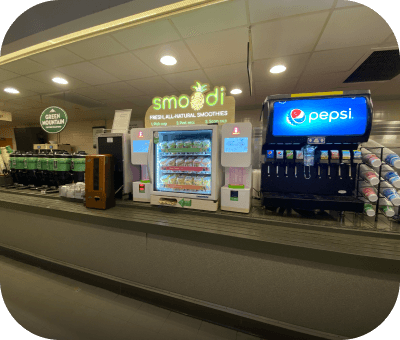
- Self-service automated station: consistent product quality with zero labor, operates 24/7, compact footprint, pre-portioned ingredients minimize waste. Limited to the recipes the machine supports.
- Bottled or pre-packaged: lowest operational burden, but highest per-unit cost, limited freshness appeal, and no customization. Consumers increasingly reject pre-packaged beverages in favor of freshly prepared options.
- Hybrid model: a self-service station handles baseline volume while a staffed bar (where it exists) covers peak hours and premium customization. This model works well in large venues with variable demand.
The format that delivers the strongest ROI for most operators is the one that eliminates labor while maintaining product quality. Labor is typically the largest cost in a beverage program, and eliminating it changes the margin structure fundamentally.
How Should Operators Evaluate Equipment?
Equipment selection is where many programs succeed or fail. Operators should evaluate equipment on total cost of ownership, not purchase price alone.
Lease Versus Purchase
Leasing preserves capital and typically includes service and maintenance. Purchasing costs less over the long term but exposes the operator to repair costs, obsolescence risk, and capital commitment. For operators testing a new program or managing multiple locations, leasing reduces financial risk and provides flexibility to adjust the program based on performance.
Space and Utilities
Measure the available space carefully. Some equipment requires dedicated counters, plumbing modifications, or electrical upgrades. A machine that occupies 40 inches of floor space and connects to a standard outlet and water line deploys faster and at lower cost than one requiring construction. Understand the utility requirements before committing: electrical specifications, water pressure requirements, drainage needs, and any ventilation requirements.
Maintenance Model
Equipment that self-cleans between uses eliminates a significant daily labor task. Equipment that requires manual disassembly and cleaning at the end of each day adds 30 to 60 minutes of staff time. Over a year, that difference amounts to 180 to 360 labor hours. Equipment with included service contracts and remote monitoring reduces downtime risk compared to equipment where the operator is responsible for arranging repairs.
How Should Operators Manage the Supply Chain?
The ingredient supply chain determines both product quality and operational complexity. Operators should evaluate three dimensions.
- Fresh versus frozen: fresh fruit offers premium perception but introduces spoilage (10 to 25 percent waste rates), short shelf life (days), and frequent delivery requirements. IQF (individually quick frozen) ingredients retain nutritional value, offer shelf life of up to two years, and reduce waste to near zero.
- Distributor access: ingredients available through existing foodservice distributors (such as Dot Foods or Sysco) simplify procurement. Ingredients requiring specialty suppliers add ordering complexity, minimum order quantities, and delivery logistics.
- Inventory cadence: programs using shelf-stable ingredients can order monthly or quarterly. Programs using fresh ingredients require weekly or twice-weekly deliveries. For operators in remote locations, shelf-stable ingredients are not just a convenience but a necessity.
How Should Operators Set Pricing?
Pricing a healthy beverage program requires balancing consumer willingness to pay against cost structure. Smoothies typically retail between $6 and $12 in commercial foodservice settings, with the price varying by venue type and market. Campus dining programs trend toward the lower end. Hotels and airports command premium pricing. Corporate offices often subsidize partially or fully as an employee amenity.
The key metric is gross margin per unit. For a self-service program with no labor cost, the margin calculation is straightforward: retail price minus ingredient cost minus equipment cost per unit (lease or amortized purchase divided by volume). Programs with healthy margins reinvest quickly. Programs with thin margins depend on volume to justify the equipment investment.
How Does Smoodi Simplify the Process?
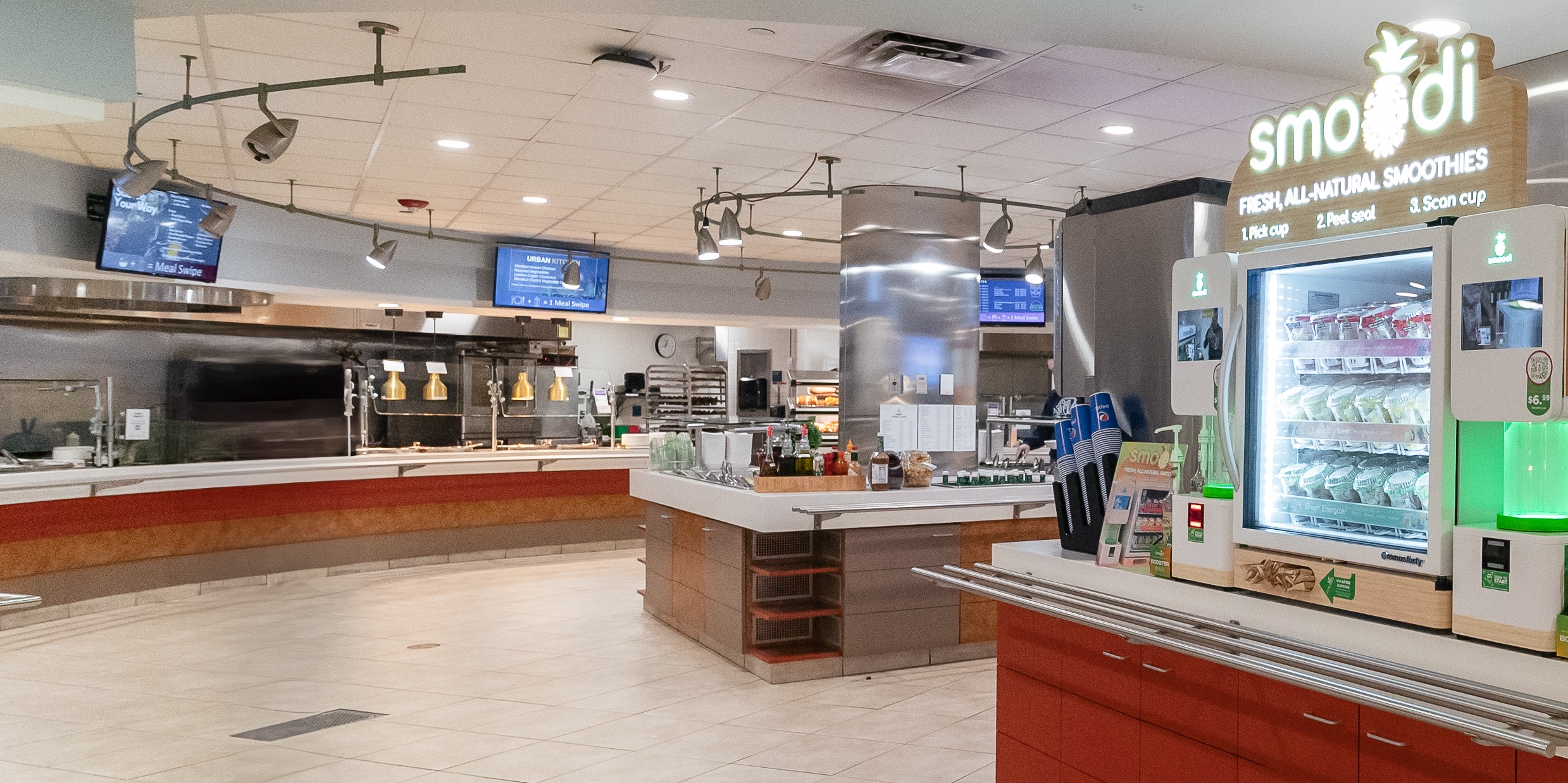
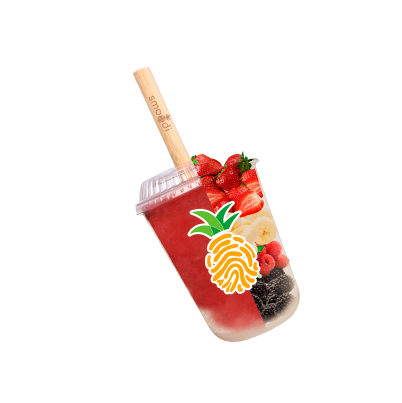
Smoodi's automated smoothie machine is designed to simplify every decision point in the beverage program planning process. The machine blends a fresh smoothie from IQF real fruit cups and water in under 60 seconds. It self-cleans between every use, operates without staff, and occupies approximately 40 inches of floor space. IQF fruit cups have a shelf life of up to two years, with no syrups, concentrates, or artificial ingredients. Distribution through Dot Foods integrates with existing supply chains.
"I have been looking to add a smoothie bar for years but did not want to deal with the labor and food waste. Having smoodi in our facility is a huge benefit for our members."
— Adam Healy, General Manager, Waverly Oaks Athletic Club
Smoodi operates in more than 300 locations across the United States, with over 2 million smoothies served. The company was founded at Harvard Innovation Labs. The operational lease starts at $299 per month for a 48-month term, with a purchase option at $14,999. The booster bar offers protein powder, collagen, and other functional supplements. For high-volume locations, multiple machines can be installed side by side, blending simultaneously.
How Should Operators Measure ROI?
Once a beverage program is operational, operators should track several metrics to evaluate performance and optimize the program.
- Daily unit sales: the most fundamental metric. Track by daypart to identify peak periods and underperforming time slots.
- Revenue per square foot: compare the beverage station's revenue generation against other uses of the same floor space. A station generating $3,000 per month in 40 inches of space likely outperforms most alternative uses of that area.
- Gross margin: retail revenue minus ingredient and equipment costs. For self-service programs, labor is zero, simplifying the calculation.
- Payback period: the number of months before cumulative gross profit exceeds the initial investment (for purchased equipment) or the number of months before monthly revenue exceeds monthly lease plus ingredient costs.
- Customer feedback: track satisfaction through direct feedback, repeat purchase rates, and flavor preference data. Adjust the menu and booster offerings based on what consumers actually purchase.
Operators who track these metrics from day one can optimize placement, pricing, and product mix within the first 30 to 60 days, ensuring the program reaches its revenue potential quickly.
Foodservice operators ready to plan a beverage program can calculate projected ROI at getsmoodi.com/roi or explore deployment options at getsmoodi.com/get-started.
Ready to bring Smoodi to your location?
Join hundreds of operators delivering fresh, automated smoothies with zero labor.
Get Started