How Can Hotels Capture More F&B Revenue Per Guest?
The global hotel food and beverage market reached $525 billion in 2026. Hotels that treat F&B as a revenue multiplier rather than a cost center are capturing significantly more per guest.
The global hotel food and beverage service market reached $525.3 billion in 2026 and is projected to hit $1.25 trillion by 2035 at a 9.5 percent compound annual growth rate, according to Business Research Insights. Upper-upscale hotels generate 57 percent of total F&B revenue, while luxury hotels contribute 36 percent. CBRE reports hotel F&B was a bright spot in recent performance data, with significant revenue growth driven by leisure and bleisure demand segments.
Despite these numbers, most hotels still treat food and beverage as a cost center rather than a revenue multiplier. The breakfast buffet runs at thin margins. The restaurant operates limited hours. Room service, where it still exists, carries high labor costs. The result: hotels capture F&B revenue during a few peak hours and leave the remaining dayparts empty. The opportunity for hotels willing to rethink their F&B model is substantial.
Where Are Hotels Leaving F&B Revenue on the Table?
Unstaffed Dayparts
Most hotel F&B operations are staffed from roughly 6 AM through 10 PM, with gaps during the mid-morning, mid-afternoon, and late-evening hours. Yet guests are present in the building 24 hours a day. A business traveler arriving at 11 PM after a delayed flight, a fitness center user finishing a 5 AM workout, and a conference attendee on a mid-afternoon break all represent potential F&B transactions that generate zero revenue because no service is available.
Extending staffed F&B hours to cover these dayparts is economically impractical. The labor cost of staffing a beverage station from 10 PM to 6 AM would exceed the revenue generated during those low-traffic hours. Self-service stations solve this equation by eliminating the labor variable entirely, making it profitable to serve guests during hours that are uneconomical for staffed operations.
Undermonetized Locations
Hotels contain multiple locations where guests congregate but no F&B is offered: fitness centers, pool decks, conference pre-function areas, co-working lounges, and lobby seating areas. Each of these locations represents a guest touchpoint where a beverage purchase is natural but no purchase option exists. A compact, self-service beverage station in any of these locations generates incremental revenue from traffic that is already present in the building.
Wellness-Driven Guest Expectations
Hospitality Net identifies wellness-driven F&B as a fundamental consumer behavior shift, not a passing trend. Guests increasingly evaluate a hotel's food and beverage options as part of their booking decision. Hotels that offer healthy, fresh beverage options in convenient locations signal a property that takes guest wellness seriously. This perception influences both booking decisions and willingness to pay premium rates.
What Does the Revenue Math Look Like?
The economics of a self-service beverage station in a hotel setting are straightforward. At a retail price point of $8 to $12 per smoothie, a station serving 10 to 15 units per day generates $2,400 to $5,400 in monthly gross revenue. Against a lease cost of $299 to $499 per month plus ingredient costs, the margin is substantial. Critically, this revenue is incremental. It does not cannibalize existing restaurant or room service revenue because it serves dayparts and locations where no F&B currently exists.
For hotels with multiple guest touchpoints, the math compounds. A property with stations in the fitness center, lobby, and conference floor generates three revenue streams from a single equipment category, each operating without dedicated staff.
How Does Smoodi Fit the Hotel F&B Model?
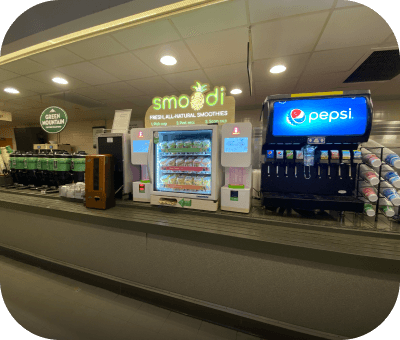
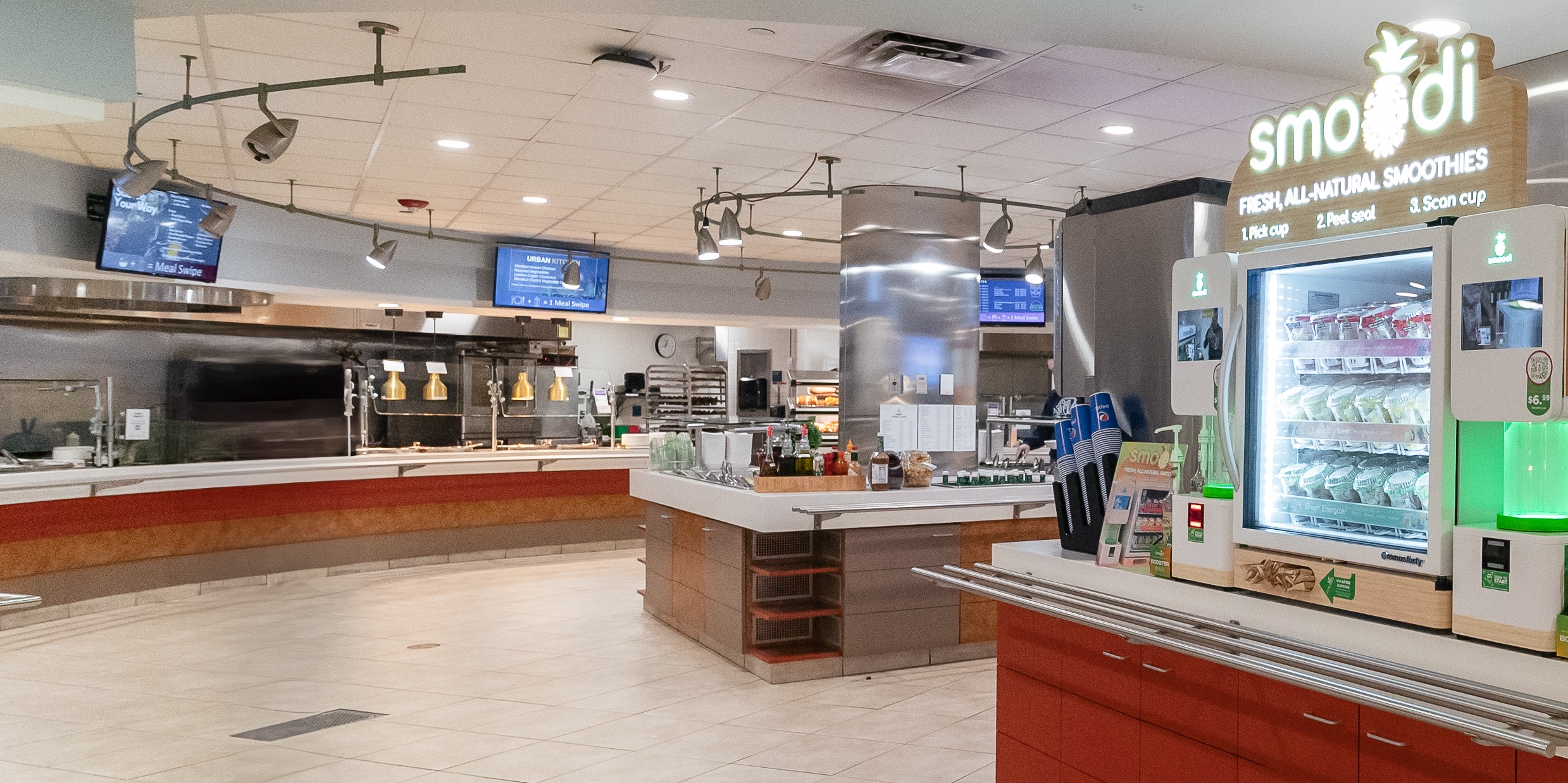
Smoodi's automated smoothie machine addresses the specific constraints that prevent hotels from expanding F&B into unstaffed dayparts and undermonetized locations. The machine occupies approximately 40 inches of floor space, fitting into fitness centers, lobbies, conference areas, and pool-adjacent spaces without construction. It blends a fresh, whole-fruit smoothie in under 60 seconds and self-cleans between every use, eliminating the need for F&B staff at each station.
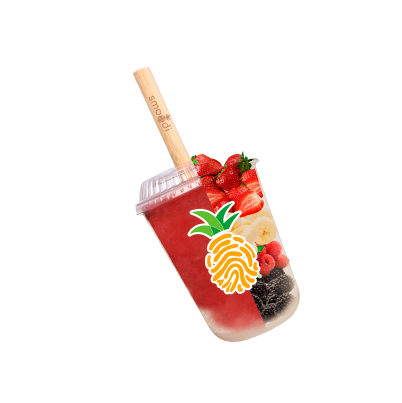
IQF (individually quick frozen) fruit cups are blended with water only, with no syrups, concentrates, or artificial ingredients. This aligns with the wellness positioning that premium hotels seek. Cups have a shelf life of up to two years and are distributed through Dot Foods, integrating with existing hospitality supply chains. The booster bar offers protein powder, collagen, and other functional supplements, allowing guests to customize their smoothie for post-workout recovery or functional nutrition.
"We were looking for quick, healthy options for our customers and smoodi ticked all the boxes. It's quick, self-service, and does the job. The feedback has been great - the lines say it all."
— Jim Launer, President, Spooky Nook Sports
Smoodi operates in more than 300 locations across the United States, with over 2 million smoothies served. The company was founded at Harvard Innovation Labs. The operational lease starts at $299 per month for a 48-month term, with a purchase option at $14,999. For high-volume properties, multiple machines can be installed side by side, blending simultaneously to handle peak traffic during breakfast hours or conference breaks.
What Should Hotel Operators Consider?
Hotel F&B directors and general managers evaluating self-service beverage stations should consider several factors specific to the hospitality environment.
- Brand alignment: the product must match the quality standard guests expect from the property. A self-service station serving a product made from whole fruit with no artificial ingredients aligns with premium and upper-upscale positioning. A vending-style machine with pre-packaged products may not.
- Placement strategy: the highest-revenue placements are locations with consistent foot traffic and natural beverage occasions. Fitness centers, breakfast areas, conference pre-function spaces, and lobby lounges consistently outperform back-of-house or low-traffic corridors.
- Revenue attribution: operators should track self-service beverage revenue separately from existing F&B to measure true incrementality. The goal is to demonstrate that the station is generating new revenue, not shifting existing revenue from the restaurant.
- Guest experience: self-service stations should enhance the guest experience, not create friction. Equipment that is visually appealing, intuitive to use, and consistently clean reinforces the property's brand. Equipment that looks commercial, requires instructions, or shows residue between uses undermines it.
- Multi-property scalability: hotel groups and management companies should evaluate whether a beverage solution can be deployed consistently across properties. Consistent product quality, standardized supply chain, and centralized service contracts simplify multi-property rollouts.
What Is the Opportunity for Hotels That Act Now?
The hotel F&B market is growing at 9.5 percent annually. Within that growth, wellness-driven and self-service formats are outpacing traditional staffed F&B. Hotels that deploy self-service beverage stations in undermonetized locations and unstaffed dayparts are not experimenting with a new concept. They are capturing revenue that their current F&B model leaves on the table every day.
The properties that will capture the most value are those that treat F&B not as a single restaurant operation but as a distributed network of guest touchpoints, each generating revenue without requiring dedicated staff. A fresh, healthy, self-service beverage option in the fitness center, lobby, and conference floor turns three dormant spaces into three revenue-generating stations.
Hotel operators interested in adding self-service beverage stations can explore deployment options and calculate per-property ROI at getsmoodi.com/roi.
Ready to bring Smoodi to your location?
Join hundreds of operators delivering fresh, automated smoothies with zero labor.
Get Started