How Is Lower-Sugar Demand Changing Foodservice?
Roughly 66 percent of consumers report shifting to lower-sugar options. For foodservice operators, this creates both a sourcing challenge and a competitive opportunity.
Sugar reduction is no longer a dietary preference limited to health-conscious consumers. It is a mainstream expectation reshaping how foodservice operators source, formulate, and serve beverages. Roughly 66 percent of consumers report shifting to lower-sugar options, according to TFI Canada's 2026 analysis. SIAL Paris identifies sugar reduction as a defining beverage trend for 2026. BevSource reports that clean label and no artificial ingredients are now table-stakes consumer expectations, not differentiators.
For foodservice operators, this shift creates a practical challenge. Most commercial smoothie and blended beverage programs rely on pre-mixed bases, concentrates, or syrups that contain added sugars. Switching to formulations that genuinely contain no added sugar often requires different equipment, different ingredients, and different supplier relationships. Operators who solve this sourcing problem gain a competitive advantage with the majority of consumers who are actively seeking lower-sugar options.
What Is Driving the Lower-Sugar Beverage Shift?
Consumer Health Awareness
Public awareness of the health effects of excess sugar consumption has reached a tipping point. The American Heart Association recommends limiting added sugars to no more than 25 grams per day for women and 36 grams for men. A single serving of many commercial smoothie bases or fruit concentrates can exceed that daily limit. Consumers are reading labels more carefully than at any point in the past two decades, and beverages with high added-sugar content face declining sales across retail and foodservice channels.
Regulatory Pressure
The USDA 2025-2030 Dietary Guidelines reinforce limits on added sugar and have direct implications for institutional foodservice. Schools, hospitals, universities, and government facilities that participate in USDA-funded meal programs must comply with sugar limits in their menus. The CACFP (Child and Adult Care Food Program) imposes specific sugar thresholds for reimbursable meals. For operators serving these institutions, beverages with added sugars are a compliance liability, not just a consumer preference issue.
Clean Label Expectations
The clean-label movement has converged with sugar reduction. Consumers do not just want less sugar. They want fewer ingredients overall, and they want those ingredients to be recognizable whole foods. BevSource's 2026 analysis confirms that clean label and no artificial ingredients are baseline expectations across every demographic segment. A beverage that replaces sugar with artificial sweeteners does not satisfy this expectation. Consumers want naturally low-sugar products made from real ingredients.
Where Does the Sugar Problem Exist in Foodservice Beverages?
Many operators believe their beverage programs are already healthy because they feature smoothies or fruit-based drinks. The reality is more complicated. The sugar in commercial beverage programs often comes from sources that are not immediately obvious.
- Fruit concentrates: concentrated fruit juice is frequently used as a sweetener in smoothie bases. While technically derived from fruit, the concentration process strips fiber and nutrients while preserving sugar, making it nutritionally equivalent to added sugar.
- Flavored syrups: many commercial smoothie recipes call for flavored syrups that add 15 to 30 grams of sugar per serving. These syrups are often positioned as flavor enhancers rather than sweeteners, obscuring their sugar contribution.
- Pre-mixed bases: liquid smoothie bases that combine fruit puree with juice concentrates, stabilizers, and sweeteners are common in staffed smoothie bars. A single pour of base can contain more sugar than a can of soda.
- Yogurt and dairy additions: flavored yogurts and sweetened dairy products used in smoothie recipes contribute significant added sugar that is not always visible on simplified menu boards.
For operators who want to offer genuinely low-sugar beverages, the path forward requires eliminating these hidden sugar sources entirely, not simply reducing them.
How Does Smoodi Solve the Sugar Challenge?
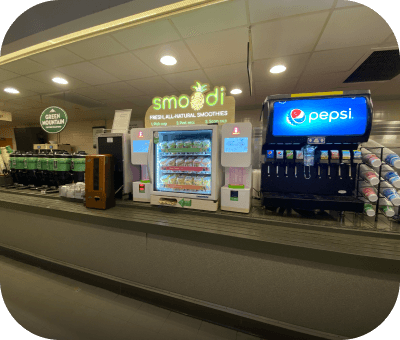
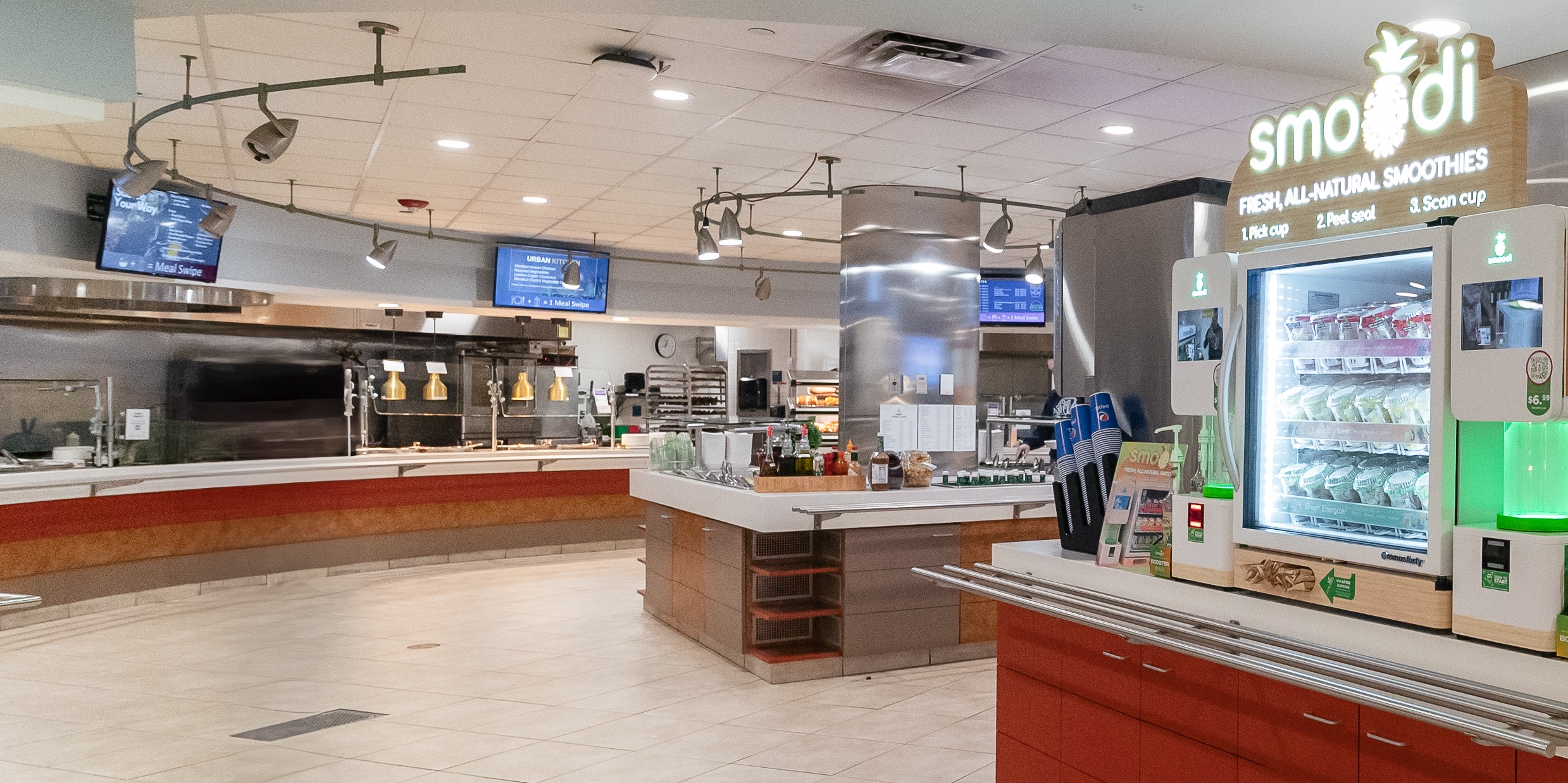
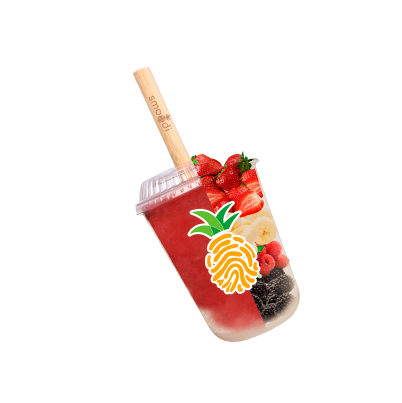
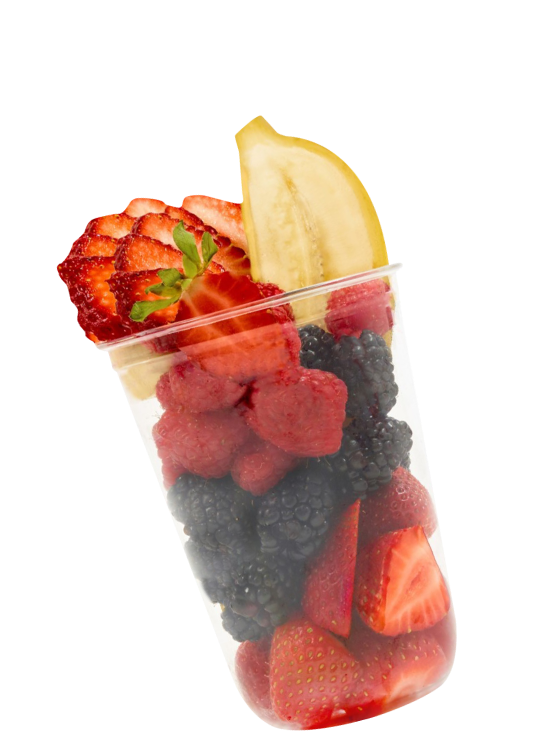
Smoodi's approach eliminates the sugar problem at the product level. Each smoothie is made from IQF (individually quick frozen) real fruit cups blended with water only. There are no syrups, no concentrates, no artificial ingredients, and no added sugar of any kind. The sugar content in a Smoodi smoothie comes exclusively from the natural fruit itself, the same sugar present in eating a piece of whole fruit.
This formulation makes Smoodi compliant with institutional sugar restrictions, including USDA dietary guidelines and CACFP standards, without requiring operators to reformulate or source alternative ingredients. The product meets the standard as produced, with no modifications needed for any institutional setting.
"The investment into smoodi has been phenomenal. We broke even in the first couple of weeks."
— Linda Thacker, Director of Dining Services, Maryville University
Smoodi operates in more than 300 locations across the United States, with over 2 million smoothies served. The company was founded at Harvard Innovation Labs. IQF fruit cups have a shelf life of up to two years and are distributed through Dot Foods. The machine blends a fresh smoothie in under 60 seconds and self-cleans between every use. The operational lease starts at $299 per month for a 48-month term, with a purchase option at $14,999. The booster bar offers protein powder, collagen, and other functional supplements for consumers who want additional nutritional customization.
What Should Operators Look for in Lower-Sugar Beverage Programs?
Operators evaluating beverage programs for sugar compliance and consumer alignment should ask several specific questions before selecting a solution.
- Ingredient transparency: can the supplier provide a complete ingredient list for every product? Are there any concentrates, syrups, or added sweeteners in the formulation?
- Institutional compliance: does the product meet USDA dietary guidelines and CACFP sugar thresholds without modification? Can the supplier provide documentation for compliance audits?
- Consumer perception: will the product satisfy consumers who are actively reading labels and rejecting added-sugar products? Does the ingredient list pass the clean-label test?
- Taste without sugar: does the product deliver a satisfying flavor profile using only whole food ingredients? Sugar-free products that taste bland or artificial will not generate repeat purchases.
- Operational simplicity: does switching to a lower-sugar beverage program require new equipment, new training, or new supplier relationships? The simpler the transition, the faster the ROI.
Where Is the Sugar-Reduction Trend Headed?
When two-thirds of consumers are actively shifting to lower-sugar options, the trajectory is not speculative. Regulatory pressure from USDA guidelines, institutional compliance requirements from CACFP and school nutrition standards, and consumer clean-label expectations are all reinforcing the same direction. Operators who continue to serve beverages with hidden added sugars face growing consumer rejection and potential compliance risk.
The operators best positioned for this shift are those whose beverage programs use whole-food ingredients with zero added sugar as a baseline, not as a premium option. When the product itself is inherently clean, the operator does not need to reformulate, relabel, or explain away an ingredient list. The product simply meets the standard that consumers and regulators increasingly demand.
Foodservice operators interested in a beverage program with zero added sugar can explore options and calculate ROI at getsmoodi.com/roi.
Ready to bring Smoodi to your location?
Join hundreds of operators delivering fresh, automated smoothies with zero labor.
Get Started