What Makes a Successful Return-to-Office Food Program?
Return-to-office mandates are increasing, and food amenities help justify the commute. Self-service nutrition fits offices that downsized during remote work.
Return-to-office mandates continue to expand across major employers in 2026, with companies requiring three to five days of in-office attendance. The operational challenge is no longer whether employees will return but how to make the office experience compelling enough to justify the commute. Food and beverage amenities have emerged as one of the most visible, daily-use investments that employers can make to improve the in-office experience. For facilities teams and workplace experience managers, the question is what kind of food program fits an office that may have downsized its kitchen, reduced its support staff, and reconfigured its floor plan during the shift to remote work.
Why Is Food Central to Return-to-Office Strategy?
DoorDash's 2026 Workplace Meal Trends Report confirms that workplace meal benefits are now a strategic tool for driving employee engagement, with data showing that employees stay later and rely on workplace meals to support extended collaboration. The HR Digest 2026 reports that personalized nutrition support is among the top workplace wellness trends, with food choices recognized as shaped by culture, geography, and access. Wellhub 2026 benchmarks show wellness programs averaging 3:1 to 6:1 ROI across all categories.
Food occupies a unique position among office amenities because it delivers value every single day. A renovated conference room is used occasionally. A rooftop terrace is weather-dependent. A smoothie station or healthy snack program is used daily, often multiple times per day, by employees across every department and level. This frequency creates a baseline of satisfaction that other amenities cannot match.
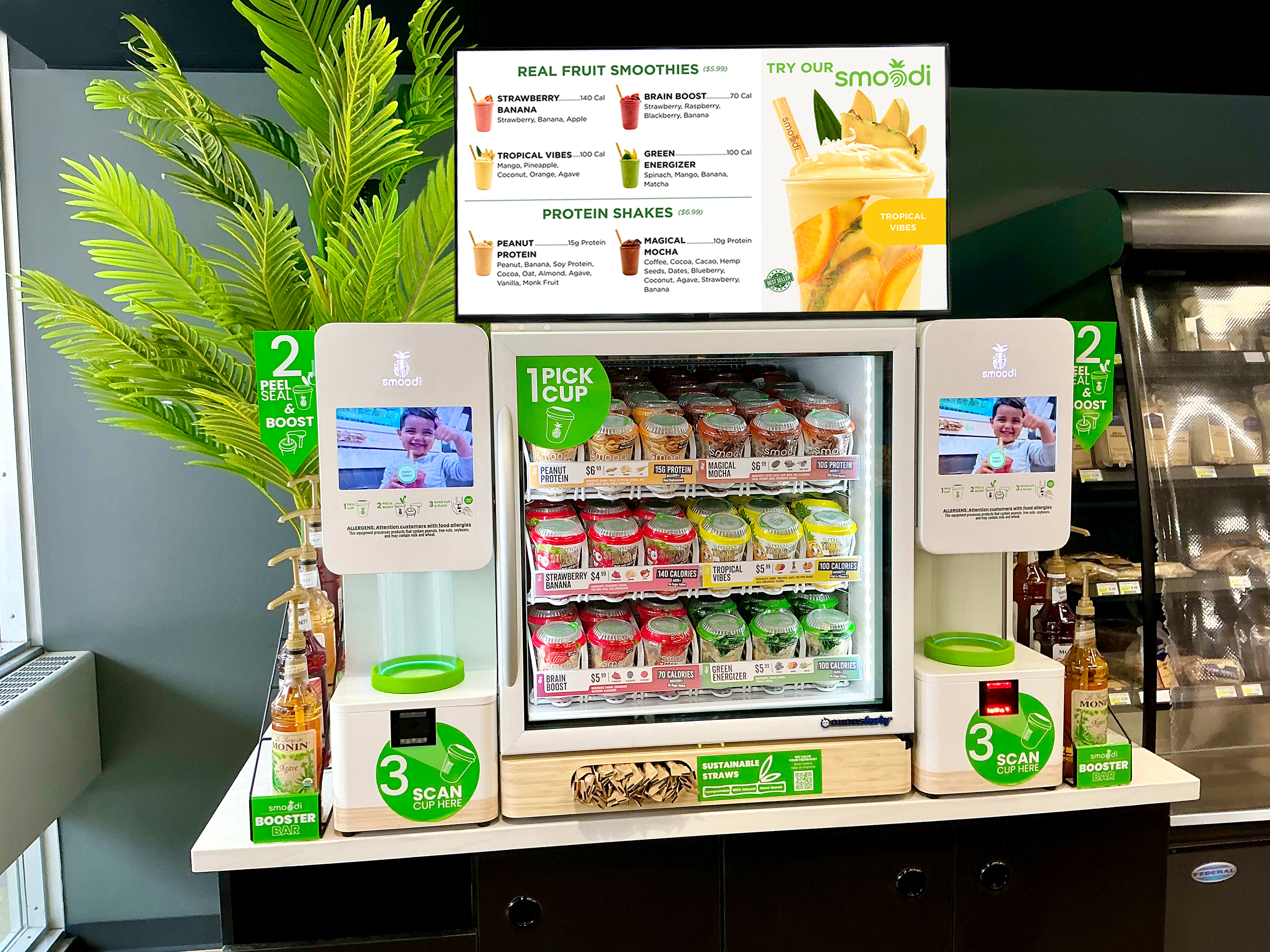
For employees weighing the commute against working from home (where their own kitchen is steps away), the office food program must provide something they cannot easily replicate at home. A bowl of fruit and a coffee machine do not clear this bar. A fresh, whole-fruit smoothie with protein and collagen boosters, prepared in under a minute with zero effort on the employee's part, does.
What Are Companies Doing About Office Nutrition in 2026?
Corporate approaches to office food vary widely based on company size, budget, and office configuration.
Large technology and finance companies with thousands of employees maintain full cafeterias with subsidized meals, barista stations, and snack pantries. These programs cost $10 to $25 per employee per day and require dedicated facilities staff, contracted caterers, and significant floor space. They are effective but cost-prohibitive for most mid-size employers.
Mid-size companies (100 to 1,000 employees) typically offer a combination of a snack pantry (packaged snacks, coffee, and beverages restocked weekly), occasional catered lunches (one to three times per week), and third-party delivery subsidies. These programs provide periodic value but leave gaps on non-catered days and outside lunch hours.
Small companies and satellite offices (fewer than 100 employees) often have minimal food programs: a coffee machine, a water cooler, and whatever employees bring from home. These offices struggle to justify any food amenity investment given the small headcount, yet they face the same return-to-office engagement challenge as larger employers.
"We were looking for ways to give our employees healthier options - smoodi was the answer. It tastes great, our team loves it."
— Eric Rose, President & COO, Shoreham Bank
How Does a Self-Service Station Fit Downsized Offices?
Many offices that transitioned to remote work in 2020 and 2021 reduced their physical footprint during lease renewals. Kitchens were converted to meeting rooms. Break areas were consolidated. Support staff was reduced. When these companies mandate return-to-office attendance, they face a food program gap: the demand for in-office food amenities has returned, but the infrastructure and staff to support a traditional food program have not.
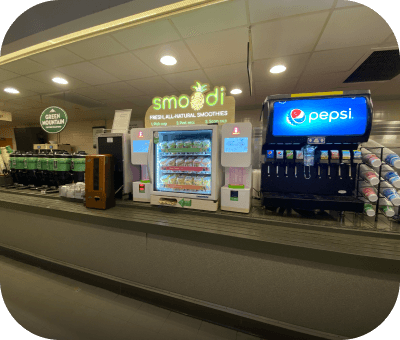
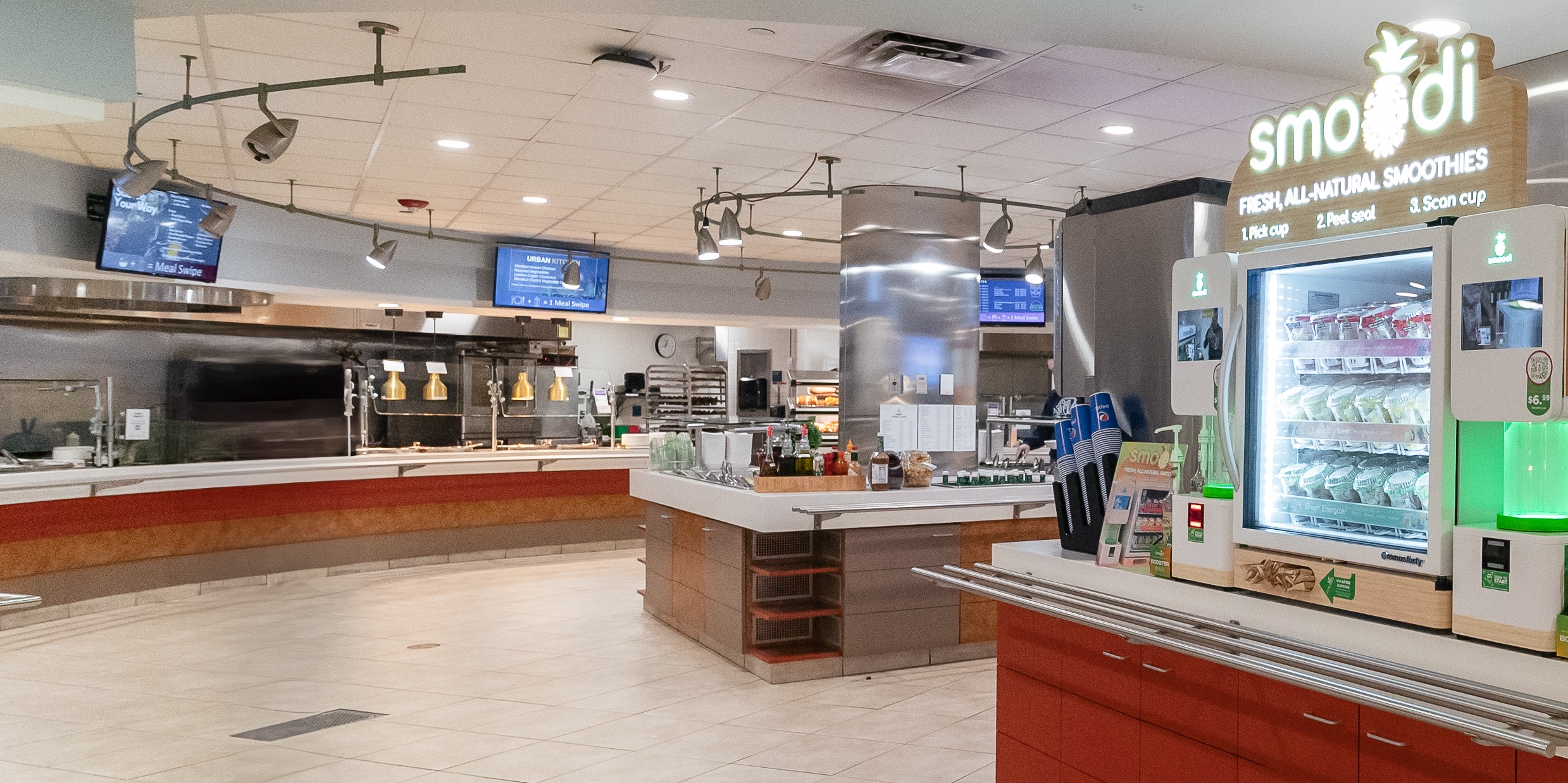
An automated smoothie station addresses this gap precisely. The machine occupies approximately 40 inches of floor space, fitting in a kitchen corner, a break area niche, or a lobby alcove without displacing existing furniture or equipment. It requires no dedicated staff, no food preparation space, and no cleaning crew. The machine self-cleans between every use. Installation requires a standard 120 VAC outlet, water connection, sanitizer inlet, and drain.
For offices that downsized their facilities teams during remote work, the zero-labor operating model is the critical advantage. The workplace experience manager or office coordinator can oversee a smoothie station as part of their existing responsibilities without adding headcount or contracting a food service vendor.
What Financial Model Works for Corporate Deployment?
Smoodi's operational lease starts at $299 per month for a 48-month term, scaling to $499 per month for a 12-month term. The purchase option is $14,999. For corporate budgets, the lease model provides a predictable monthly expense that can be allocated to the workplace experience, employee benefits, or facilities budget without capital expenditure approval.
Some companies absorb the lease and cup costs entirely, offering smoothies as a complimentary employee perk alongside free coffee and snacks. Others subsidize partially, offering smoothies at a reduced price. Either model works, and the financial structure depends on how the company positions the amenity within its broader benefits package.
IQF (individually quick frozen) fruit cups are blended with water only. No syrups, concentrates, or artificial ingredients. The booster bar offers protein powder, collagen, and functional supplements. Cups have a shelf life of up to two years and are distributed through Dot Foods, so ordering is straightforward and waste is eliminated entirely.
"As an office leader, I'm always looking for ways to support my team's health and productivity. smoodi's variety of healthy options are a game-changer."
— Karen Hood, Manager, ZS
What Results Are Employers Seeing?
Employers who have deployed Smoodi stations in their offices report consistent patterns. The station becomes a social anchor point where employees gather, similar to the role a coffee machine plays but with a healthier product. Morning usage peaks around 9:00 to 10:00 AM as employees arrive and settle in. A second peak appears in the mid-afternoon (2:00 to 3:30 PM) during the typical energy dip window. Both usage windows align with the times when employees are most likely to leave the office to buy food elsewhere or consider leaving early.
Smoodi operates in more than 300 locations across the United States, with over 2 million smoothies served. The company was founded at Harvard Innovation Labs. For corporate offices of any size, the combination of whole-ingredient products, zero labor, compact footprint, and predictable monthly costs makes an automated smoothie station one of the most practical food amenity investments for the return-to-office environment.
Workplace experience managers, facilities directors, and HR teams interested in adding a healthy food amenity to their office can explore options at getsmoodi.com/get-started. To evaluate the financial impact, visit getsmoodi.com/roi.
Ready to bring Smoodi to your location?
Join hundreds of operators delivering fresh, automated smoothies with zero labor.
Get Started