Why Are Self-Service Food Stations Growing So Fast?
The self-service food and beverage equipment market is projected to reach $50 billion by 2033. Understanding why helps operators make smarter equipment decisions.
Self-service food and beverage equipment is outpacing every other category in foodservice. The global food and beverage kiosk market was valued at $23.3 billion in 2025 and is projected to reach $50.4 billion by 2033 at a compound annual growth rate of 10.1 percent, according to Verified Market Research. The broader self-service kiosk market reached $39.4 billion in 2024 and is on track for $82.1 billion by 2031 at 11.1 percent CAGR. The Kiosk Industry Association's Tiger Report confirms double-digit growth across the self-service sector for the third consecutive year.
For foodservice operators evaluating where to invest, this growth rate raises a practical question: what is driving it, and does the trend have staying power? The answer lies in three converging forces that show no signs of reversing.
What Is Driving Self-Service Equipment Growth?
Labor Scarcity and Rising Wages
The foodservice labor shortage is not a temporary disruption. The Bureau of Labor Statistics projects a continued gap between open positions and available workers in food preparation and serving roles through at least 2030. Average wages for foodservice workers have risen more than 30 percent since 2020, compressing already thin margins. For operators who need to serve food and beverages during extended hours or across multiple locations, staffing each service point with trained personnel is increasingly unsustainable. Self-service equipment removes the labor variable entirely from the equation.
Consumer Preference for Speed and Autonomy
Consumer research consistently shows that speed and control are the top two factors driving self-service adoption. A majority of consumers now prefer self-service options when the wait time for staffed service exceeds two minutes. This preference spans demographics, though it is strongest among Gen Z and millennial consumers who grew up with self-checkout, mobile ordering, and on-demand services. The expectation is not just that self-service exists, but that it delivers a product of equal or better quality than staffed alternatives.
Operational Consistency Across Locations
Multi-site operators face a fundamental challenge with staffed food programs: the product varies by location because the people making it vary. Different employees measure ingredients differently, follow recipes with different levels of precision, and produce inconsistent results. Self-service equipment eliminates this variability. The product is the same at every location, every time. For franchise networks, hospital systems, university dining programs, and corporate campuses with multiple buildings, this consistency has direct value.
Which Verticals Are Adopting Self-Service Fastest?
Self-service food and beverage equipment is gaining traction across virtually every foodservice vertical, but several segments are adopting at an accelerated pace.
- Airports and travel hubs: the airport food and beverage market is projected to reach $32.56 billion by 2030 according to OpenPR, with self-service stations addressing passenger throughput and limited dwell time
- Hospitals and healthcare: 24/7 operations, staff working rotating shifts, and patient visitors arriving at all hours create demand for food access that does not depend on cafeteria hours
- Universities and campus dining: Gen Z students expect self-service options integrated into their daily routine, and campus dining operations face the same labor constraints as commercial foodservice
- Corporate offices and coworking spaces: employers seeking to provide food amenities without hiring food service staff are turning to self-service stations as a low-overhead solution
- Convenience stores and grocery: retailers are adding self-service food preparation stations to differentiate from pure packaged offerings and capture prepared food margins
The common thread across all of these verticals is the same: operators need to serve food or beverages in locations or at times where staffed service is impractical, too expensive, or both.
What Separates Effective Self-Service Equipment from Underperforming Options?
Not all self-service equipment delivers equal results. Operators who have deployed self-service stations report that the highest-performing equipment shares several characteristics.
- Speed: the product must be ready in under two minutes. Longer cycle times create queues that defeat the purpose of self-service
- Hygiene: self-cleaning capability between uses is critical for health-conscious consumers and for meeting food safety requirements without staff intervention
- Footprint: compact equipment that fits in existing spaces (lobbies, break rooms, corridors) without requiring construction or dedicated square footage
- Supply chain simplicity: ingredients with long shelf life, minimal storage requirements, and distribution through established foodservice channels
- Reliability: equipment that operates consistently with minimal maintenance, because there is no operator standing by to troubleshoot
Equipment that fails on any of these dimensions creates operational friction that undermines the self-service value proposition. A station that requires frequent restocking, regular manual cleaning, or periodic technician visits may save labor at the point of service but shifts that labor to maintenance and support roles.
How Does Smoodi Fit Within This Market?
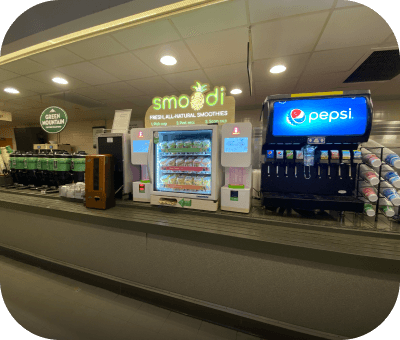
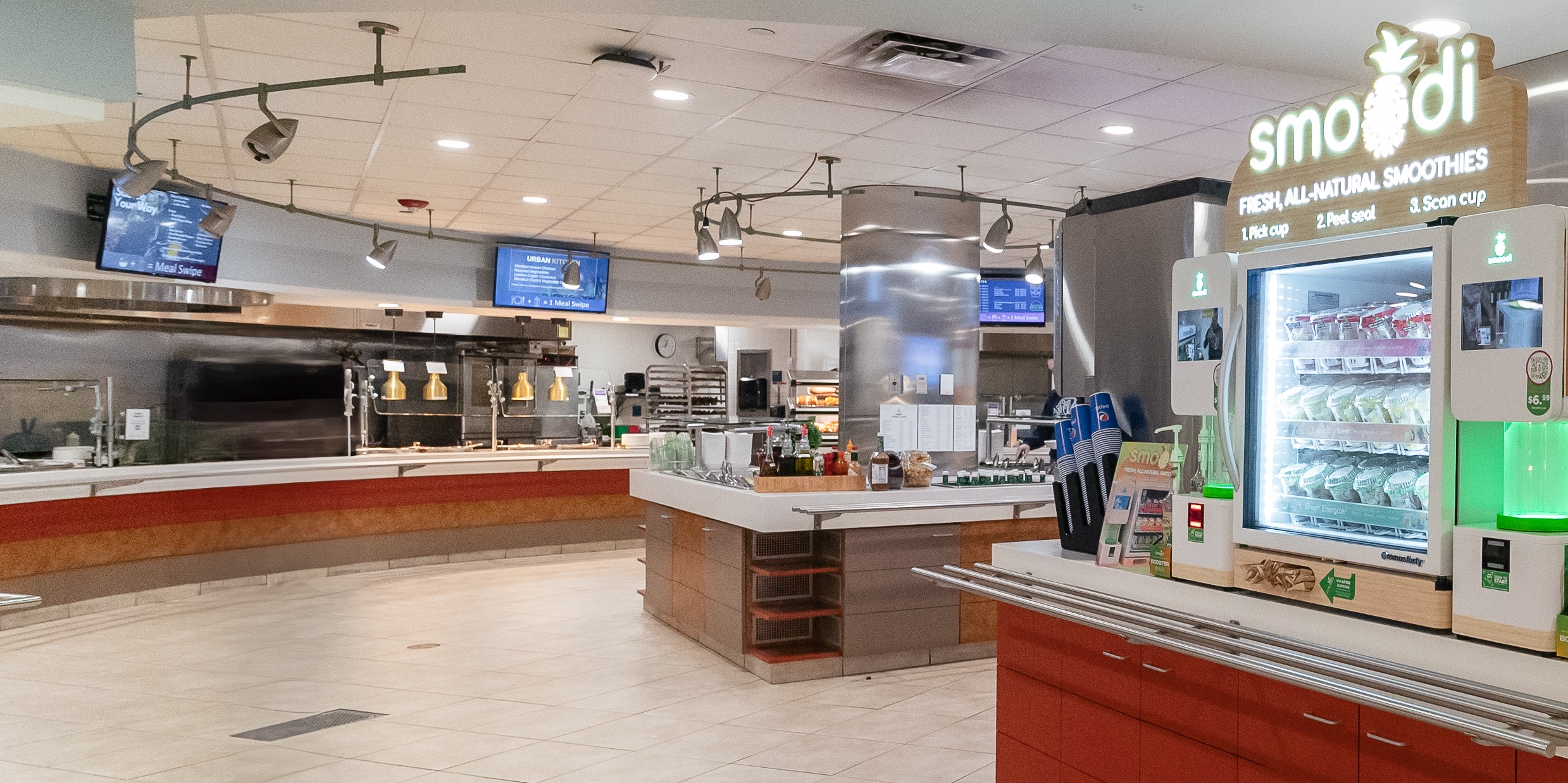
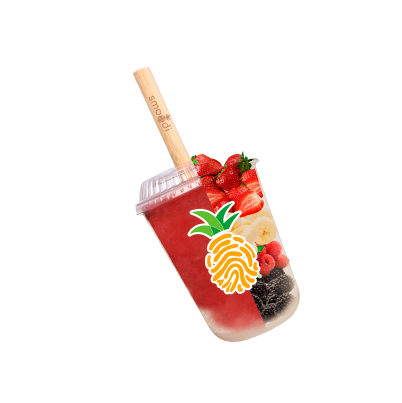
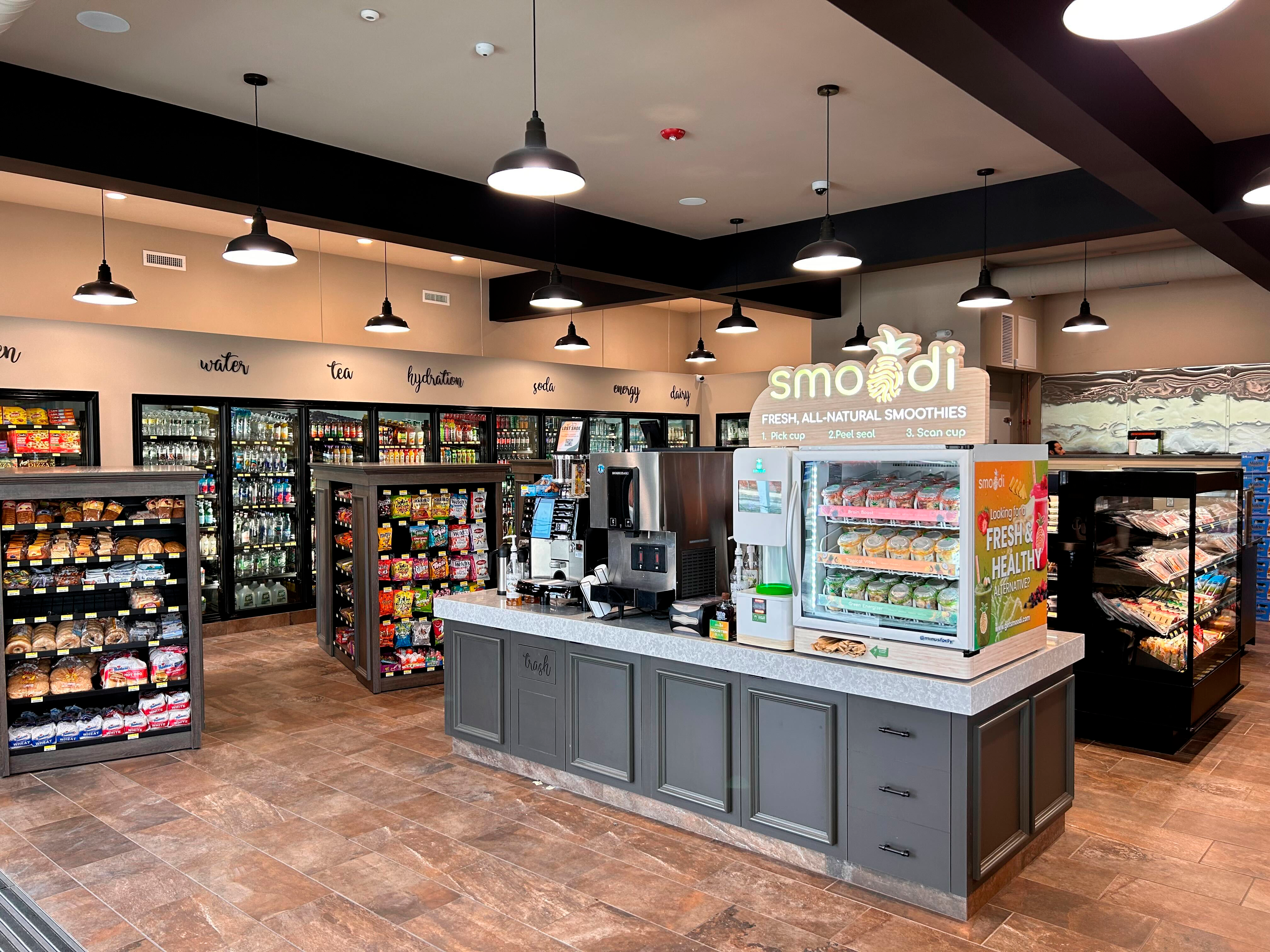
Smoodi's automated smoothie machine is built specifically for the self-service model. The machine blends a fresh, whole-fruit smoothie in under 60 seconds and self-cleans between every use. It occupies approximately 40 inches of floor space, fitting into lobbies, break rooms, hallways, and concession areas without construction. IQF (individually quick frozen) fruit cups are blended with water only, with no syrups, concentrates, or artificial ingredients. Cups have a shelf life of up to two years and are distributed through Dot Foods, integrating with existing foodservice supply chains.
"We were looking for quick, healthy options for our customers and smoodi ticked all the boxes. It's quick, self-service, and does the job. The feedback has been great - the lines say it all."
— Jim Launer, President, Spooky Nook Sports
Smoodi operates in more than 300 locations across the United States, with over 2 million smoothies served. The company was founded at Harvard Innovation Labs. The operational lease starts at $299 per month for a 48-month term, with a purchase option at $14,999. The booster bar offers protein powder, collagen, and other functional supplements. For high-volume locations, multiple machines can be installed side by side in the same footprint as a single competitor kiosk, blending simultaneously to handle peak traffic without queues.
What Does the Growth Trajectory Mean for Operators?
The self-service food and beverage equipment market is not in an early experimental phase. With a market value already exceeding $23 billion and growth rates above 10 percent annually, self-service stations have moved from novelty to standard infrastructure across foodservice verticals. Operators who adopt now are joining an established and accelerating trend. Operators who wait risk falling behind competitors who have already integrated self-service options into their food programs.
The practical takeaway for operators evaluating equipment investments: self-service stations that deliver fresh, quality products without labor, without large footprints, and without complex supply chains are the fastest-growing equipment category in foodservice for a reason. They solve the problems that operators across every vertical are facing today.
Foodservice operators interested in adding a self-service beverage station can explore options and calculate ROI at getsmoodi.com/roi.
Ready to bring Smoodi to your location?
Join hundreds of operators delivering fresh, automated smoothies with zero labor.
Get Started