What Does the $27 Billion Smoothie Market Mean for Foodservice Operators?
The global smoothie market has reached $27.35 billion in 2026, projected to grow to $47.71 billion by 2034. Here is how operators can position themselves to capture their share of this expanding category.
The global smoothie market is valued at $27.35 billion in 2026, according to Fortune Business Insights, and is projected to reach $47.71 billion by 2034 at a compound annual growth rate of 7.2%. Other research firms offer varying estimates depending on segment definitions, with figures ranging from $16.65 billion to $21.34 billion for more narrowly defined categories. Regardless of which figure operators reference, the direction is unambiguous: smoothie consumption is growing substantially, and the growth is structural rather than cyclical.
For foodservice operators, these market numbers translate into a concrete question: are you positioned to capture your share of this demand, or are you ceding it to competitors and retail alternatives? The operators who invest in smoothie capabilities now are building revenue streams that will compound as the market grows through the end of the decade.
What Is Driving Smoothie Market Growth?
Several long-term consumer trends are fueling the growth of the smoothie market. The shift toward plant-based and plant-forward diets has made fruit-based beverages a natural daily choice for a growing segment of the population. Consumer awareness of the connection between diet and health outcomes continues to increase, driving demand for food and beverages that deliver measurable nutritional benefits.
Clean-label expectations are reshaping what consumers accept in their beverages. Products with artificial colors, flavors, preservatives, or excessive added sugars face growing consumer resistance. Smoothies made from real, recognizable ingredients align with these expectations and benefit from the broader clean-label trend that is reshaping the entire food and beverage industry.
The functional beverage segment within the smoothie market is growing even faster than the category overall. Consumers increasingly want their smoothies to do more than taste good. They want beverages that deliver specific nutritional outcomes: protein for muscle recovery, fiber for gut health, antioxidants for immune support, and collagen for skin health. This functional demand creates opportunities for operators to offer premium, customizable smoothie programs that command higher price points and build customer loyalty.
Which Market Segments Are Growing Fastest?
Within the $27.35 billion smoothie market, growth is not distributed evenly. Several segments are expanding significantly faster than the overall category:
- Functional and fortified smoothies with added protein, fiber, probiotics, and adaptogens represent the fastest-growing sub-category
- Self-service and automated smoothie formats are gaining share from staffed smoothie bars as operators prioritize labor efficiency
- Institutional foodservice (universities, hospitals, corporate offices) is adding smoothie programs at a higher rate than commercial restaurant channels
- Grab-and-go smoothie formats in convenience stores, airports, and grocery stores are expanding the total addressable market
- Whole-fruit and clean-label smoothies are gaining share from products made with concentrates, syrups, or artificial ingredients
These growth patterns point to a common theme: consumers want genuine, nutritious smoothies in convenient formats, and operators who can deliver that combination efficiently are winning market share. The days of smoothies being a specialty offering found only in dedicated smoothie shops are over. Smoothies are becoming a mainstream foodservice category present in every venue type.
The Operator's Market Entry Challenge
Despite the clear market opportunity, many foodservice operators have hesitated to launch smoothie programs. The barriers are well documented: labor costs for dedicated smoothie preparation staff, waste from perishable fresh ingredients, the complexity of managing recipes and inventory, and the capital investment required for commercial blending equipment and prep areas.
These barriers explain why the smoothie market has historically been dominated by dedicated smoothie chains and juice bars rather than by the institutional foodservice operators who serve the largest daily customer volumes. University dining halls, hospital cafeterias, corporate cafeterias, and fitness centers collectively serve millions of consumers daily, but most have not offered smoothie programs because the operational model did not fit their constraints.
Automated smoothie technology has changed this equation. Operators no longer need to choose between offering smoothies and managing the complexity of a traditional smoothie program. Self-service machines that handle blending, portioning, and cleaning eliminate the operational barriers that kept institutional operators out of the smoothie market.
How Smoodi Positions Operators in a $27 Billion Market
Smoodi's automated smoothie machines enable operators across every foodservice segment to participate in the growing smoothie market without the traditional barriers. Each machine uses sealed IQF (individually quick frozen) fruit cups containing real fruit, blended with water only. No syrups, concentrates, or artificial ingredients. This positions every Smoodi smoothie in the fastest-growing segments of the market: clean-label, whole-fruit, and functional beverages.
The booster bar adds functional customization that taps into the premium segment of the smoothie market. Protein powder, collagen, and other supplements allow consumers to personalize their smoothie for specific health goals. This functional capability means Smoodi smoothies compete not just in the basic fruit smoothie category but in the higher-value, faster-growing functional beverage segment.
"We were looking for quick, healthy options for our customers and smoodi ticked all the boxes. It's quick, self-service, and does the job. The feedback has been great, the lines say it all."
— Jim Launer, President, Spooky Nook Sports
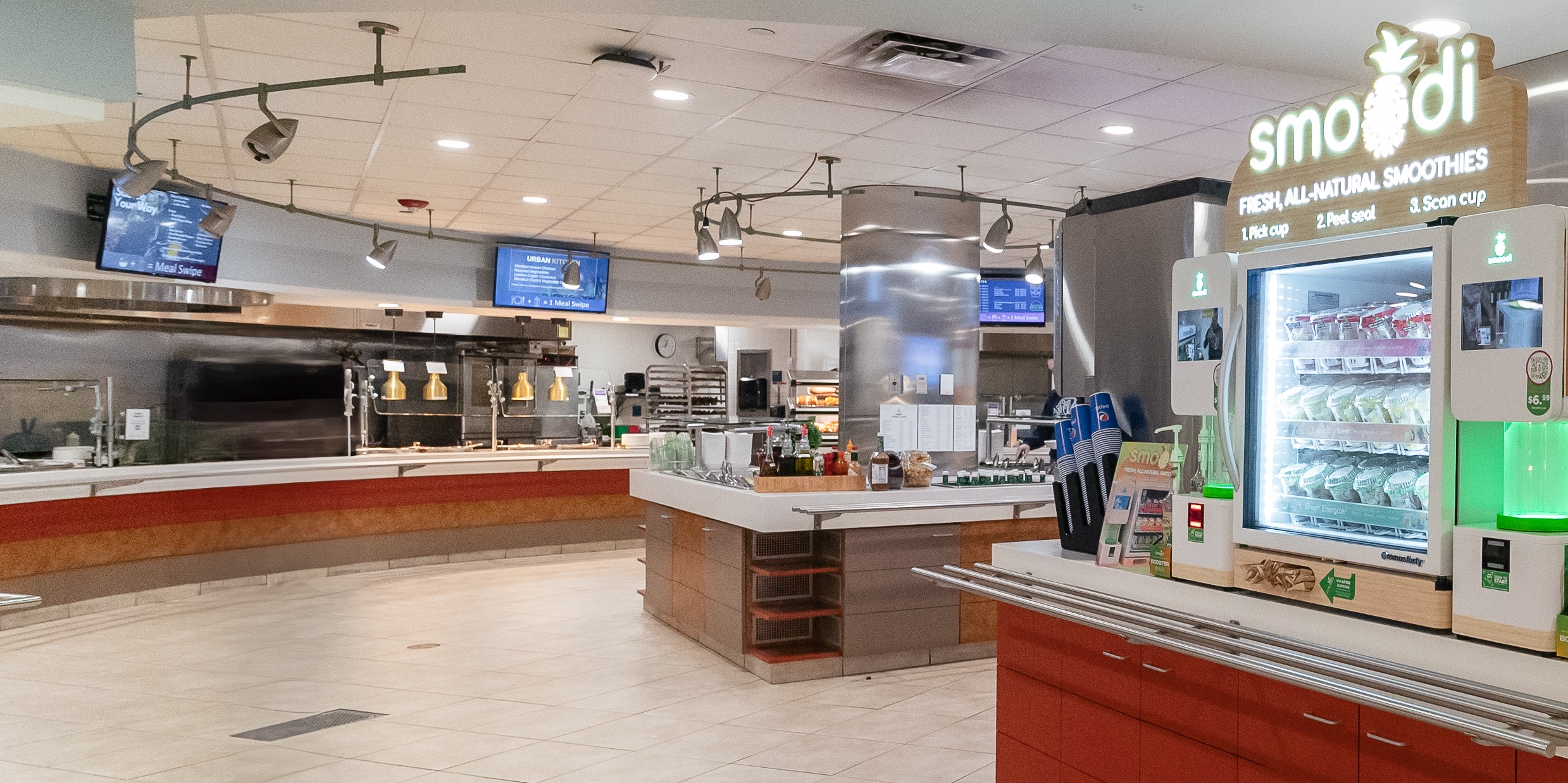
The machine's compact footprint (approximately 40 inches of floor space) and standard utility requirements (120V outlet, water inlet, sanitizer inlet, and drain connection) make it practical for operators to add smoothie service to existing foodservice areas. The machine blends each smoothie in under 60 seconds and self-cleans between every use, requiring zero dedicated staff.
Market Capture Economics
For operators evaluating the smoothie market opportunity, the financial model is straightforward. Smoodi operational leases start at $299 per month for 48-month terms, with 36-month ($349), 24-month ($399), and 12-month ($499) options available. Purchase pricing starts at $14,999. Operators pay the lease or purchase cost plus cup costs, and keep the margin on every smoothie sold.
The zero-labor model means there is no incremental staffing cost per smoothie served. The two-year shelf life of IQF fruit cups means there is no ingredient waste. Distribution through Dot Foods provides reliable, nationwide supply chain access. These factors combine to create a cost-per-serving that is dramatically lower than traditional smoothie programs, enabling operators to price competitively while maintaining strong margins.
For high-volume locations, multiple Smoodi machines can be installed side by side to meet peak demand. Each machine operates independently, so throughput scales without bottlenecks. This approach allows operators to match their smoothie capacity to actual demand rather than investing in oversized equipment based on peak projections.
Capturing Your Share of the Smoothie Market
The $27.35 billion smoothie market is not going to wait for operators to decide whether smoothies belong on their menu. Consumer demand is growing at 7.2% annually, driven by health awareness, clean-label preferences, and the rise of functional beverages. Operators who enter the market now build brand recognition, customer habits, and operational expertise that compound as the market grows toward $47.71 billion by 2034.
With over 300 locations across the US and more than 2 million smoothies served, Smoodi has demonstrated that automated smoothie service works across diverse foodservice environments. Founded at the Harvard Innovation Labs, Smoodi was built to make the smoothie market accessible to every operator, from a single-location fitness center to a multi-campus university system. The technology, the supply chain, and the financial model are all in place. The market opportunity is clear.
Operators ready to capture their share of the smoothie market can explore lease and purchase options at getsmoodi.com/get-started, or evaluate the financial model for their specific location at getsmoodi.com/roi.
Ready to bring Smoodi to your location?
Join hundreds of operators delivering fresh, automated smoothies with zero labor.
Get Started