What Should Operators Know About Total Cost of Ownership?
The sticker price of foodservice equipment is only the beginning. Understanding total cost of ownership helps operators avoid hidden expenses and make smarter investment decisions.
Every foodservice operator who has purchased equipment knows the sticker price rarely tells the full story. A piece of equipment that costs $15,000 upfront may cost $25,000 or more over its useful life when maintenance, labor, consumables, training, downtime, and waste are factored in. Yet most purchasing decisions are made based on the initial price tag alone. The operators who consistently make better equipment investments are the ones who evaluate total cost of ownership (TCO) before signing a purchase order.
This guide walks through the components of TCO for foodservice beverage equipment, explains where hidden costs accumulate, and provides a framework operators can use to compare options on a true cost basis.
What Is Total Cost of Ownership for Foodservice Equipment?
Total cost of ownership is the sum of all costs associated with acquiring, operating, maintaining, and eventually replacing a piece of equipment over its useful life. For foodservice beverage equipment, TCO includes the purchase price or lease payments, installation costs, labor to operate and clean, ingredients and consumables, maintenance and repairs, training costs for new staff, waste and spoilage, utility costs, and the cost of downtime when the equipment is out of service.
WebstaurantStore notes that while purchasing equipment outright saves money over the long term, leasing preserves cash flow, which is the number one cause of restaurant failure in the first year. TFI Canada confirms that leasing is often the safer choice for most new operators because it limits financial exposure and includes service coverage. The right answer depends on the operator's specific financial situation, but the decision should be based on TCO, not sticker price alone.
Where Do Hidden Costs Accumulate?
Labor Costs
For staffed beverage programs, labor is typically the largest cost component, often exceeding the equipment cost within the first year. A single full-time beverage operator costs $35,000 to $50,000 annually in wages, benefits, and payroll taxes. Part-time staff cost less per hour but introduce scheduling complexity and inconsistency. Training new employees after turnover adds cost each cycle. For equipment that operates without dedicated staff, this line item drops to zero.
Maintenance and Repairs
Commercial beverage equipment requires regular maintenance: blade replacement, motor servicing, seal replacement, calibration, and deep cleaning. Without a maintenance contract, individual service calls typically cost $150 to $400 per visit. Unplanned repairs can exceed $1,000. Over a five-year ownership period, maintenance costs can add 15 to 30 percent to the original purchase price. Some operators factor this in when budgeting, but many discover these costs only after the equipment is installed.
Ingredient Waste and Spoilage
Fresh ingredients for beverage programs have a short shelf life. A smoothie program using fresh fruit experiences spoilage rates of 10 to 25 percent depending on the fruit type, storage conditions, and demand variability. Over a year, this waste represents a significant cost. Frozen pre-portioned ingredients reduce spoilage to near zero, but operators should evaluate the shelf life and storage requirements of any ingredient format.
Training and Turnover
Foodservice experiences high employee turnover, particularly in preparation roles. Each new hire requires training on recipes, equipment operation, cleaning protocols, allergen management, and portion control. For a staffed beverage station, the training cost per new employee typically ranges from $500 to $2,000 when accounting for trainer time, reduced productivity during the learning period, and initial waste from errors. At an average turnover rate of 75 percent annually, this cost recurs frequently.
Downtime
When equipment breaks down, the direct cost of repair is only part of the impact. Lost revenue during downtime, customer dissatisfaction, and the operational disruption of rerouting staff or inventory all carry costs that are difficult to quantify but real. Equipment with remote monitoring, predictive maintenance capabilities, and included service agreements minimizes downtime risk.
How Should Operators Compare Lease and Purchase Options?
The lease versus purchase decision should be evaluated on TCO, not monthly payment versus sticker price. A useful framework considers costs across three time horizons.
Three-Year Comparison
At the three-year mark, leasing typically costs more in total payments than purchasing outright. However, leasing preserves capital for revenue-generating investments, includes maintenance and service in many contracts, and provides flexibility to upgrade or return equipment if business needs change. For operators in their first three years of operation, the cash flow preservation and risk mitigation of leasing often outweigh the higher total payments.
Five-Year Comparison
At five years, the TCO gap between leasing and purchasing narrows when maintenance, repair, and service costs are factored into the purchase scenario. An operator who purchased equipment outright and then pays for maintenance contracts, individual service calls, and parts replacement may find that total expenditure approaches what a lease with included service would have cost.
Seven-Year Comparison
At seven years, purchasing generally results in lower total expenditure, assuming the equipment remains functional and does not require major component replacement. However, seven-year-old equipment may lack software updates, energy efficiency improvements, and feature advancements that newer equipment provides. The opportunity cost of operating outdated equipment is difficult to quantify but should be part of the evaluation.
How Does Smoodi's Model Address Total Cost of Ownership?
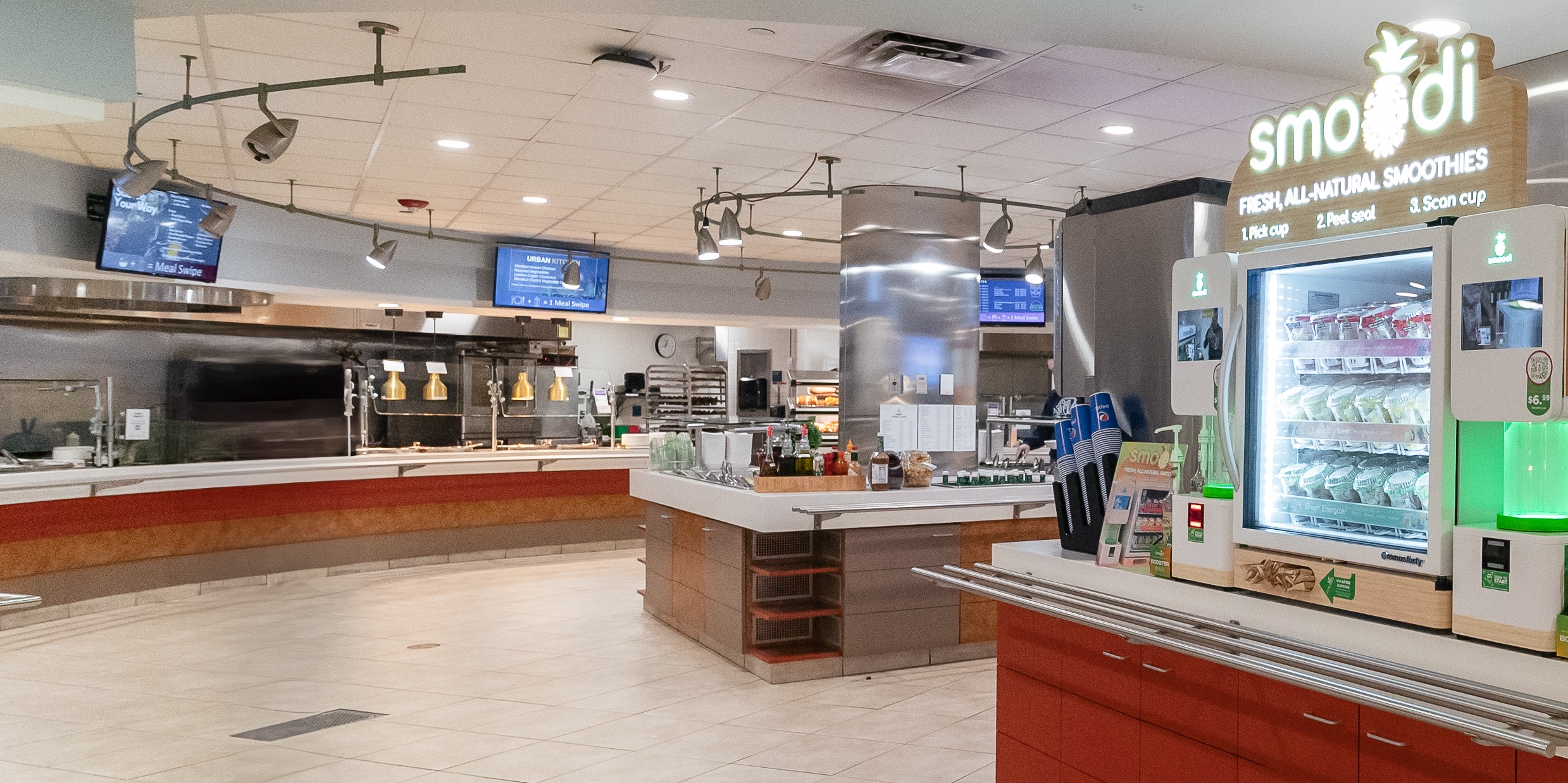
Smoodi's equipment programs are designed to simplify the TCO calculation by consolidating costs that are typically separate line items.
- Operational lease ($299 to $499 per month depending on term length) includes the machine, full service and maintenance, software updates, and support. No separate maintenance contracts, no per-visit service fees, no parts costs.
- Purchase option ($14,999) is available for operators who prefer ownership. Smoodi retains ownership under the lease model and handles all service.
- Zero labor: the machine blends a fresh smoothie in under 60 seconds and self-cleans between every use. No dedicated operator, no training costs, no turnover impact.
- IQF fruit cups with up to two years of shelf life eliminate waste and spoilage. Cups are blended with water only, with no syrups, concentrates, or artificial ingredients.
- Distribution through Dot Foods integrates with existing foodservice supply chains, avoiding the complexity of managing a separate fresh produce vendor.
- The machine requires approximately 40 inches of floor space, a standard 120 VAC / 7A outlet, water connection (3/8 inch push-to-connect, 50 to 80 PSI), sanitizer inlet (1/4 inch push-to-connect), and drain.
"The investment into smoodi has been phenomenal. We broke even in the first couple of weeks."
— Linda Thacker, Director of Dining Services, Maryville University
For operators evaluating the TCO of a beverage program, Smoodi's model consolidates what would typically be five to seven separate cost categories (equipment, labor, maintenance, ingredients, training, waste, service) into two predictable line items: a lease payment and cup costs. The operator retains the margin on each smoothie sold.
A Practical TCO Evaluation Checklist
Before committing to any foodservice beverage equipment, operators should calculate TCO using the following framework.
- Purchase price or total lease payments over the intended use period
- Installation costs including utilities, construction, and setup labor
- Annual labor cost for dedicated operators (if required), including benefits and payroll taxes
- Annual training cost, factoring in expected turnover rate
- Annual maintenance and repair costs, including service contracts and per-visit charges
- Annual ingredient cost, including estimated waste and spoilage percentage
- Annual utility cost (electricity, water, gas)
- Estimated downtime cost per year (lost revenue during equipment outages)
- Upgrade or replacement cost at end of useful life
Adding these components together produces a true cost picture that enables apples-to-apples comparison between equipment options. The equipment with the lowest sticker price is not always the equipment with the lowest total cost.
Smoodi operates in more than 300 locations across the United States, with over 2 million smoothies served. The company was founded at Harvard Innovation Labs. Operators interested in a detailed total cost comparison for their specific facility can request a custom analysis at getsmoodi.com/roi.
Ready to bring Smoodi to your location?
Join hundreds of operators delivering fresh, automated smoothies with zero labor.
Get Started