How Is Unattended Retail Reshaping Food Access?
The self-service kiosk market is valued at $28 to $39 billion in 2026, growing at 11 percent annually. Automated fresh-preparation stations are emerging as a distinct category alongside vending and micro markets.
The self-service kiosk market is valued at $28 to $39 billion in 2026, depending on the market research source, and growing at 11 percent or higher compound annual growth rate toward $82 billion by 2031. Unattended retail, the broader category that includes vending machines, micro markets, smart coolers, and automated food stations, is reshaping how consumers access food and beverages in every setting from offices and campuses to hospitals, airports, and retail environments. For foodservice operators, facilities managers, and workplace amenity buyers, the growth of unattended retail creates a strategic question: which unattended format best fits your location, your consumers, and your operational capabilities?
What Are the Three Formats of Unattended Food Retail?
Unattended food retail has evolved into three distinct formats, each with different capabilities, limitations, and operational requirements. Understanding the differences is essential for operators evaluating which format to deploy.
Format 1: Traditional and Smart Vending
Traditional vending machines dispense pre-packaged, shelf-stable products. Smart vending adds digital interfaces, cashless payment, inventory tracking, and sometimes age verification. The product is manufactured, packaged, and placed in the machine at a distribution center or commissary. The machine stores and dispenses; it does not prepare anything. Advantages include low space requirements, established supply chains, and minimal maintenance. Limitations include product freshness (everything is pre-packaged), limited variety per machine, and the perception among health-conscious consumers that vending equals junk food. Fifty-eight percent of consumers say they prefer healthier vending options, indicating that the traditional vending product mix does not align with current demand.
Format 2: Micro Markets
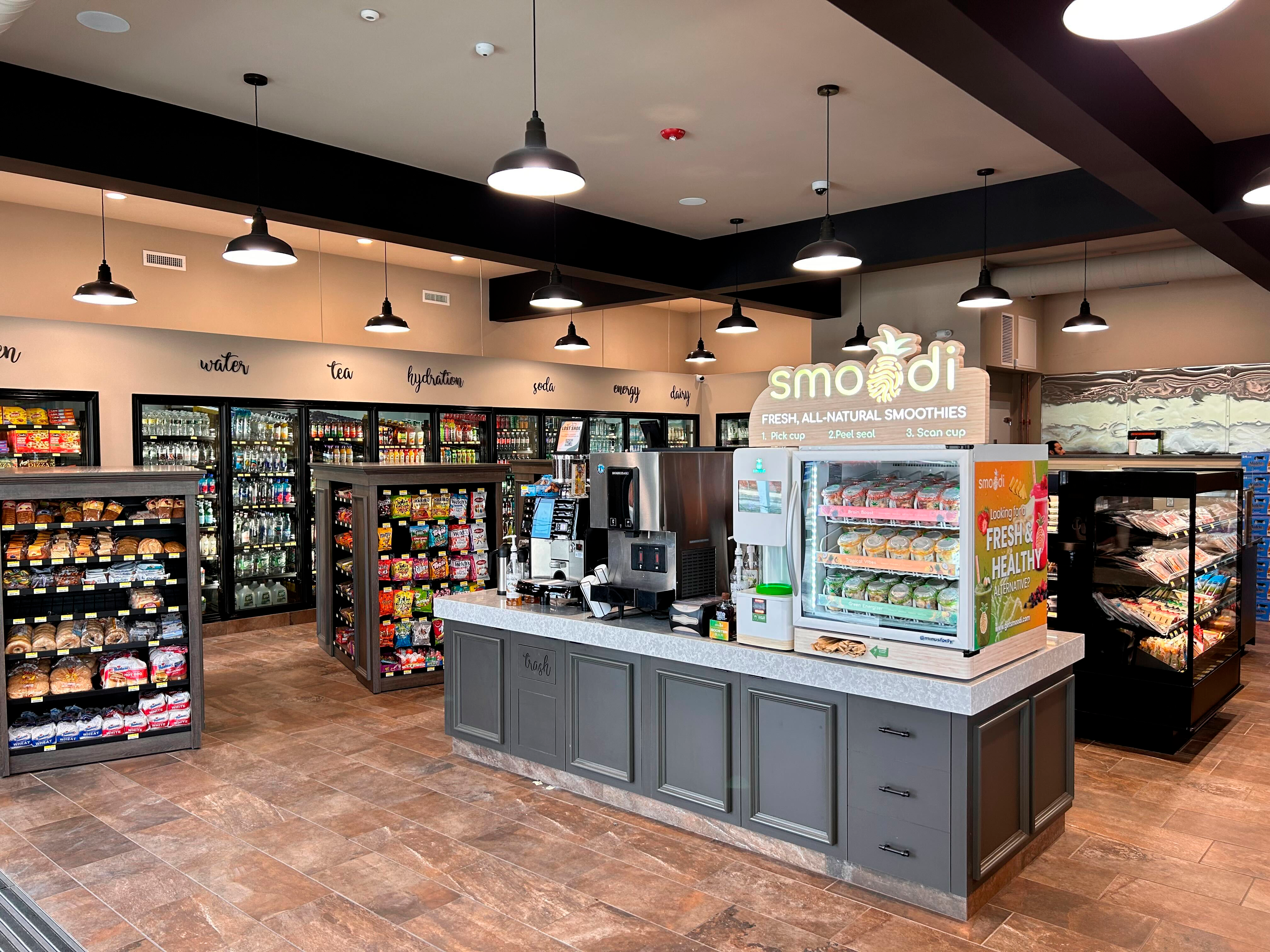
Micro markets are open-format, self-checkout retail environments typically installed in workplaces, hospitals, and educational institutions. They resemble a small convenience store: open shelving, refrigerated cases, and a self-checkout kiosk. Micro markets offer significantly more variety than vending machines and can include fresh items such as sandwiches, salads, yogurt, and beverages. The format is the fastest-growing segment of workplace refreshment, expanding at 10 percent or more annually. Limitations include the need for regular restocking (often daily for perishable items), refrigeration requirements, shrinkage risk from the open format, and a physical footprint that typically requires 50 to 150 square feet of dedicated space.
Format 3: Automated Fresh-Preparation Stations
The third and newest format is the automated preparation station: equipment that prepares food or beverages on demand from ingredient inputs, without a human operator. Unlike vending (which dispenses pre-made products) or micro markets (which display products for self-selection), automated preparation stations actually make the product at the point of service. The customer initiates the preparation, the equipment executes it, and the result is a fresh, made-to-order product delivered in real time. This format occupies a unique position in the unattended retail landscape because it solves the fundamental tension between freshness and unattended operation. Vending sacrifices freshness for automation. Micro markets maintain freshness but require regular human restocking and risk perishable waste. Automated preparation stations deliver a fresh product from shelf-stable ingredients, combining the unattended operation of vending with the quality perception of a staffed food station.
What Operational Challenges Do Unattended Formats Face?
Each unattended format carries operational challenges that operators must evaluate before deployment. The challenges differ by format, but they cluster around four themes: perishable management, maintenance, labor, and quality perception.
Perishable management is the most persistent challenge. Forty-eight percent of vending operators report technical maintenance challenges, and perishable items amplify the problem. Products with short shelf life require frequent restocking, cold-chain integrity throughout the supply chain, and real-time inventory monitoring to prevent waste and out-of-stock situations. A micro market with sandwiches and salads may require daily restocking, and unsold items become waste at the end of each day.
Maintenance requirements vary by format complexity. Traditional vending machines require periodic mechanical servicing and product loading. Smart vending adds software updates and digital component maintenance. Micro markets require restocking labor, planogram management, and self-checkout system maintenance. Automated preparation equipment requires cleaning, ingredient replenishment, and mechanical servicing, though the frequency depends on the specific equipment design.
Labor remains a factor even in unattended formats. Vending machines need route drivers to restock them. Micro markets need merchandisers to maintain inventory. The label unattended refers to the customer-facing operation, not the back-end logistics. Operators evaluating unattended retail should calculate the total labor requirement, not just the absence of a cashier.
How Do Shelf-Stable Ingredients Change the Equation?
The breakthrough that makes automated fresh-preparation stations viable as an unattended retail format is the use of shelf-stable ingredients that produce fresh results. When the input ingredient does not require daily cold-chain management, the restocking frequency drops from daily to weekly or monthly. When the input ingredient has a shelf life measured in months or years rather than days, waste from unsold perishables drops to near zero. When the equipment self-cleans, the maintenance labor requirement drops to periodic servicing rather than daily sanitation.
This combination of shelf-stable inputs and fresh outputs is what distinguishes automated preparation from both vending and micro markets. The operator stocks the machine with long-shelf-life ingredients at low frequency. The machine prepares a fresh product at the moment of purchase. The customer receives something that tastes and looks freshly made, because it was. The operator avoids the daily labor, waste, and logistics burden of perishable inventory.
For operators who have avoided unattended food retail because of perishable management complexity, this format removes the primary barrier to entry. The economics shift from a daily operational burden to a periodic restocking task, making unattended fresh food viable in locations that could never support a micro market or staffed station.
Where Does Unattended Fresh Preparation Fit Best?
Automated fresh-preparation stations are most valuable in locations that meet three criteria: consumer demand for fresh, healthy food exists; traditional staffed foodservice is impractical or uneconomical; and the location can support basic utility connections.
- Office breakrooms and lobbies where companies want to offer health-forward amenities without hiring foodservice staff
- Hospital common areas, lobbies, and staff lounges where 24/7 fresh food access is needed but cafeteria hours are limited
- University residence halls, libraries, and fitness centers where students want food access outside dining hall hours
- Fitness centers and wellness facilities where members expect post-workout nutrition options
- Hotel lobbies and fitness centers where guests expect wellness amenities across all dayparts
- Airport gate areas and transit hubs where space is at a premium and demand is highly variable
- Corporate campuses and co-working spaces where food perks support employee recruitment and retention
How Does Smoodi Fit the Unattended Retail Category?
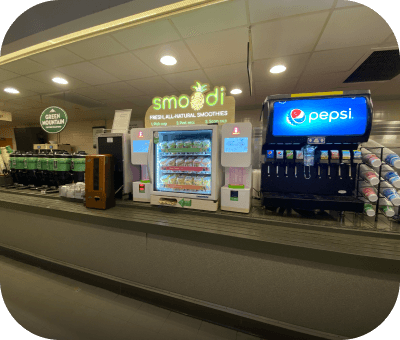
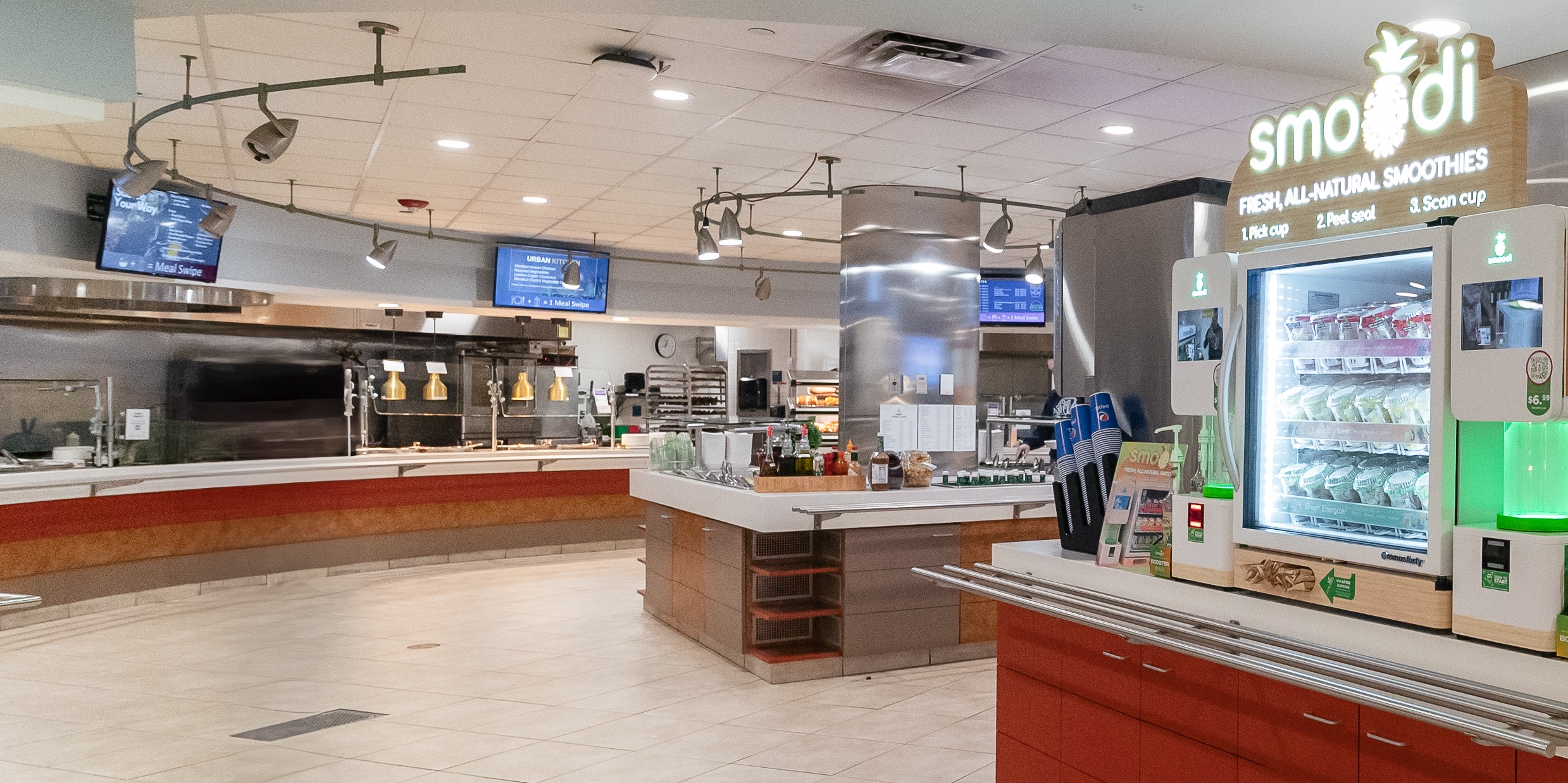
Smoodi's automated smoothie machine is an automated fresh-preparation station that solves the three core challenges of unattended food retail. First, it solves the perishable problem: IQF (individually quick frozen) real fruit cups have a shelf life of up to two years, eliminating daily restocking, cold-chain logistics, and perishable waste. Second, it solves the maintenance problem: the machine self-cleans between every use, requiring no daily sanitation labor. Third, it solves the labor problem: the machine operates without a dedicated attendant, making it a true zero-labor food station.
"It's been a day and a half and we've sold over 1,000 pieces. It's been great. Install was very fast. Our guys love it."
— Hector Ortiz, Food Service Operations Manager, Baptist Health
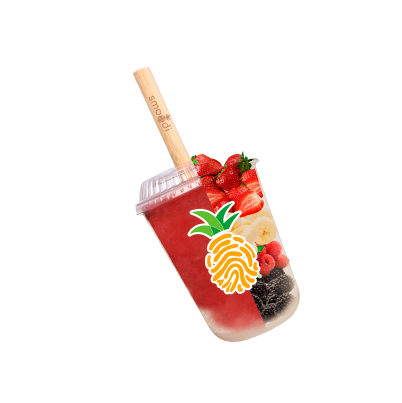
Each smoothie is blended from real fruit cups with water only in under 60 seconds. No syrups, concentrates, or artificial ingredients. The booster bar offers protein powder, collagen, and other functional supplements for customers who want to customize their nutrition. The compact design requires approximately 40 inches of floor space. For high-traffic locations, multiple machines can be installed side by side, blending simultaneously to scale throughput without adding staff.
Smoodi operates in more than 300 locations across the United States, with over 2 million smoothies served. The company was founded at Harvard Innovation Labs. IQF fruit cups are distributed through Dot Foods, the largest foodservice redistributor in the United States. The operational lease starts at $299 per month for a 48-month term, with a purchase option at $14,999.
Operators evaluating unattended retail formats for their locations can explore fresh, automated nutrition options at getsmoodi.com/get-started.
Ready to bring Smoodi to your location?
Join hundreds of operators delivering fresh, automated smoothies with zero labor.
Get Started