How Does Workplace Nutrition Affect Productivity?
The link between nutrition and workplace performance is well documented. Employers who provide healthy food options see measurable improvements in energy, focus, and afternoon productivity across their teams.
Every employer has seen the afternoon slump. The 2:00 PM energy dip that turns productive morning teams into distracted, unfocused groups watching the clock until 5:00 PM. The culprit is often the same across industries: poor nutritional choices at lunch, fueled by whatever happens to be available in the break room or vending machine. The connection between what employees eat during the workday and how they perform afterward is not a wellness platitude. It is a measurable, well-documented productivity factor.
For HR leaders, facilities directors, and corporate wellness managers, workplace nutrition represents one of the highest-impact, lowest-cost levers available for improving team output. The science is clear. The application is straightforward. The challenge has always been execution: how do you provide healthy options at scale without running a cafeteria?
What Does the Science Say About Nutrition and Work Performance?
Blood glucose stability is the primary mechanism connecting food intake to cognitive performance. When employees consume high-sugar, high-glycemic foods (vending machine snacks, pastries, sweetened beverages), blood glucose spikes rapidly and then crashes. The crash triggers fatigue, reduced concentration, irritability, and impaired decision-making. This cycle repeats with each high-glycemic meal or snack.
Foods that provide steady energy release, including whole fruits, protein, and complex carbohydrates, maintain more stable blood glucose levels throughout the day. Employees who eat balanced, nutrient-dense meals and snacks experience fewer energy dips, longer periods of sustained focus, and better cognitive function during afternoon hours.
Protein timing also plays a role. Protein intake supports alertness and satiety, reducing the likelihood of mid-afternoon snacking on processed foods. A smoothie combining whole fruit with a protein booster delivers both steady carbohydrates and protein in a format that takes under a minute to prepare and consume, fitting naturally into a work break.
Why Are Employers Investing in Workplace Food Programs?
The trend toward employer-provided food and beverage is accelerating. Sports and protein drinks in office pantries grew 64 percent year over year in 2026, reflecting a broader shift toward functional beverages that deliver wellness benefits beyond basic hydration. Companies are moving past the snack bar model (bowls of candy, bags of chips) toward intentional nutrition programs that support employee health and performance.
This shift is driven by multiple business factors. Healthier employees take fewer sick days. Better-nourished teams maintain higher afternoon productivity. And food amenities consistently rank among the top workplace perks that influence job satisfaction and retention. The question for facilities teams is not whether to invest in workplace nutrition, but which solution delivers the best combination of health impact, operational simplicity, and cost efficiency.
What Nutrition Options Actually Work in Office Settings?
Most office food programs fall into a few categories. Catered meals (delivered lunches, chef-staffed cafeterias) provide the highest quality but carry significant cost and logistical complexity. Micro-markets (unmanned convenience stores within the office) offer variety but tend toward packaged, processed items. Vending machines are the lowest-cost option but typically stock the highest-glycemic, least nutritious products available.
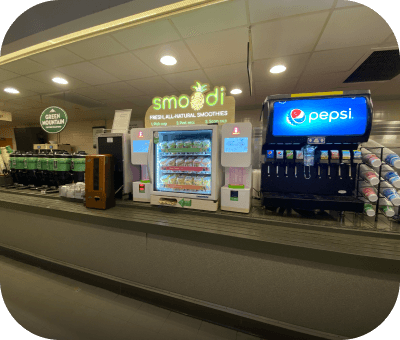
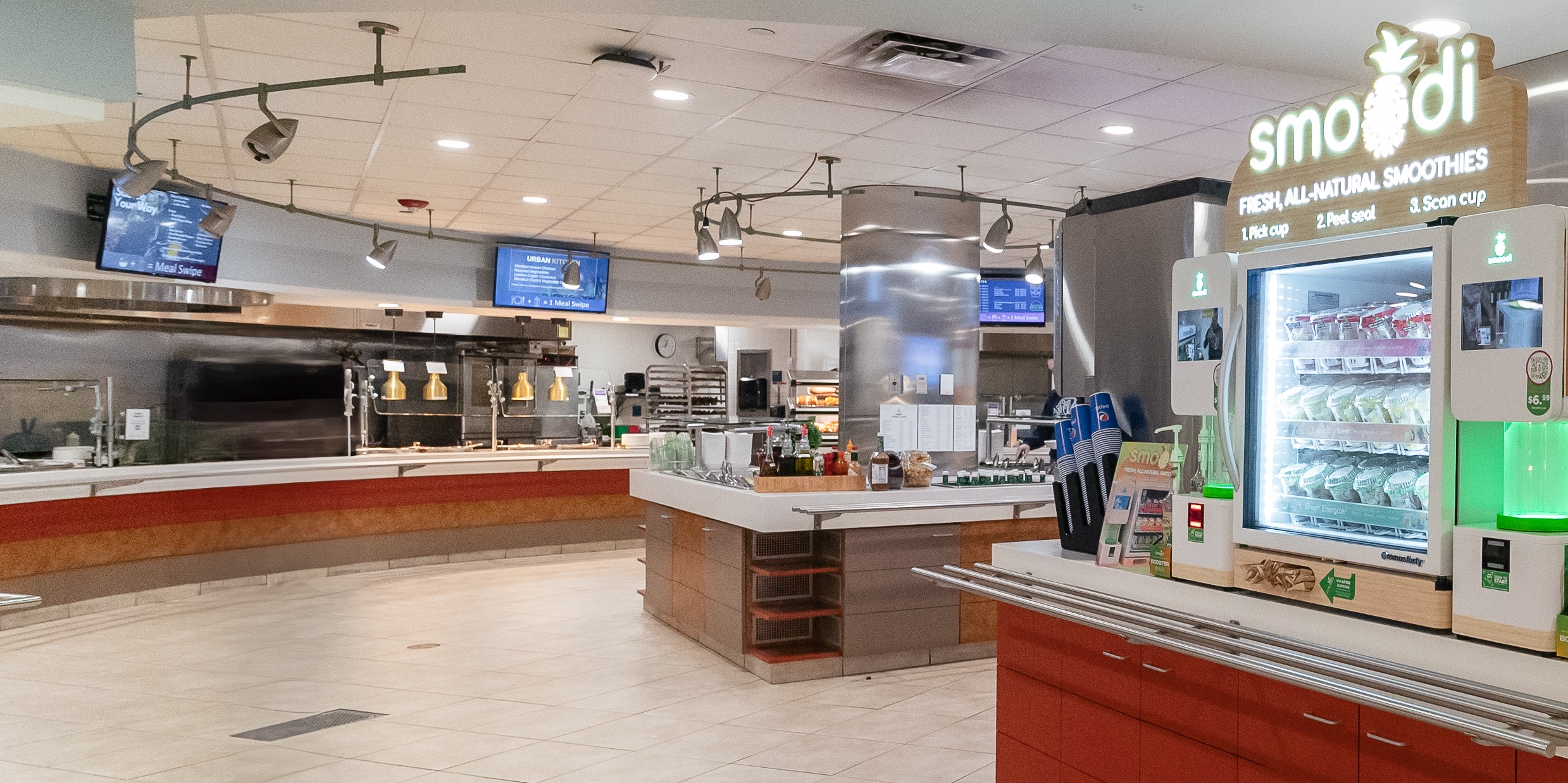
An automated smoothie station occupies a different position. It provides a fresh, whole-food product (real fruit blended with water, no syrups or concentrates) without requiring food prep staff, kitchen space, or daily deliveries. The machine self-cleans between every use. Existing facilities staff handle restocking. The booster bar adds protein powder, collagen, and other functional supplements for employees seeking performance-oriented nutrition.
"smoodi is hands down the number one perk at our headquarters. Fresh, healthy, and zero effort on our end."
— Katherine Berman, Workplace Experience Manager, Toast
How Does a Smoothie Station Improve Afternoon Energy?
The specific benefit of a whole-fruit smoothie as a workplace nutrition tool is its macronutrient profile. Natural sugars from fruit are paired with fiber, which moderates the glycemic response compared to processed sweeteners. When combined with a protein booster, the result is a balanced mid-morning or mid-afternoon snack that provides sustained energy without the spike-and-crash cycle of a candy bar or energy drink.
Positioning a smoothie station in a break room or common area also creates a behavioral nudge. When the healthiest option is also the most convenient and visually appealing option, employees are more likely to choose it. The machine's blending action draws attention and prompts usage from colleagues who might not have actively sought out a healthy snack. This passive influence on food choice is one of the most effective strategies in workplace wellness design.
What Are the Costs for Employers?
Smoodi's operational lease starts at $299 per month for a 48-month term, with shorter terms available at $349 (36 months), $399 (24 months), and $499 (12 months). Under the lease, Smoodi retains ownership and provides full service including maintenance. IQF fruit cups are purchased separately through Dot Foods distribution. For employers who prefer to own the equipment, purchase pricing starts at $14,999.
Many employers subsidize or fully cover the cost of smoothies as a workplace perk, factoring it into existing food and beverage budgets. Others pass the cost through to employees at retail pricing ($5.00 to $8.00 per smoothie). Either model works with the lease structure. The machine requires approximately 40 inches of floor space, a standard 120 VAC outlet, a water inlet, a sanitizer inlet, and a drain connection.
"As an office leader, I'm always looking for ways to support my team's health and productivity. smoodi's variety of healthy options are a game-changer."
— Karen Hood, Manager, ZS
How Does Workplace Nutrition Connect to Broader Wellness Goals?
Nutrition is one component of a comprehensive workplace wellness strategy that also includes physical activity, mental health support, ergonomics, and work-life balance. What makes nutrition unique is its daily, measurable impact on performance. An employee who eats a balanced lunch and a protein-rich afternoon snack performs measurably better than the same employee running on coffee and vending machine chips. The effect is immediate and repeatable.
For HR and facilities teams building a wellness program, a smoothie station is one of the lowest-friction additions available. It requires no programming, no classes, no enrollment. It simply exists in the break room, available to every employee, every day. The IQF fruit cups have a shelf life of up to two years, so there is no waste from unused inventory. And because the machine handles everything from blending to cleaning autonomously, there is no operational burden on the facilities team.
Smoodi was founded at Harvard Innovation Labs and operates in more than 300 locations across the United States, with over 2 million smoothies served. Workplace locations including Toast, Shoreham Bank, and ZS already use Smoodi as a core wellness amenity. To explore adding a nutrition station to your workplace, visit getsmoodi.com/get-started.
Ready to bring Smoodi to your location?
Join hundreds of operators delivering fresh, automated smoothies with zero labor.
Get Started