What Is the ROI of Workplace Wellness Food Programs?
The global corporate wellness market is projected to reach $100 billion by 2026, yet many employers still treat food programs as perks rather than investments. Research shows wellness food programs generate $3.27 in medical savings and $2.73 in absenteeism reductions for every dollar invested.
The global corporate wellness market is projected to reach $100 billion by 2026, growing at approximately 9 percent annually. Yet many employers still treat food programs as discretionary perks rather than strategic investments with measurable financial returns. The research tells a different story. Wellness programs that include nutritional components generate quantifiable savings in medical costs, absenteeism, and productivity, with returns that far exceed the initial investment. For CFOs and HR directors seeking to justify wellness food spending, the data provides a compelling business case.
What Does the Data Say About Wellness Program Returns?
The financial returns from workplace wellness programs have been studied extensively, and the consensus is clear. Research compiled by Wellhub shows that for every $1 invested in wellness programs, employers see $3.27 in reduced medical costs and $2.73 in reduced absenteeism costs. That represents a combined return of $6.00 per dollar invested. Some longitudinal studies report even higher figures, with certain programs generating up to $6 in healthcare savings alone for every $1 invested.
The impact extends beyond direct cost savings. A comprehensive review of wellness program outcomes found that 91 percent of organizations report that wellness programs improve employee productivity. Companies with comprehensive wellness initiatives see 56 percent fewer sick days. Workers who eat healthily and exercise regularly demonstrate 27 percent lower levels of presenteeism and absenteeism combined.
Perhaps the most telling statistic: 95 percent of companies that measure wellness ROI report positive returns. The challenge is not whether wellness programs work. The challenge is that many employers do not measure outcomes rigorously enough to quantify the returns they are already generating.
How Do Food Programs Specifically Drive Wellness ROI?
Among wellness program components, nutrition interventions occupy a unique position because they address multiple ROI drivers simultaneously. Physical activity programs reduce healthcare costs but do not directly affect daily productivity patterns. Mental health programs improve retention but may not affect absenteeism immediately. Workplace food programs, by contrast, influence energy levels, focus, absenteeism, healthcare utilization, and employee satisfaction all at once.
The International Labour Organization has documented that proper workplace nutrition enhances productivity by up to 20 percent. This is not a modest effect. For an organization with 200 employees averaging $60,000 in annual salary, a 5 percent productivity improvement (well below the 20 percent ceiling) represents $600,000 in additional productive value annually. Even conservative assumptions produce substantial returns.
Food programs also create a visible, daily touchpoint that reinforces the employer's commitment to employee wellbeing. Unlike an annual health screening or a gym membership subsidy, a nutrition station is something employees interact with every workday. This frequency builds engagement with the broader wellness program and increases participation in other wellness initiatives.
What Metrics Should Employers Track?
Building a business case for wellness food investment requires tracking specific metrics before and after program implementation.
- Absenteeism rate: track unplanned absences per employee per quarter. Wellness food programs typically reduce this metric within the first 6 to 12 months.
- Healthcare claims: compare per-employee medical claims year over year. Organizations with nutrition programs see measurable reductions in claims related to chronic conditions and metabolic health.
- Productivity indicators: measure output, project completion rates, or revenue per employee. While harder to attribute directly, these metrics often improve when employees have consistent access to nutritious food.
- Employee engagement scores: include food and wellness questions in engagement surveys. Programs that score highly correlate with stronger retention.
- Retention and turnover: track voluntary turnover rates. Employees who feel their employer invests in their wellbeing are significantly less likely to leave.
- Program utilization: monitor how many employees use the food program daily or weekly. High utilization indicates strong perceived value.
The key to a successful business case is baseline measurement. Employers should collect data on these metrics for at least one quarter before implementing a food program, then track changes at 3, 6, and 12 months post-implementation.
How Do You Build the Business Case?
The business case framework for a wellness food program should address four audiences: the CFO (cost and return), the CHRO (retention and engagement), facilities management (space and operations), and employees (quality and accessibility).
For the CFO, lead with the financial data. A $299 to $499 per month investment (the range for a Smoodi operational lease) represents $3,588 to $5,988 annually. Against the documented returns of $3.27 in medical savings plus $2.73 in absenteeism reductions per dollar invested in wellness, the payback period is measured in months, not years.
For the CHRO, emphasize the retention impact. In a labor market where replacing an employee costs 50 to 200 percent of their annual salary, even a small improvement in retention produces outsized financial returns. Employees consistently rank workplace food quality among their top five amenity preferences.
For facilities management, the operational simplicity matters most. Programs that require zero dedicated staff, self-clean, and fit within existing breakroom footprints eliminate the implementation barriers that stall many wellness initiatives.
How Does Smoodi Deliver Measurable Wellness ROI?
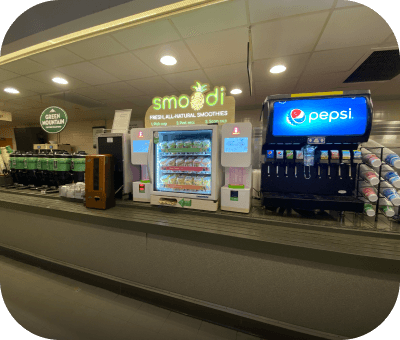
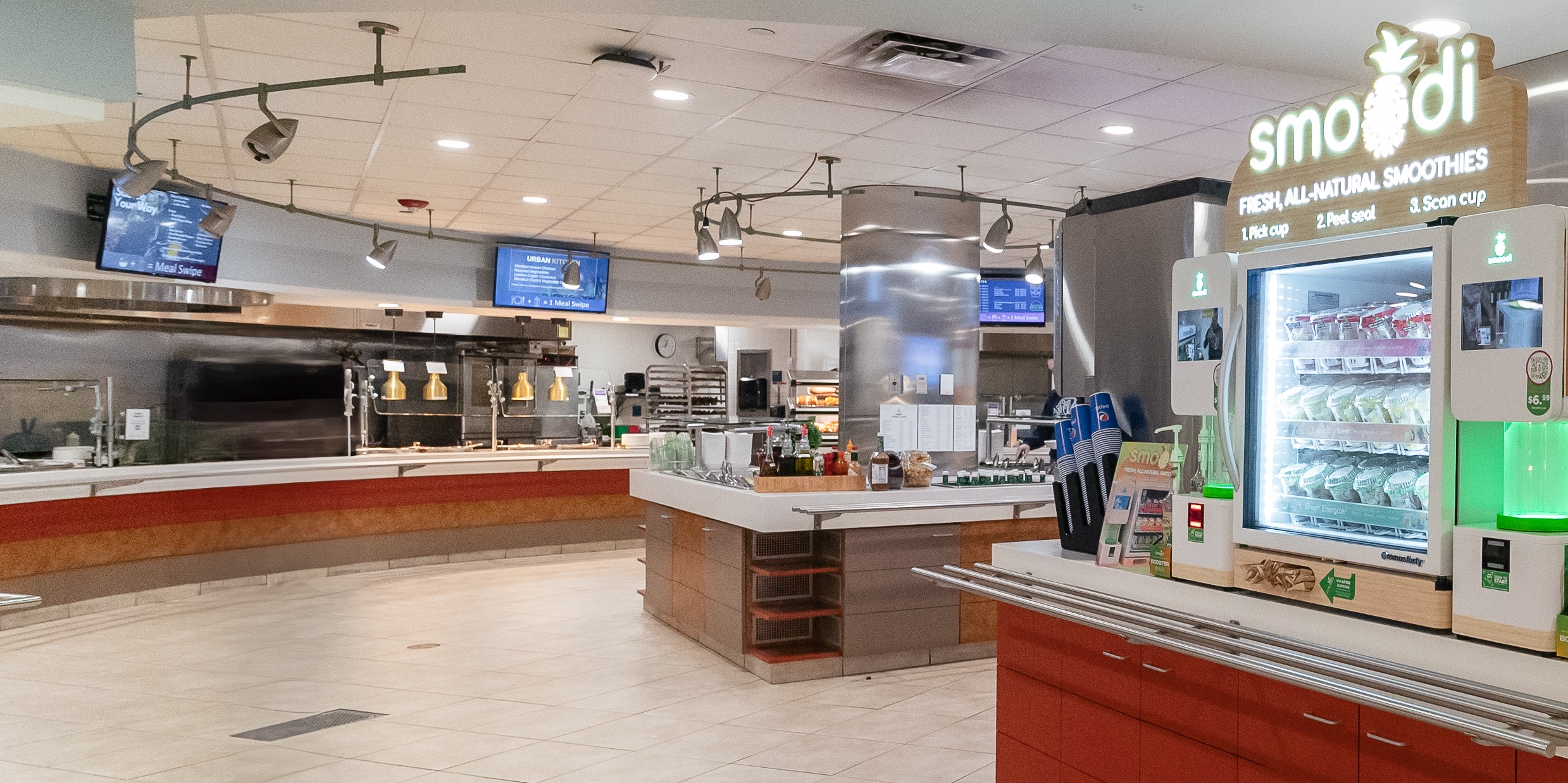
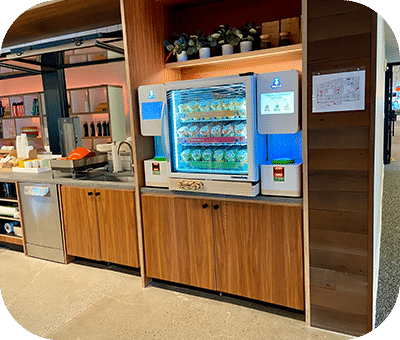
Smoodi's automated smoothie machine provides a wellness food program with predictable costs and measurable utilization. Each smoothie starts with IQF (individually quick frozen) real fruit cups blended with water only. No syrups, concentrates, or artificial ingredients. The booster bar offers protein powder, collagen, and other functional supplements. The machine blends a fresh smoothie in under 60 seconds and self-cleans between every use. No staff required.
"We were looking for ways to give our employees healthier options - smoodi was the answer. It tastes great, our team loves it."
— Eric Rose, President & COO, Shoreham Bank
The operational lease starts at $299 per month for a 48-month term, with a purchase option at $14,999. This predictable cost structure allows employers to calculate ROI with precision: monthly program cost against measured improvements in absenteeism, productivity, and retention. Smoodi operates in more than 300 locations across the United States, with over 2 million smoothies served. The company was founded at Harvard Innovation Labs. IQF fruit cups have a shelf life of up to two years and are distributed through Dot Foods. The machine requires approximately 40 inches of floor space, a standard 120 VAC outlet, a water inlet, a sanitizer inlet, and a drain.
Employers ready to build a data-driven wellness food program can calculate their projected ROI at getsmoodi.com/roi.
Ready to bring Smoodi to your location?
Join hundreds of operators delivering fresh, automated smoothies with zero labor.
Get Started