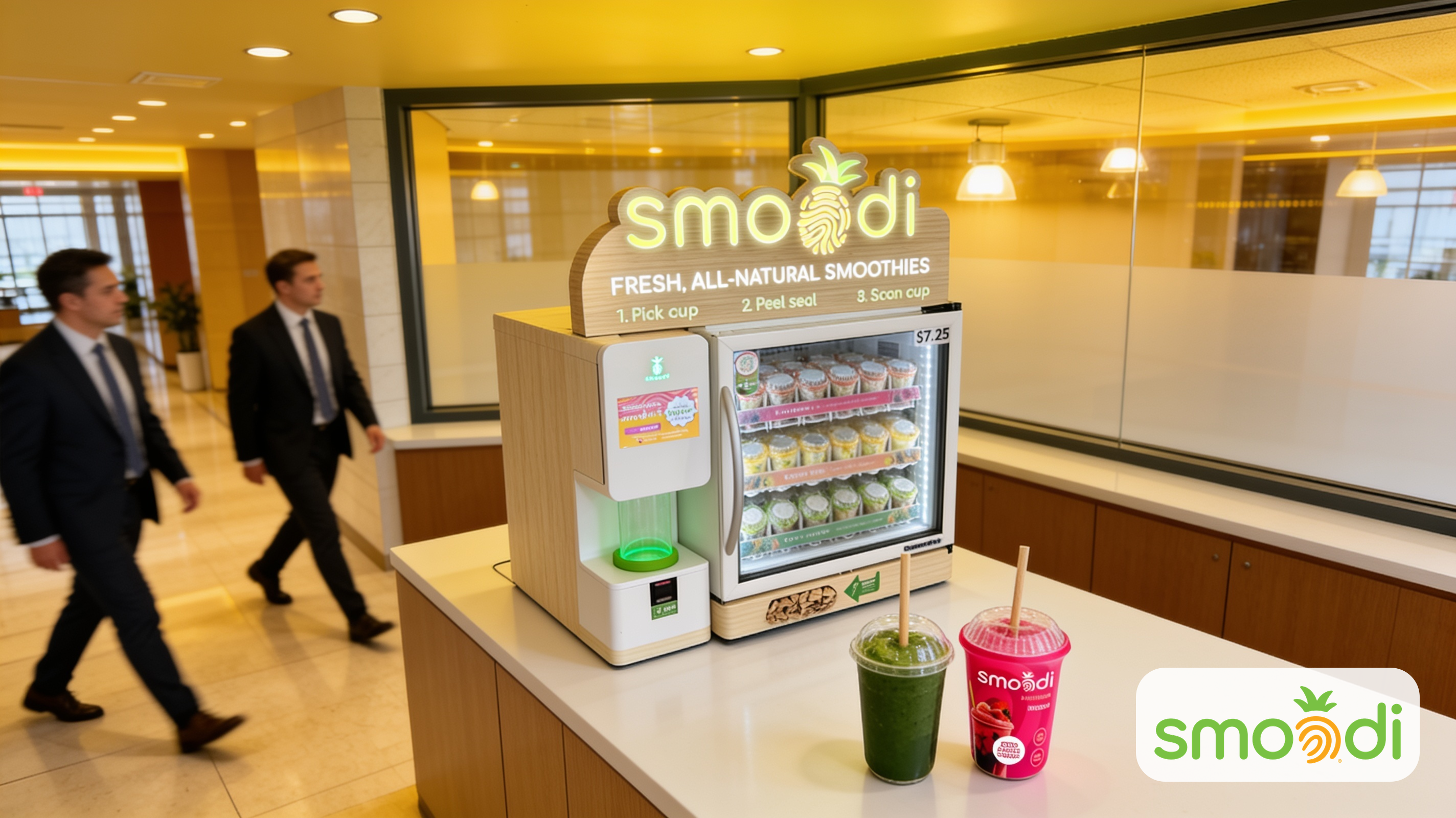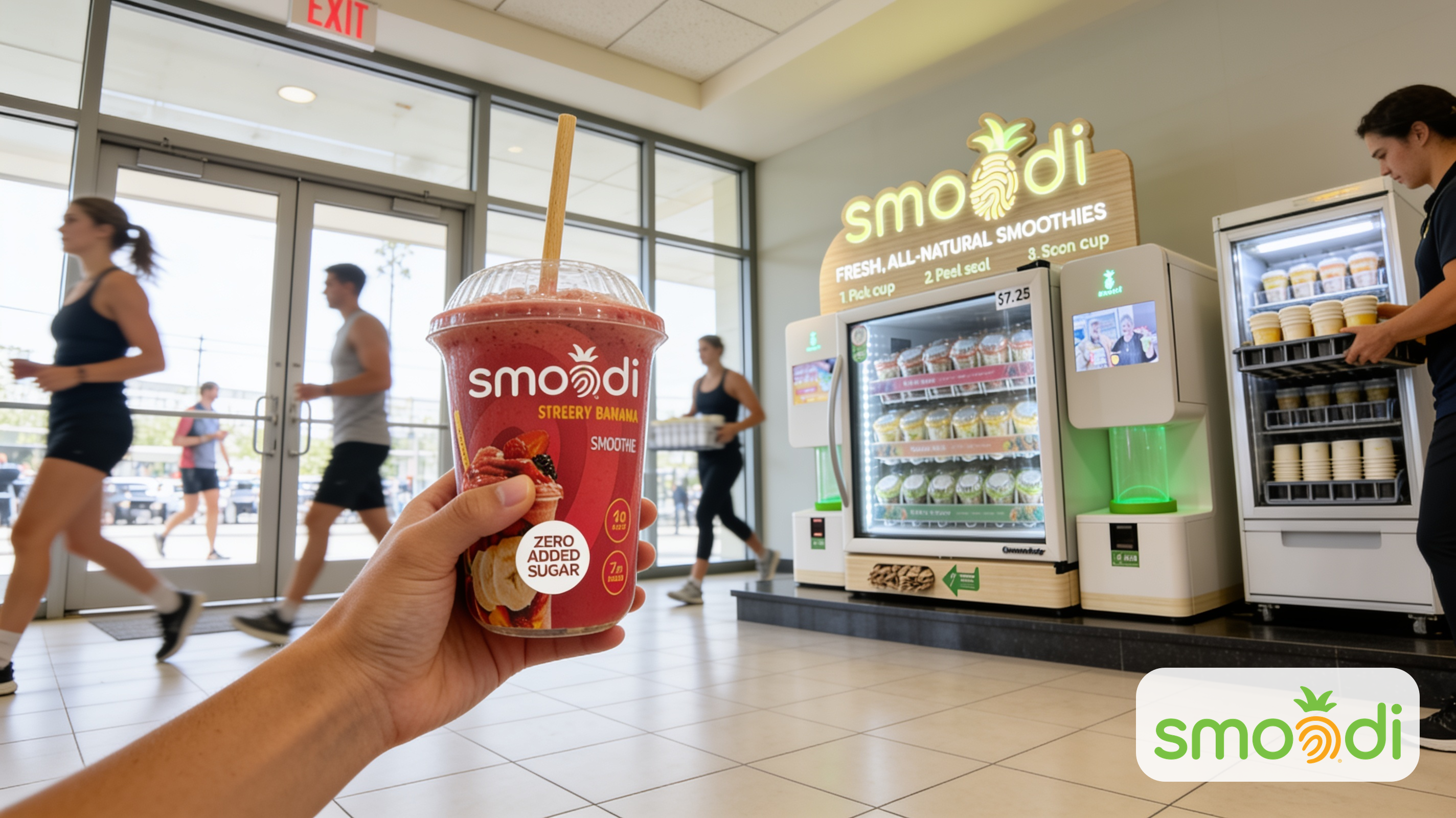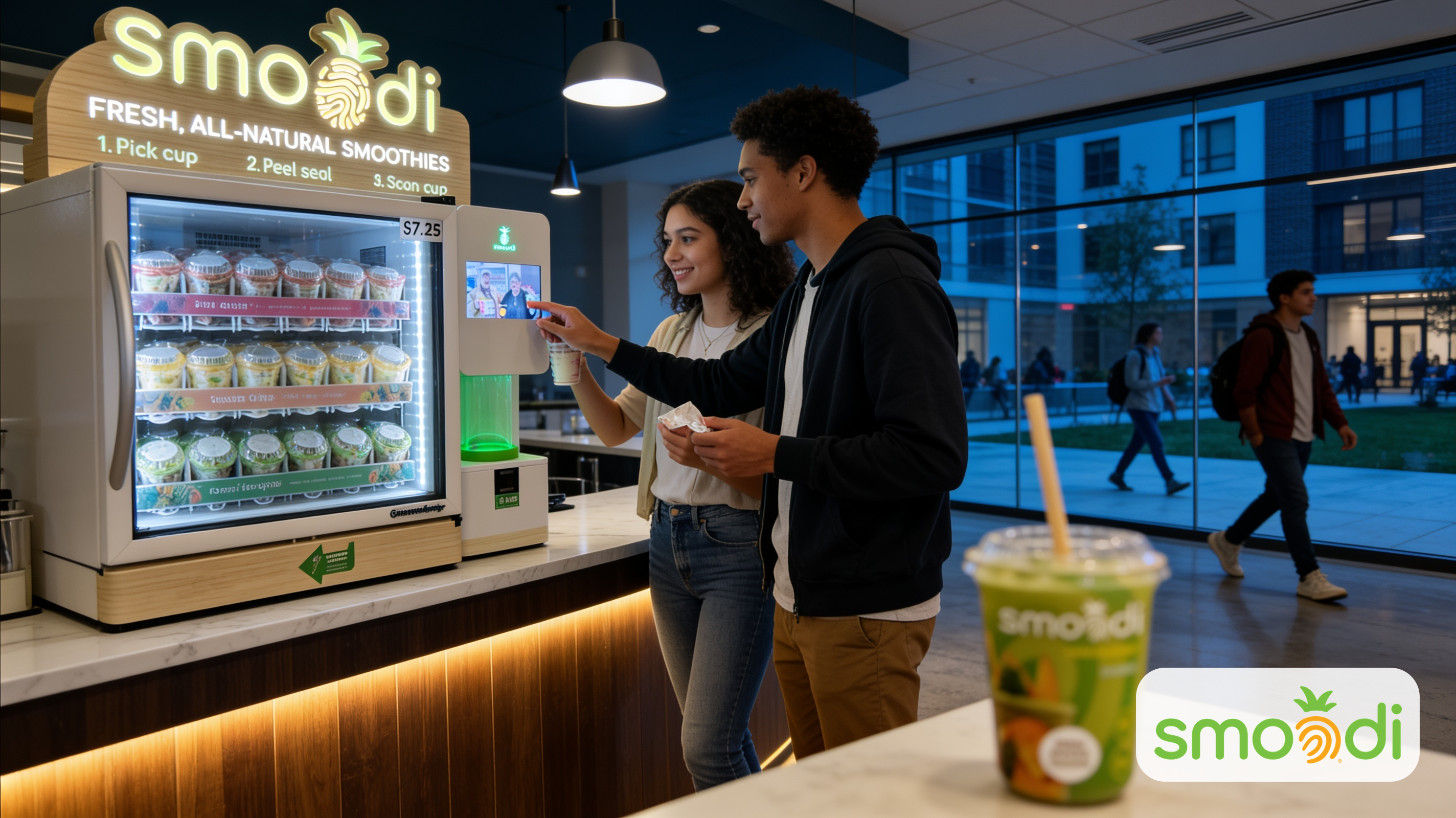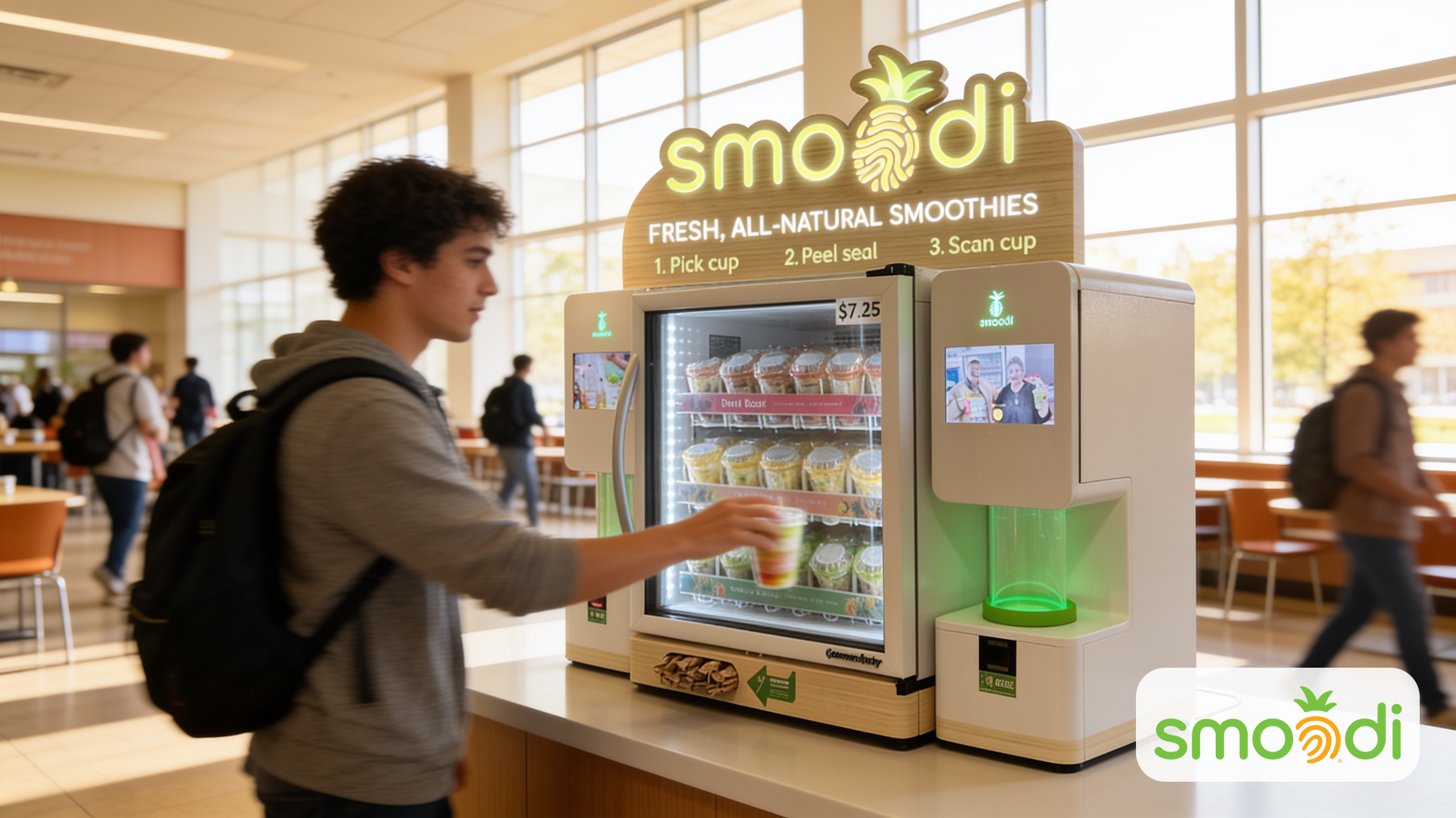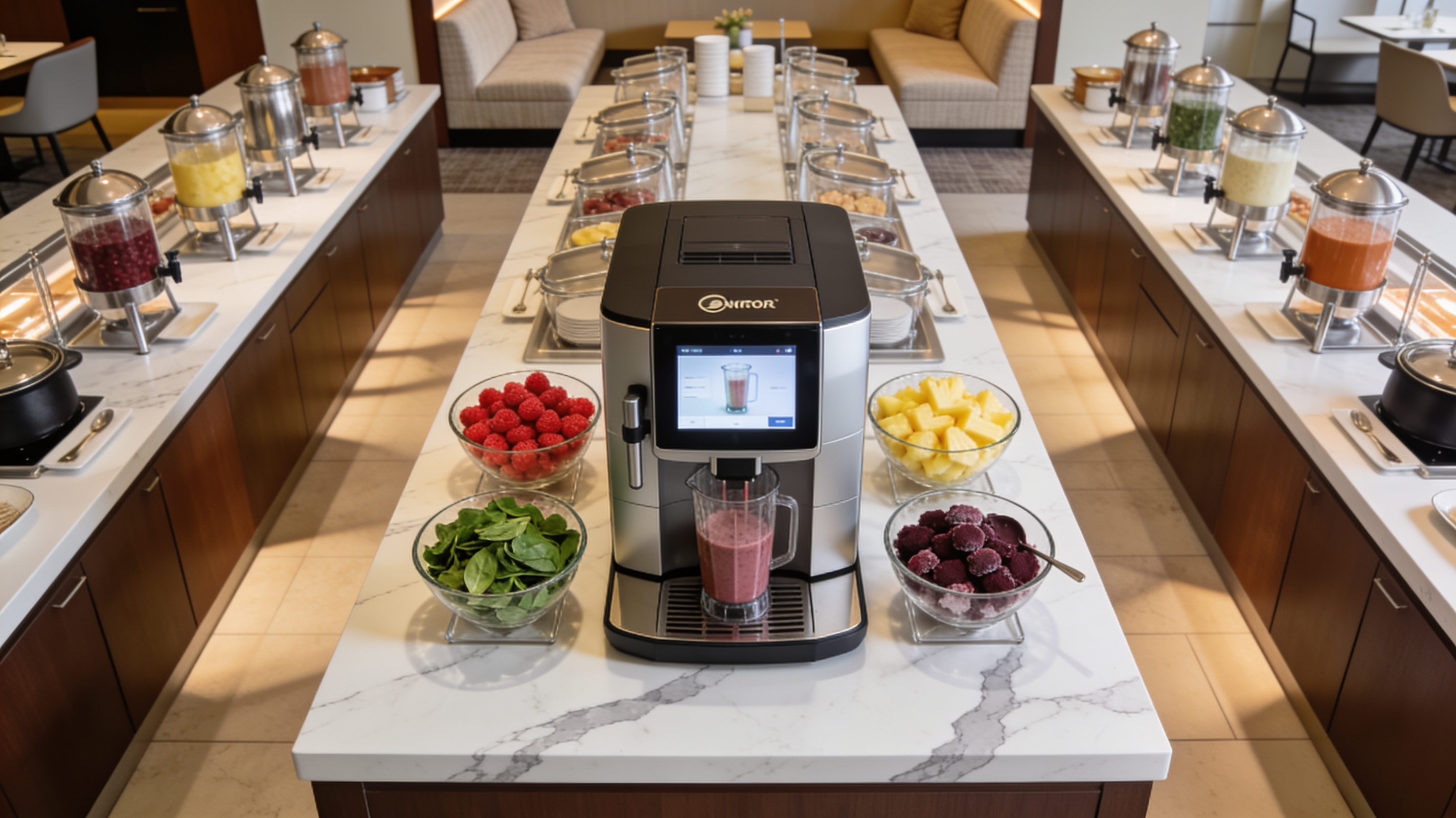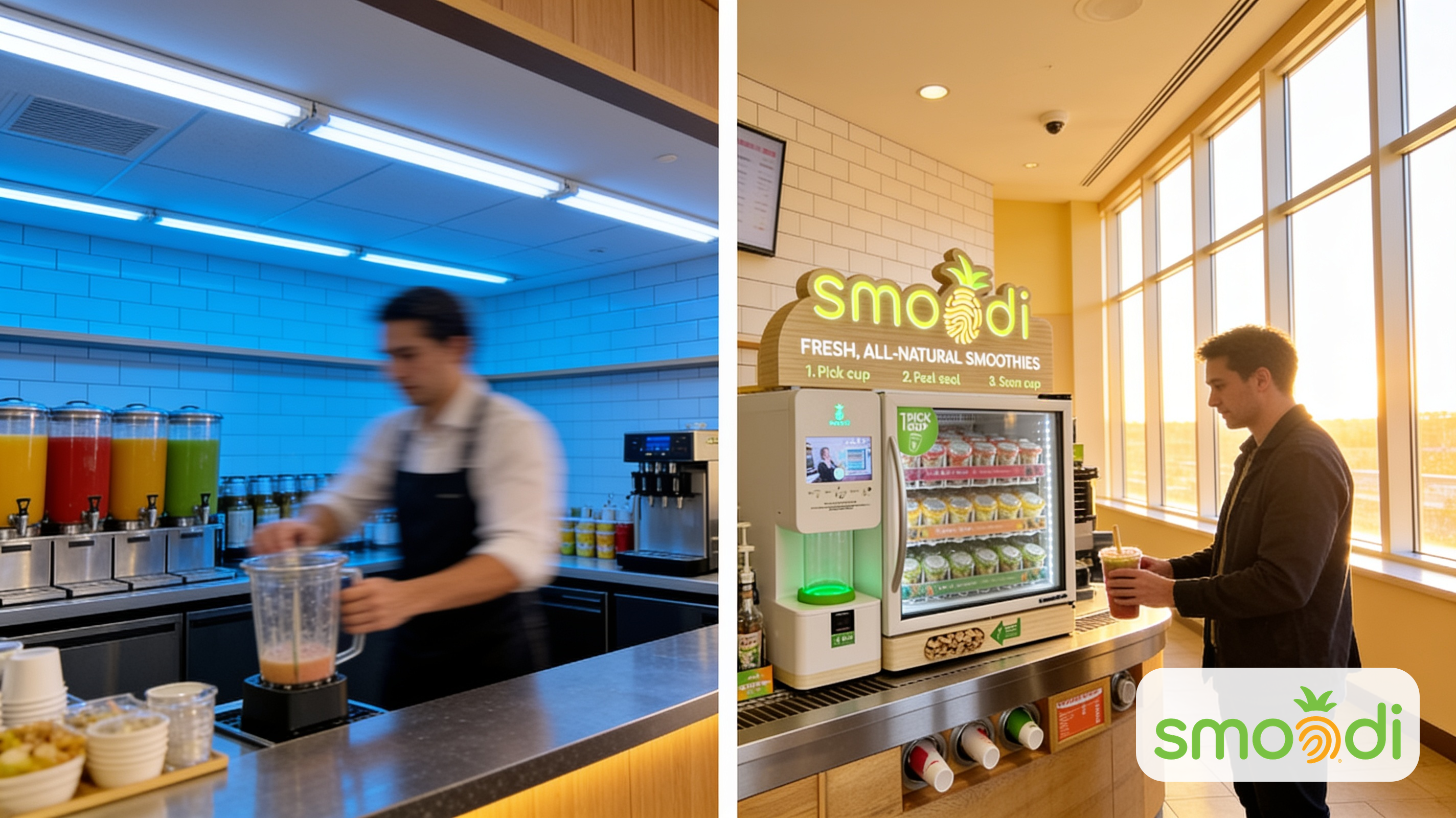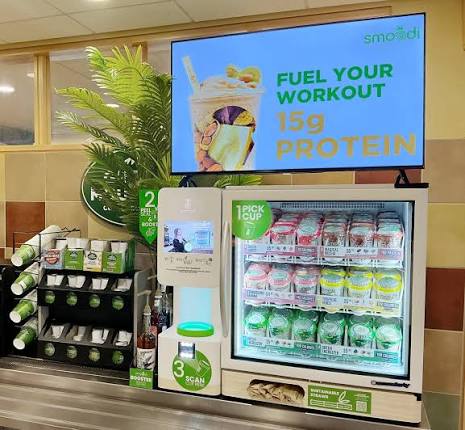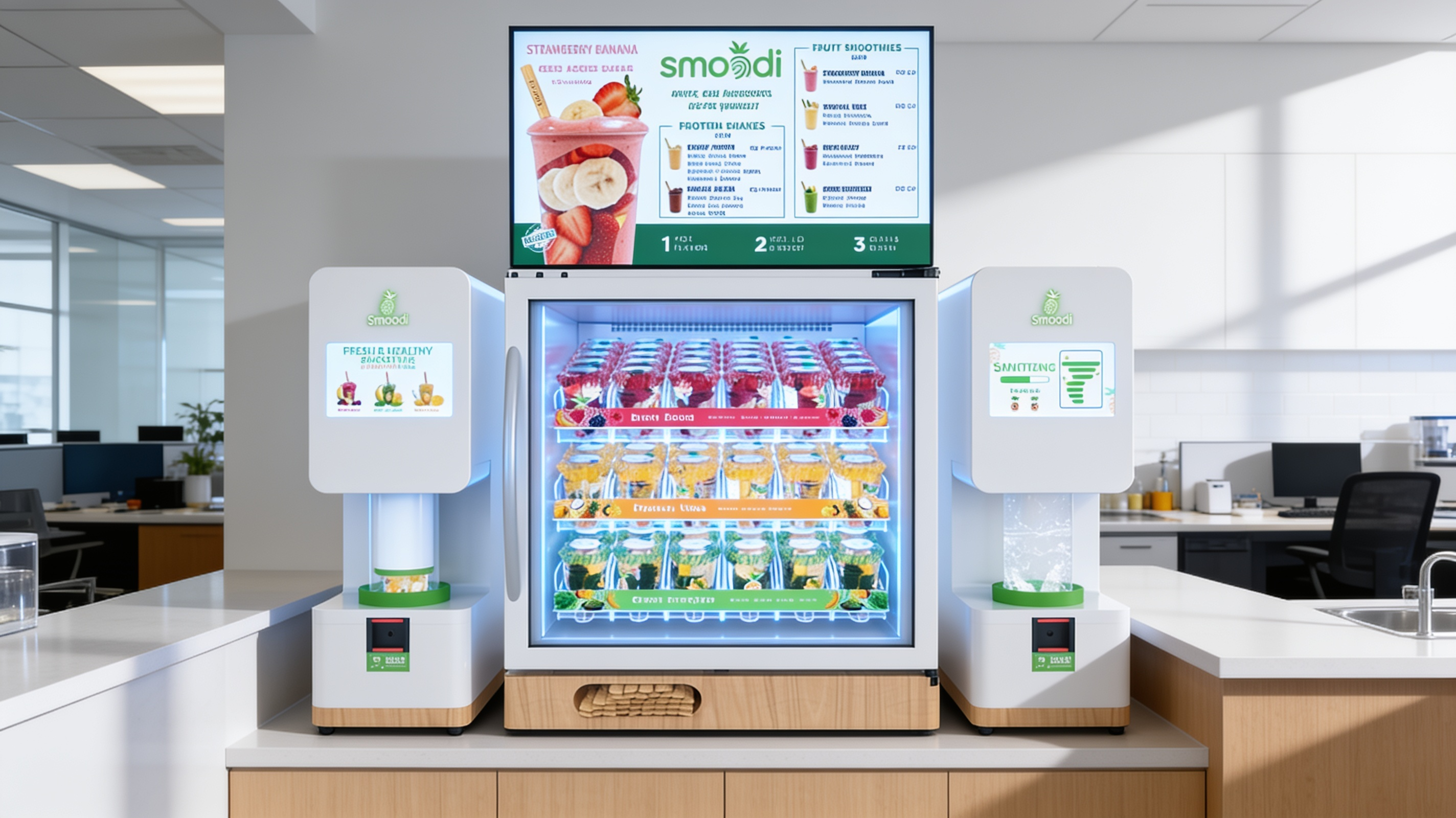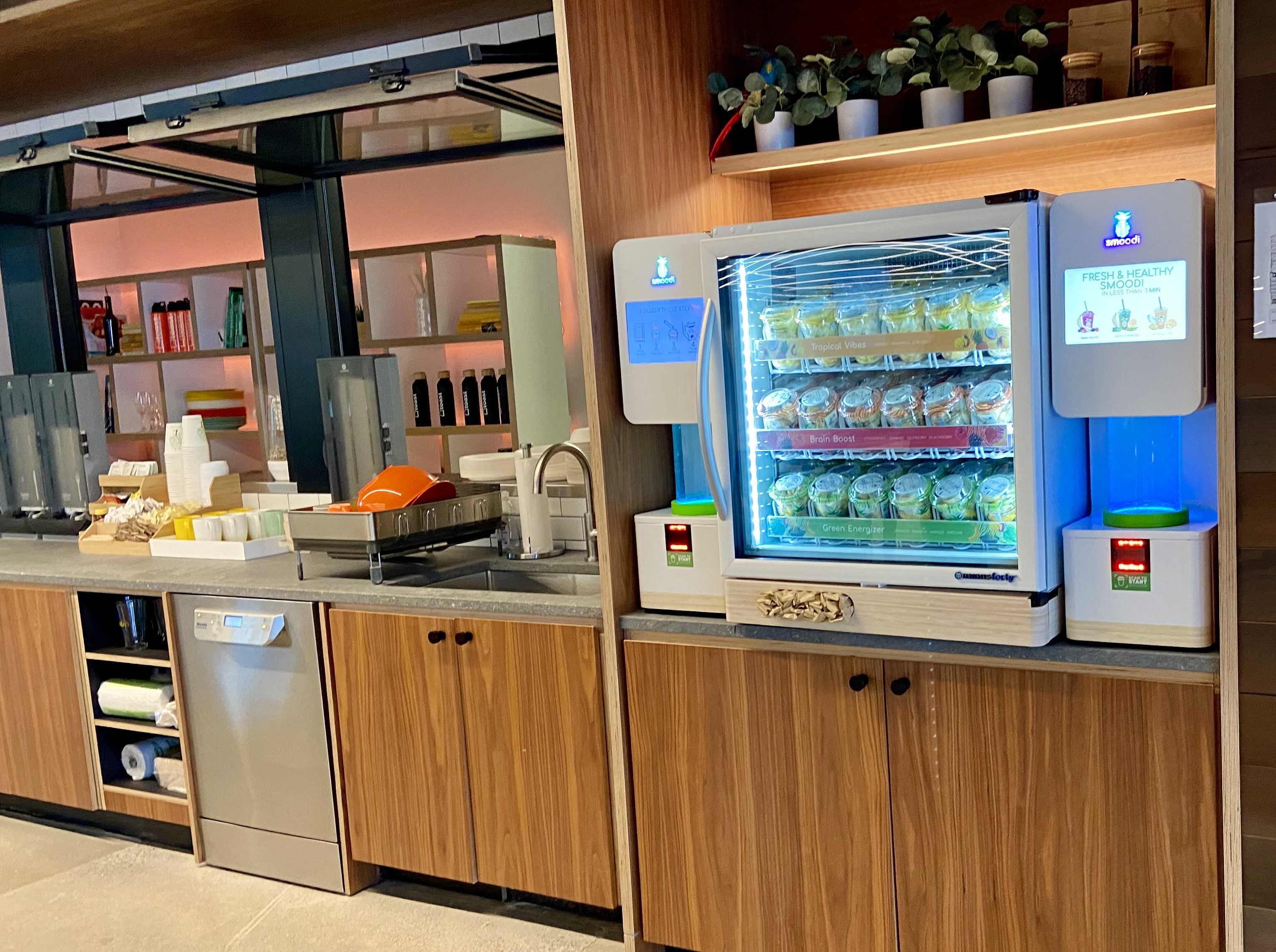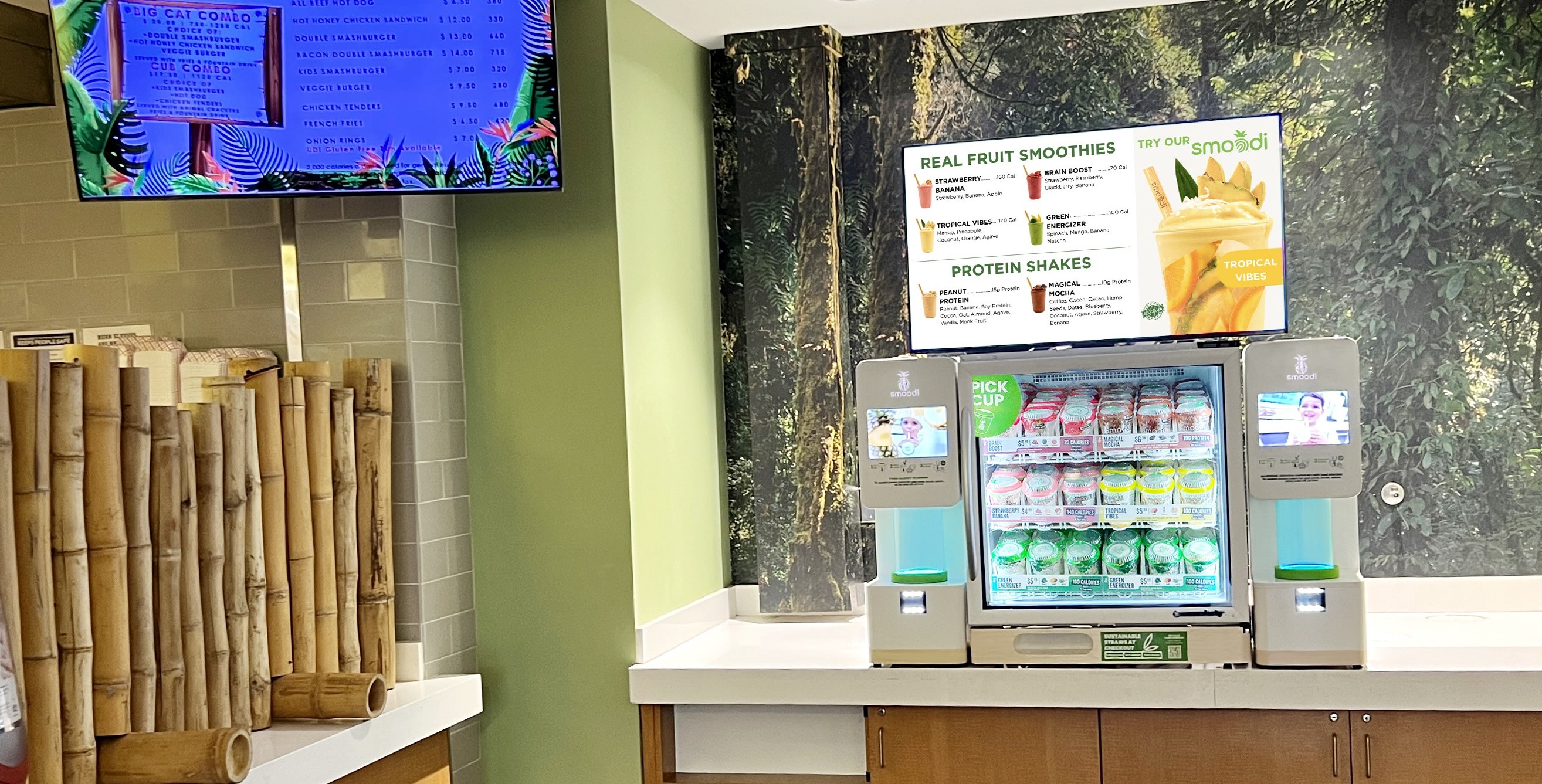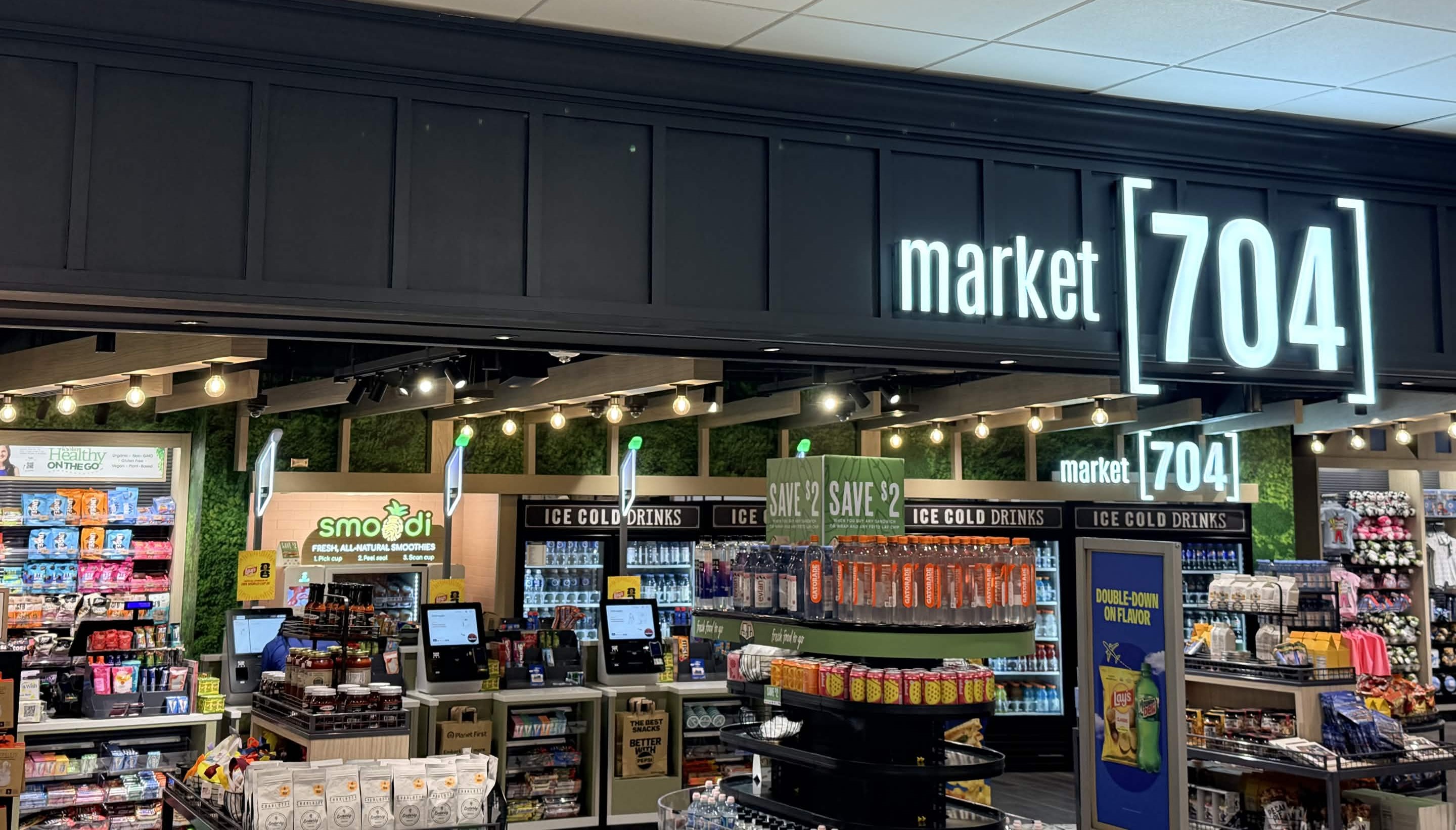
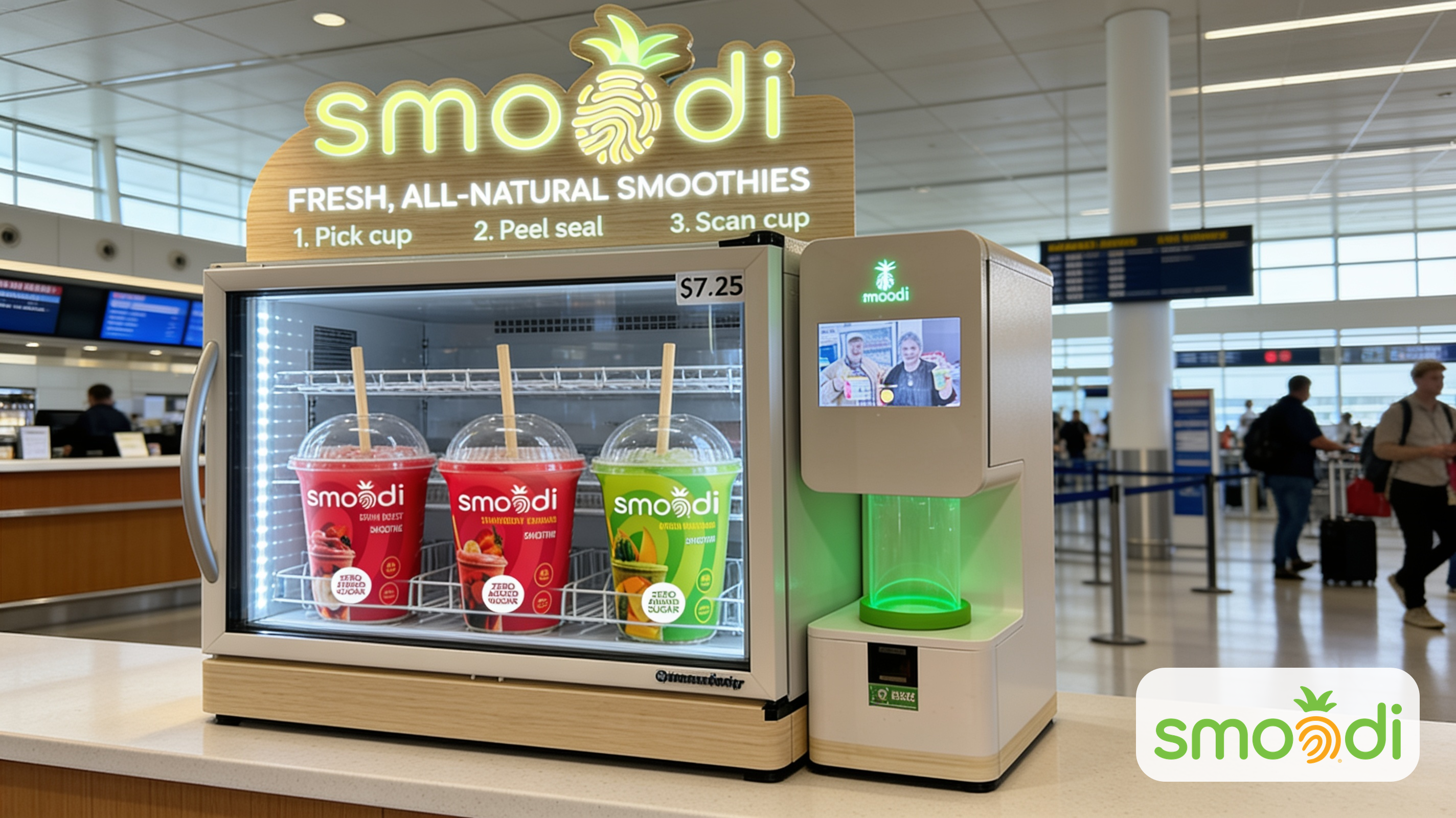
Automated Beverage Station Airport: Capturing Traveler Spend
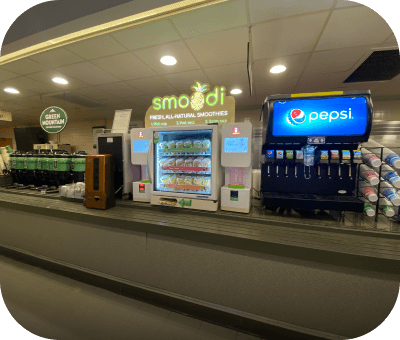
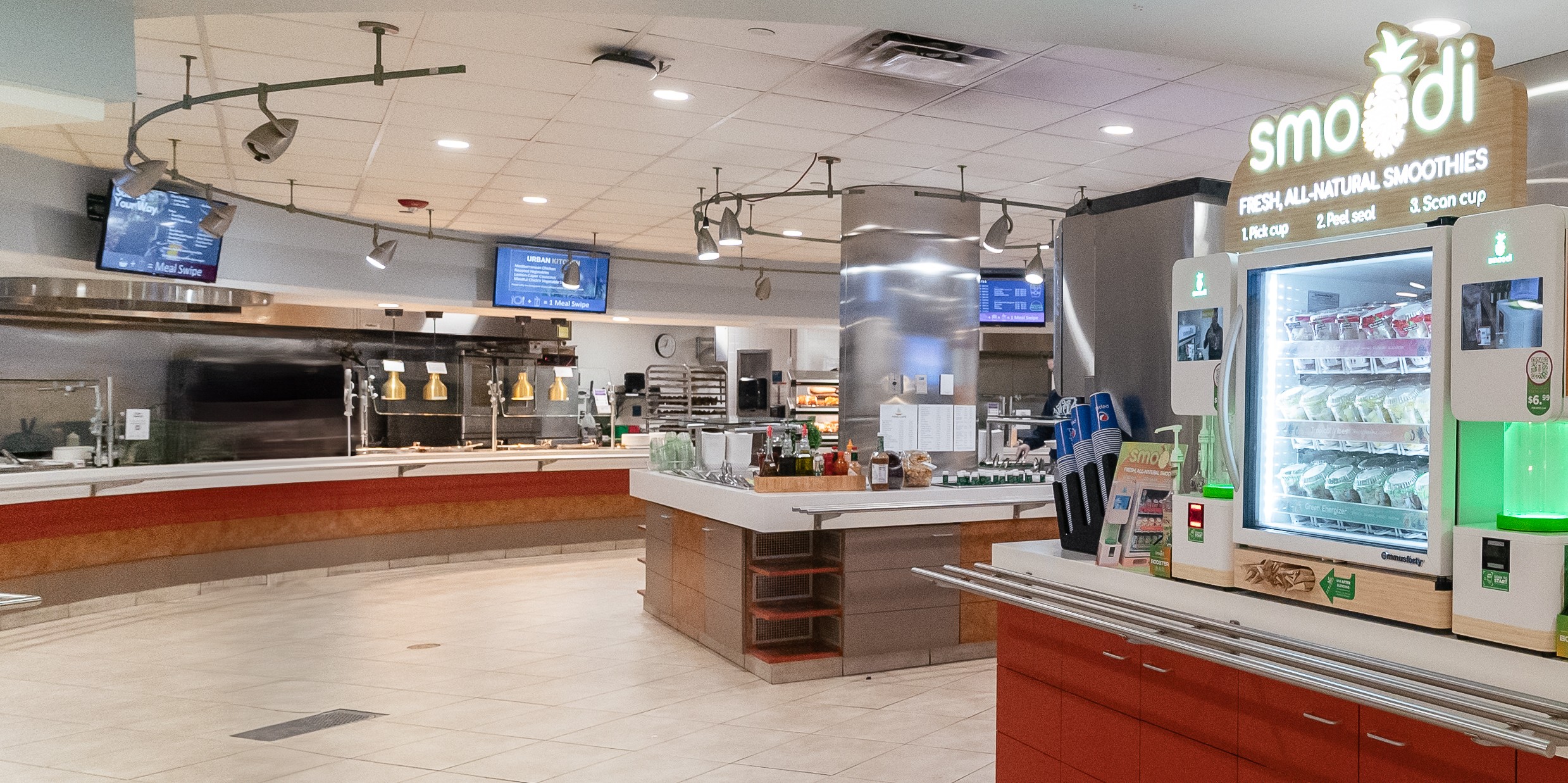
See how an automated beverage station airport solution cuts labor costs, boosts throughput, and delivers healthy smoothie options for travelers.
Insights on health, nutrition, technology, and the future of automated food service
Brand assets, company overview, and media resources
203 articles found

See how an automated beverage station airport solution cuts labor costs, boosts throughput, and delivers healthy smoothie options for travelers.

Bridge the high-protein campus dining beverage gap. See how Smoodi delivers protein-rich smoothies for students without adding kitchen labor.

Learn how smoothies can serve as a quick lunch for busy employees and how Smoodi's robotic technology supports workplace wellness.

Optimize smoothie station placement on corporate campuses to increase employee wellness and utilization with this strategic decision framework.

Learn how an automated smoothie station K-12 school cafeteria setup aligns with USDA school meal compliance, nutrition standards, and operational budgets.

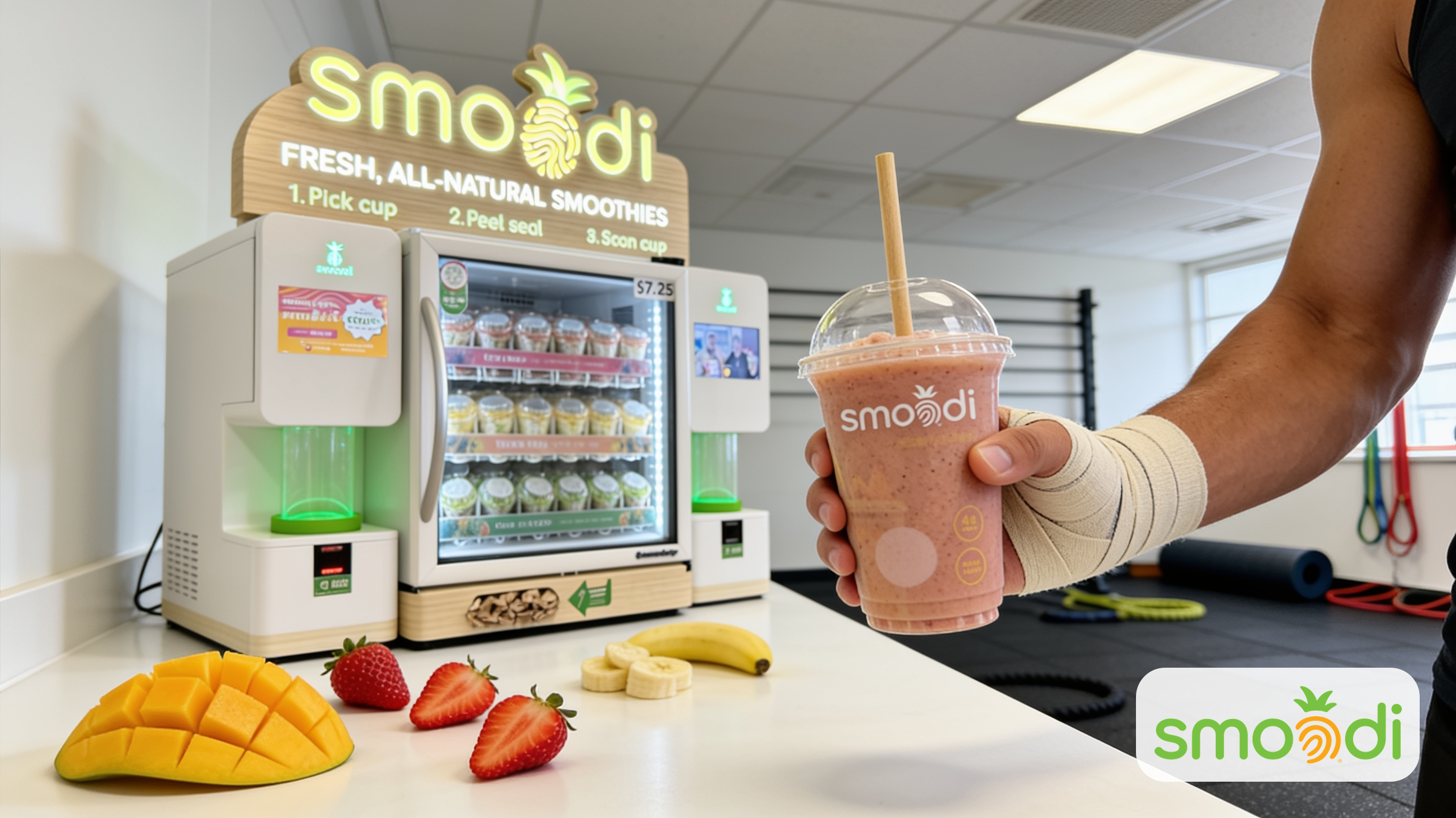
Learn how automated beverage programs drive gym smoothie bar revenue and non-dues income for boutique and big-box fitness clubs.

Learn how a student housing self-service food amenity like Smoodi meets demand for healthy, automated nutrition in modern residential communities.

See how university dining automation and enrollment pressures are pushing mid-sized campuses to adopt self-serve beverage technology.

See how an automated smoothie station for franchises ensures brand consistency, reduces labor costs, and scales a healthy beverage program.

Learn how an athletic training recovery nutrition station supports injury recovery protocols and athlete performance using automated smoothie technology.

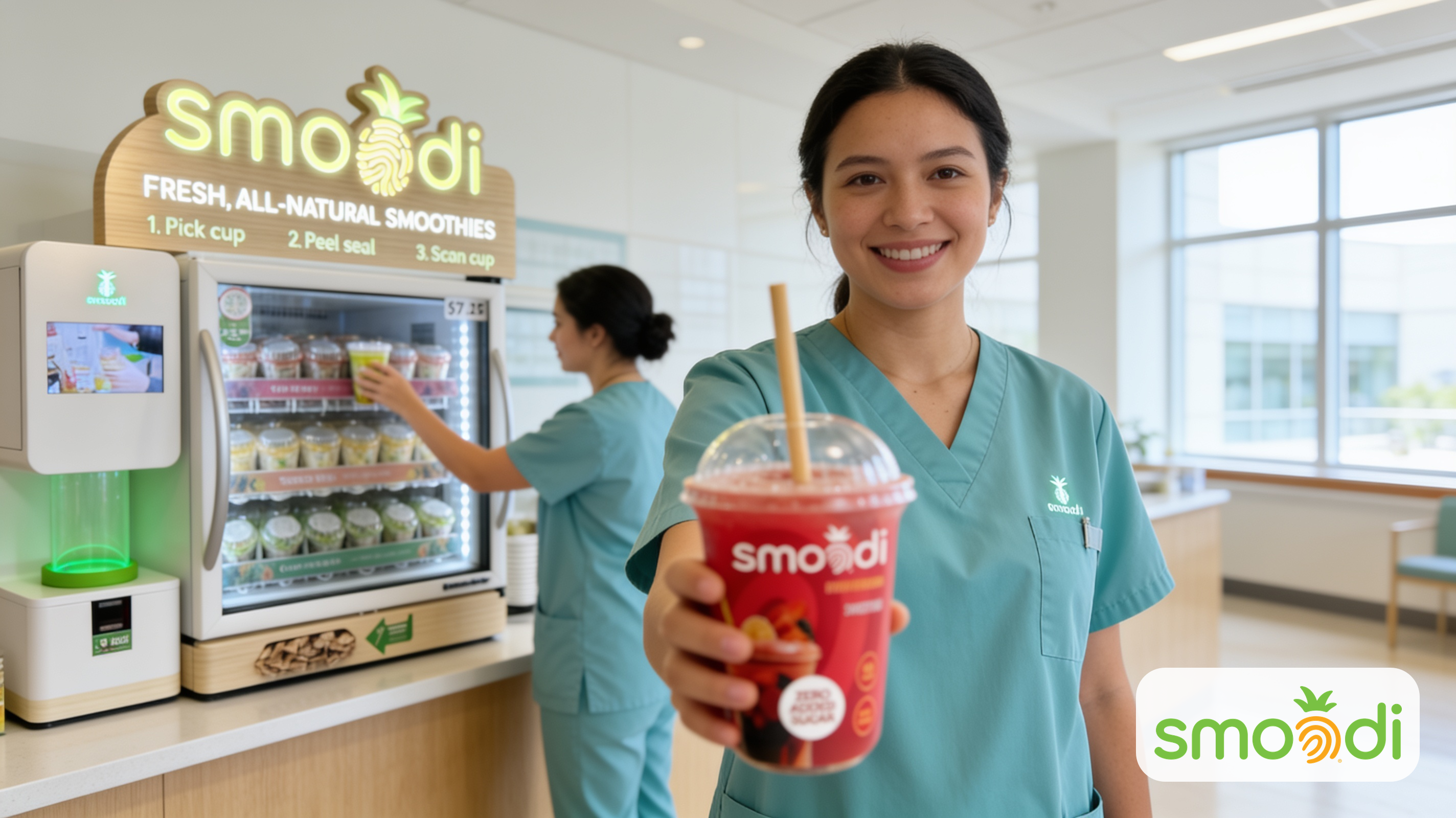
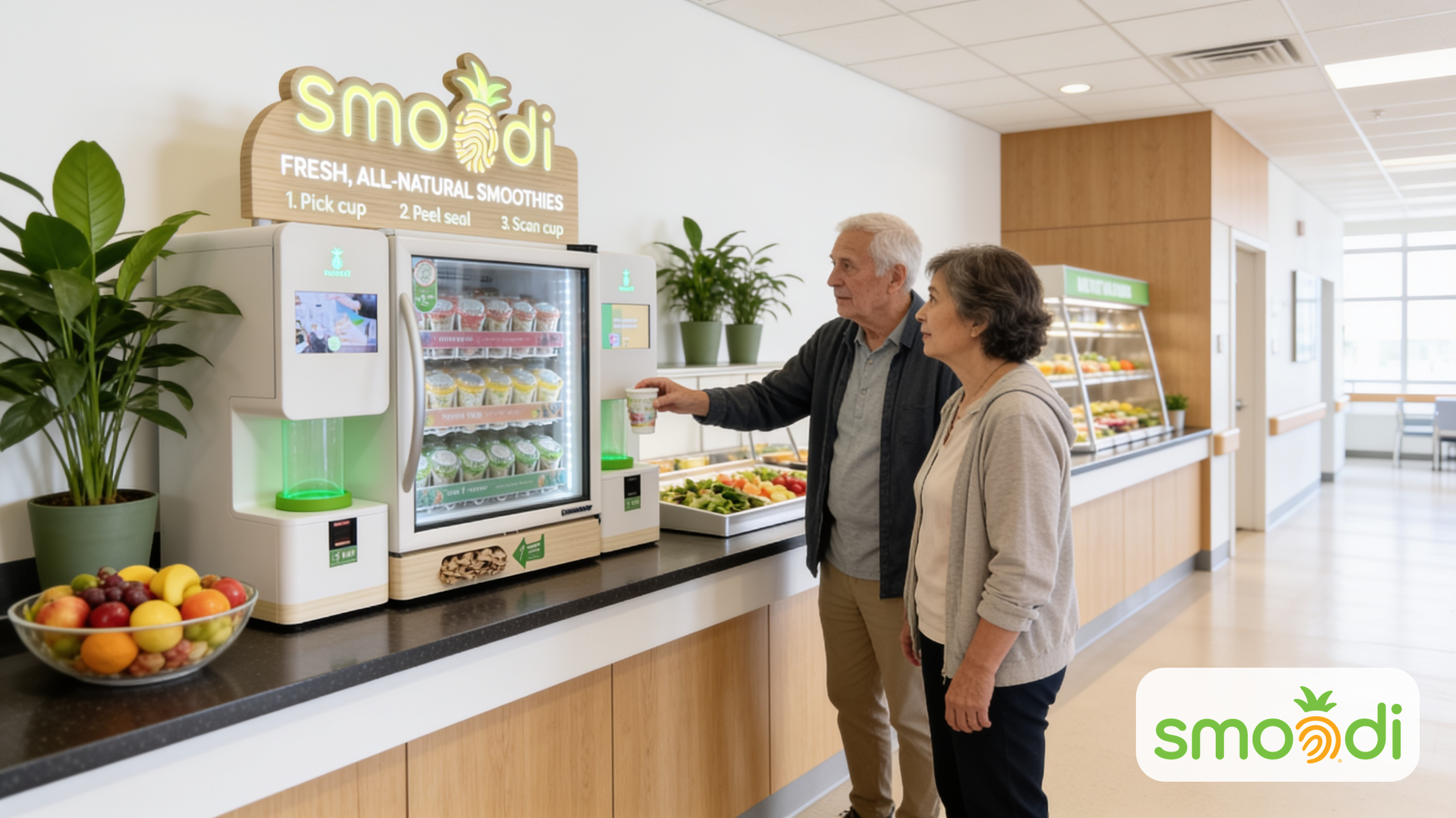
Learn how hospitals can improve patient satisfaction and recovery through healthcare fast nutrition using automated smoothie technology.

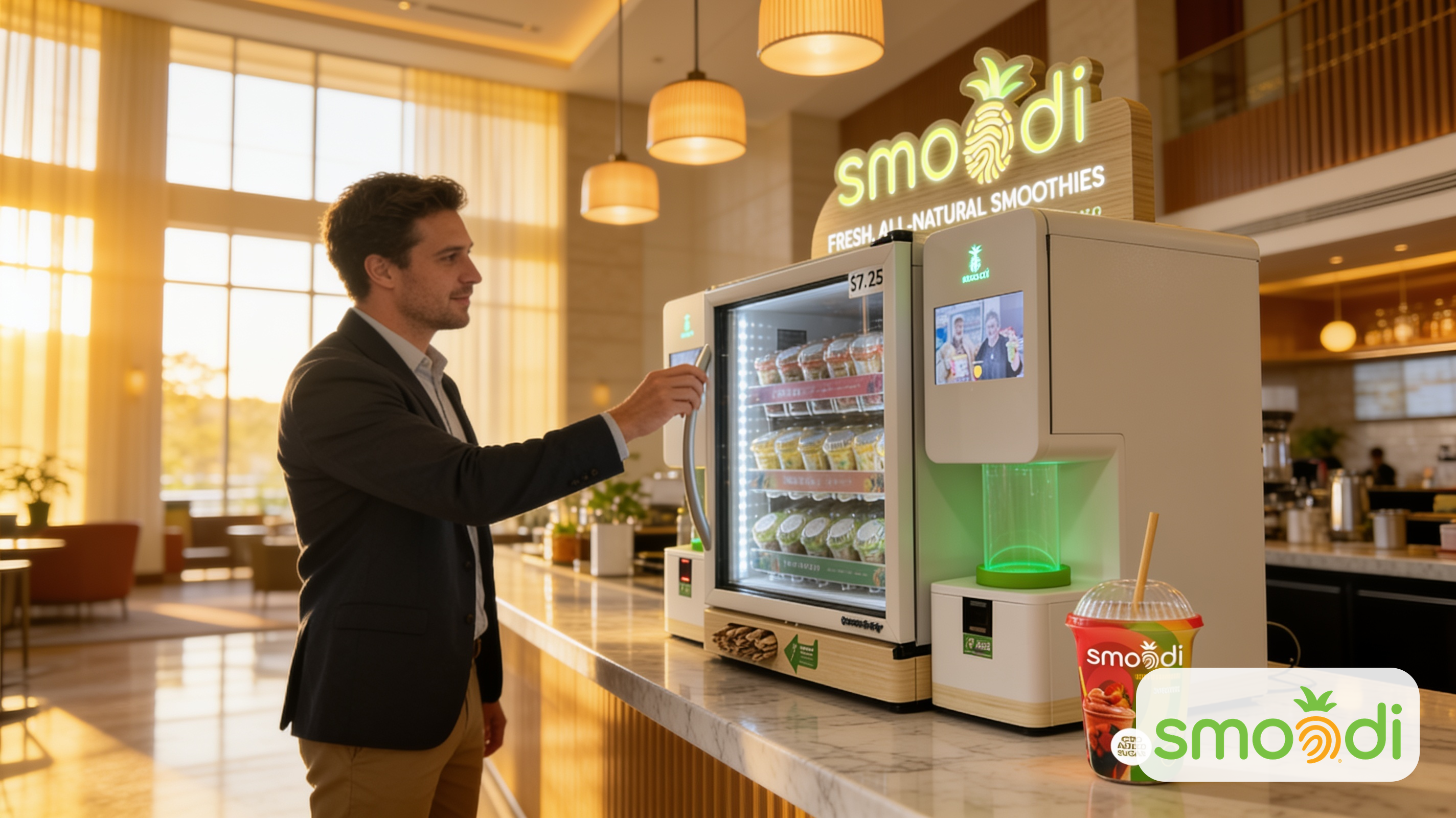
See how a hotel grab-and-go breakfast station using automation reduces hotel breakfast labor cost while meeting demand for healthy amenities.

Manage Make Hospital Food Healthier Pledge operations using automation to provide whole-food options without increasing hospital kitchen labor costs.

Learn how a healthcare staff nutrition program integrated into hospital facilities can improve overnight wellness and support staff retention goals.
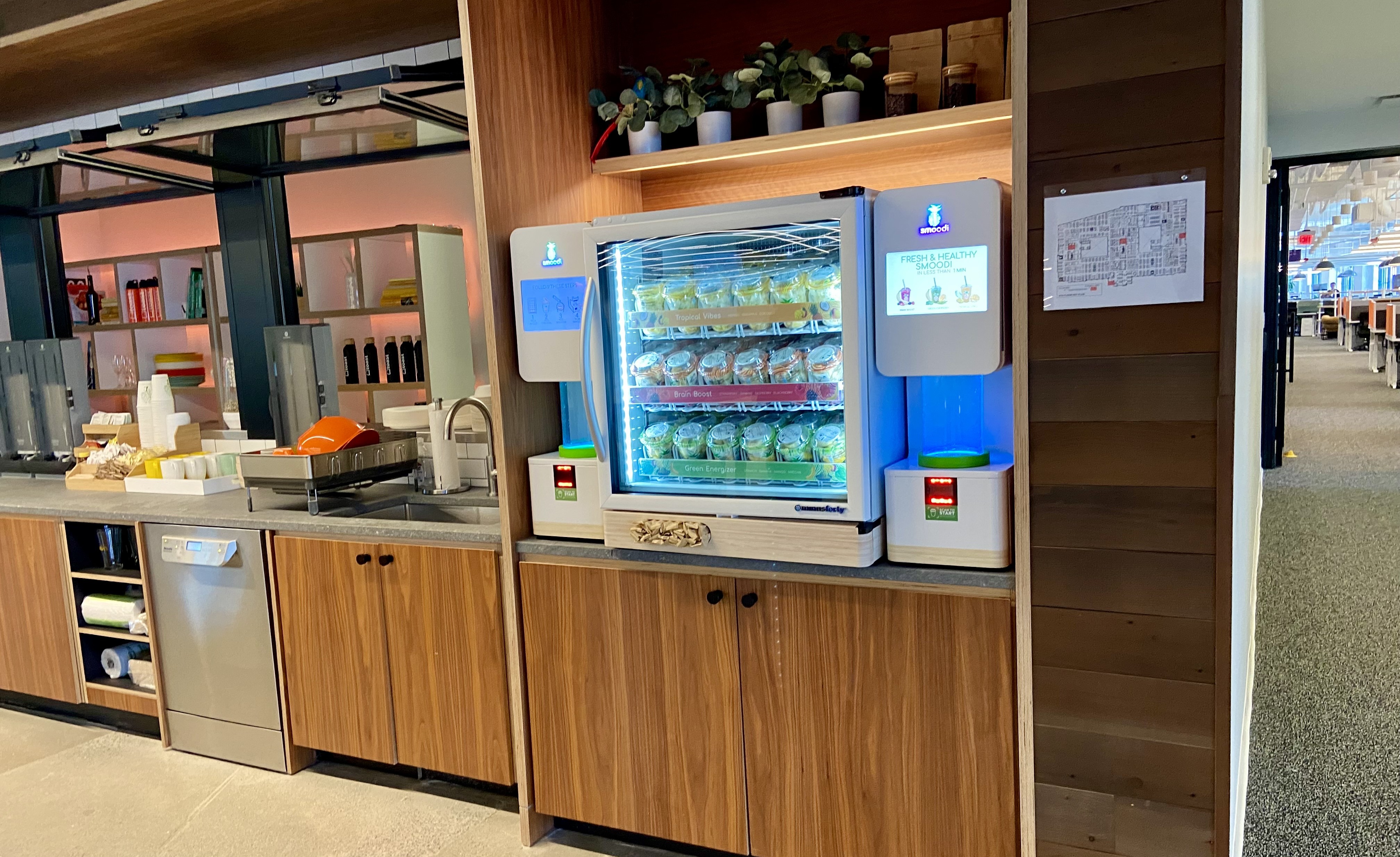
See how an automated smoothie machine helps colleges meet student demand for fresh fruit drinks while solving campus labor shortages.

Explore how beverage amenities in coworking space drive member retention and how automated smoothie machines provide a high-value, low-labor nutrition station.

Learn how gym member retention strategies using on-site nutrition and automated smoothie stations can reduce churn and increase member lifetime value.
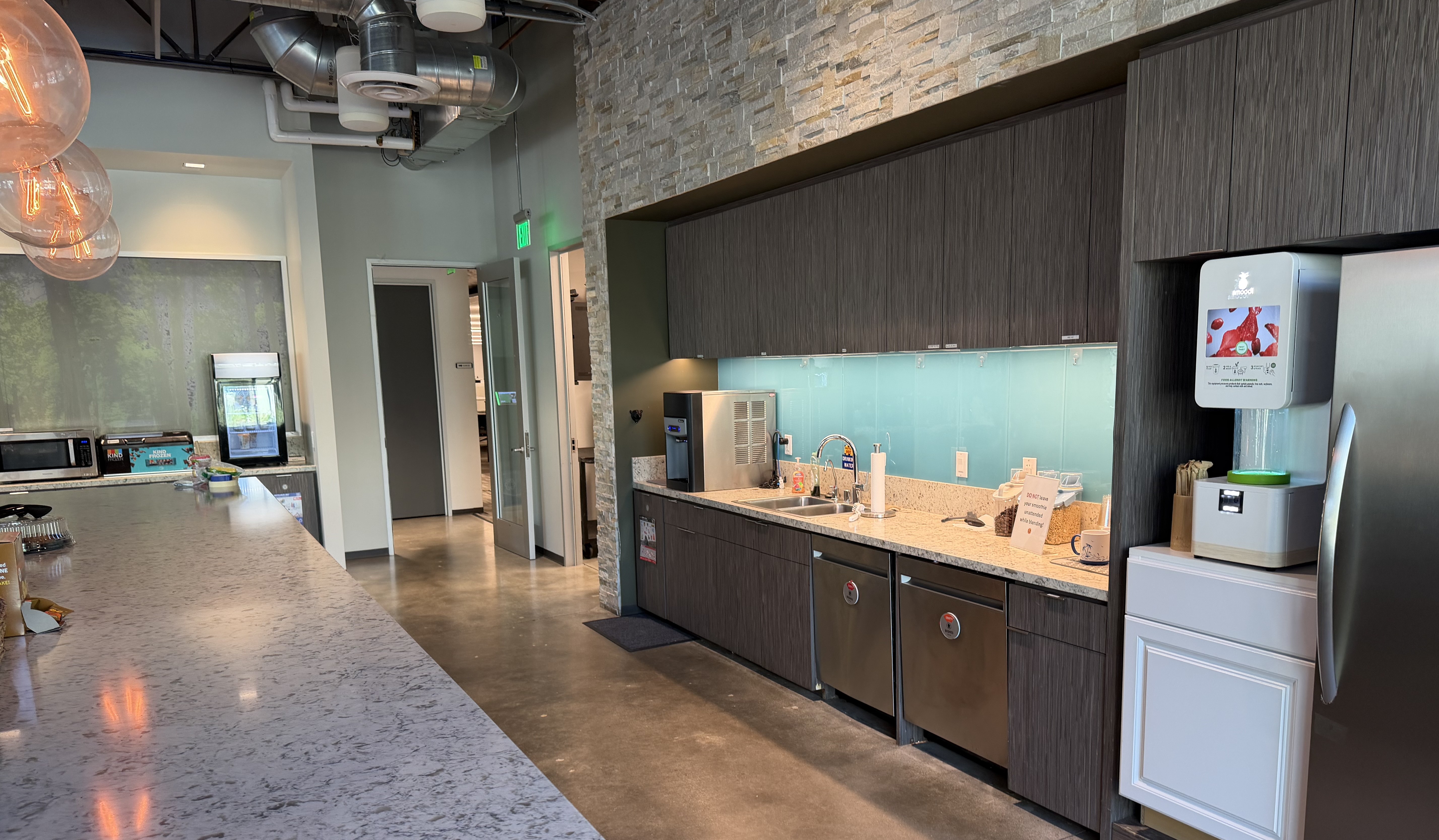
Explore the foodservice automation ROI of switching to automated beverage stations to reduce labor costs and improve operational efficiency in 2025.

Discover which return to office amenities employees value most and how an office nutrition station can drive utilization and support corporate wellness.

See how university dining technology beverage solutions shape student retention and recruitment, including automated smoothie options for campuses.

Learn how automated smoothie stations increase corporate wellness participation, reduce absenteeism, and deliver measurable ROI for organizations.

Multiple universities are making structural dining changes for fall 2026, moving toward flexible meal plans, wellness-focused menus, and retail-style access points that reshape how campus foodservice operates.

With 42% of foodservice operators reporting they were not profitable in 2025, margin protection has become the central business challenge. Three operational strategies can help: automating labor-intensive tasks, controlling waste through pre-portioned ingredients, and adding high-margin revenue streams.

The global functional beverage market is projected to exceed $220 billion by 2026. For foodservice operators, the question is not whether to add functional beverages but how to do it without complexity, waste, and additional labor.

Healthcare worker burnout remains a critical challenge in 2026, and hospital dining programs are evolving from cost centers to strategic wellness assets. When staff cannot access nutritious meals quickly, they skip eating, compounding the burnout cycle.

Consumers and operators often treat bottled smoothies and fresh-blended smoothies as interchangeable products. They are not. The differences in nutrition, ingredients, and customer experience are significant and have real implications for foodservice programs.

Food safety is the top operational concern for self-service equipment. Smoodi's self-cleaning system sanitizes between every single use with no staff intervention, eliminating cross-contamination risk and simplifying allergen management.

Smoodi was founded at Harvard Innovation Labs to solve a simple problem: making genuinely healthy beverages accessible in commercial settings. Today, Smoodi operates in 300+ locations across the United States and has served more than 2 million smoothies.

Gym smoothie bars generate $5,000 to $15,000 in monthly revenue with margins near 50%. Gyms with retail nutrition programs see member retention rates 8 to 12% higher than those without. Here is what operators need to know.

Smoodi distributes its IQF frozen fruit cups through Dot Foods, the largest foodservice redistribution company in the US. Operators can add Smoodi cups to their existing Dot Foods orders with no new vendor setup required.

Energy costs are a leading driver of inflation in foodservice, with 9 in 10 operators citing energy as a significant challenge. Smoodi runs on a standard 120V outlet, requiring no special electrical infrastructure.

CMS has finalized mandatory reporting of the Malnutrition Care Score beginning in 2028. Over 3,000 acute care hospitals must now screen and document nutrition care for all adults. Here is what hospital food programs need to know.

Datassential positions fiber to surpass protein as the top health trend in 2026. With 54% of consumers seeking high-fiber options and 150 million social media views for fibermaxxing, operators need a plan.

Value and affordability is the top factor influencing food purchases for 81% of consumers in 2026. For operators, the challenge is delivering health and quality at a price point guests accept.

The global smoothie machine market reached $4.21 billion in 2024, with the automatic segment growing at 12.5% CAGR through 2033. Here is what operators and investors should know about this fast-growing equipment category.

The global smoothie market has reached $27.35 billion in 2026, projected to grow to $47.71 billion by 2034. Here is how operators can position themselves to capture their share of this expanding category.

The antioxidant drinks market has reached $22.8 billion in 2026, and immunity-focused beverages now account for 43% of health drink sales. Learn how foodservice operators can capture this demand.

Food waste costs the global supply chain $540 billion annually, with restaurants alone accounting for $162 billion. Discover how pre-portioned beverage programs can eliminate waste at the source.

Only 12.2% of US adults meet daily fruit intake recommendations, and employees with unhealthy diets are 66% more likely to report lower productivity. Explore the research connecting nutrition to performance.

The FDA Food Code 2026 edition and updated NSF/ANSI standards raise the bar for food equipment hygiene. Learn what operators need to know about compliance for self-service beverage equipment.

US foodservice sales are expected to reach $1.55 trillion in 2026, with functional beverages driving premium pricing. Learn how adding a self-service smoothie program can boost average transaction value.

Hospitals, hotels, manufacturing plants, and data centers operate around the clock, but most food programs shut down after dinner. Self-service nutrition stations are closing the overnight gap for facilities that never sleep.

Employers spend an average of $15,449 per employee annually on healthcare. Companies investing in workplace nutrition programs are documenting measurable reductions in chronic disease risk, absenteeism, and insurance claims.

YMCAs, JCCs, Boys and Girls Clubs, and community recreation centers serve millions of members pursuing health and wellness goals. Adding a self-service nutrition option extends the wellness mission beyond the workout.

The global wellness tourism market is projected to reach $1.4 trillion by 2027. Resorts and spas that integrate wellness beverages into the guest experience are capturing a growing segment of health-conscious travelers.

Sixty-eight percent of employees say workplace food and beverage options influence their job satisfaction. In 2026, nutrition is emerging as a core employee benefit alongside healthcare, PTO, and retirement contributions.

The global digestive health products market is projected to reach $134.6 billion by 2035. Foodservice operators adding gut-friendly beverages to their programs are meeting one of the fastest-growing consumer health demands of 2026.

Food and beverages account for nearly 30 percent of theme park revenue, with the theme park F&B market reaching $34.4 billion in 2026. Parks that add healthy, self-service options are meeting a growing guest expectation.

Employees with unhealthy diets are 66 percent more likely to report lower productivity. Companies investing in workplace nutrition programs are seeing measurable improvements in focus, absenteeism, and retention.

Most Americans consume less than half the recommended daily fiber intake. Fiber-rich beverages are emerging as the next major foodservice trend, with PepsiCo, Johns Hopkins, and dietary guidelines all pointing to fiber as the nutrient of 2026.

Metabolic eating has replaced restrictive diets as the dominant nutrition trend of 2026. Foodservice operators who align their menus with blood sugar stability, fiber, and nutrient density are meeting the moment.

Wellness-centered dining is the defining senior living foodservice trend for 2026. Communities that align their dining programs with brain health, functional nutrition, and resident independence are setting a new standard.

The collagen infused beverages market is valued at $2.8 billion in 2026, projected to reach $5.3 billion by 2035. Foodservice operators who add collagen to their beverage programs are capturing a fast-growing consumer demand.

The global wellness economy exceeds $5.6 trillion. Foodservice operators who position their programs as wellness offerings, not just meals, are capturing premium pricing, loyal customers, and institutional alignment.

Forty-six percent of operators plan to increase technology budgets in 2026. Among those already using automation, 61 percent report reduced food costs and 62 percent report reduced labor costs. The data says the tipping point is here.

Forty-three million Americans live in food-insecure households. Self-service automated stations are bridging the gap between what traditional foodservice can deliver and what underserved institutional settings actually need.

The airport quick-service restaurant market is valued at $41.4 billion in 2026. Grab-and-go concepts with compact footprints are emerging as the highest-revenue format per square foot for concession operators.

The J.D. Power 2026 hotel study shows F&B satisfaction improved 14 points, tied for the largest gain. Hotels treating wellness as a revenue strategy, not a cost center, are capturing the shift.

The US Health Secretary announced a ban on eight artificial food dyes effective by end of 2026. Beverage programs relying on syrups, concentrates, and flavor powders face reformulation costs and supply chain disruption.